LLM Website Optimization
Introduction to Large Language Models
What Are Large Language Models?
Large Language Models, or LLMs, are a type of artificial intelligence designed to understand and generate human-like text. Think of them as a super-powered version of the autocomplete on your phone. Instead of just guessing the next word, an LLM can write entire essays, compose emails, translate languages, and answer complex questions.
At their core, these models are trained on vast amounts of text data from the internet, books, and other sources. By analyzing this data, they learn the patterns, grammar, context, and nuances of human language. This allows them to perform a wide variety of tasks that require a deep understanding of text.
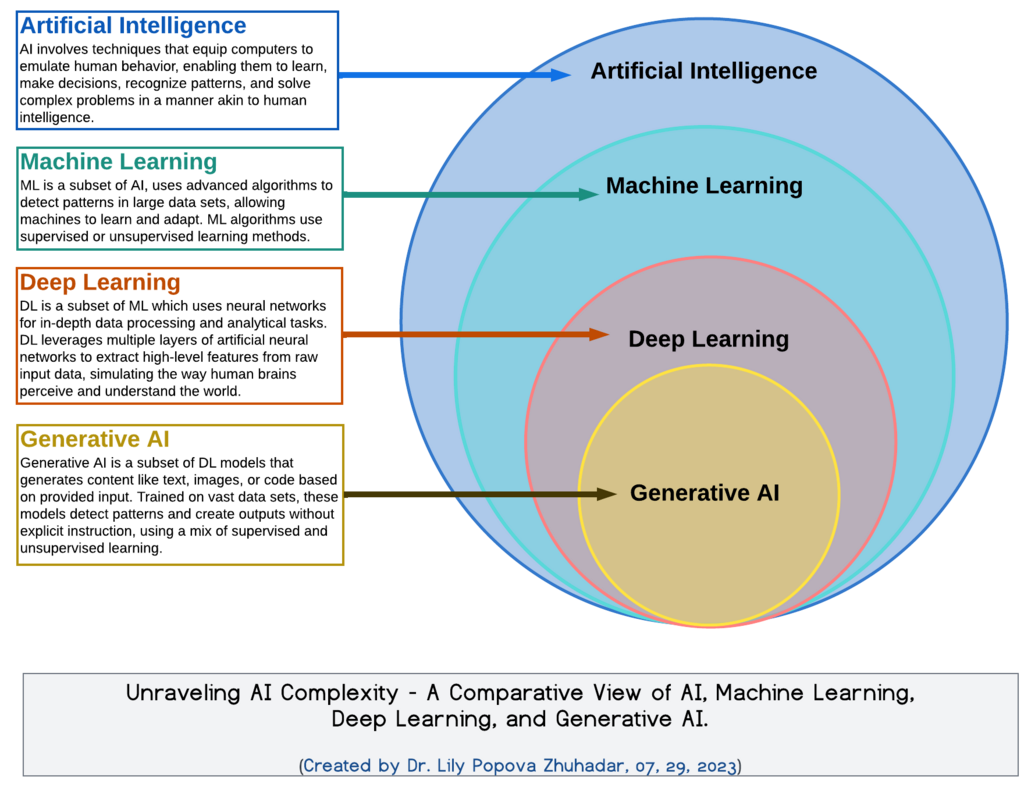
The goal isn't just to mimic human writing, but to process and comprehend information in a way that's useful for specific applications. Whether it's a chatbot providing customer support or a tool summarizing a lengthy report, the LLM's purpose is to handle language-based tasks efficiently and coherently.
How LLMs Think
Most modern LLMs are built on an architecture called the Transformer. Before the Transformer, older models struggled with long-term memory. They might forget the beginning of a long paragraph by the time they reached the end. The Transformer solved this with a clever concept called the attention mechanism.
Imagine reading the sentence: "The dog chased the ball, and it rolled into the street." Your brain instantly knows that "it" refers to the "ball," not the "dog" or the "street." The attention mechanism allows an LLM to do the same thing. It weighs the importance of different words in the input text and decides which ones to focus on when generating an output. This helps the model track context and relationships between words, even across long distances in the text.
This ability to weigh connections allows the Transformer architecture to handle complex sentences and maintain a consistent thread of meaning, making its generated text much more coherent and relevant.
Learning to Speak
Training an LLM is a multi-stage process that requires massive amounts of data and computational power. It generally happens in two main phases:
-
Pre-training: This is where the model develops its fundamental language understanding. It's fed a colossal dataset of text—essentially, a large portion of the internet. The model is given a task, like predicting the next word in a sentence or filling in missing words. By repeatedly making predictions and comparing them to the actual text, the model adjusts its internal parameters to get better. This phase teaches it grammar, facts about the world, and reasoning abilities.
-
Fine-tuning: After pre-training, the general model is adapted for specific tasks. This involves training it on a smaller, more specialized dataset. For example, to create a chatbot for customer service, a pre-trained model would be fine-tuned on a dataset of customer service conversations. This helps align the model's responses to be more helpful, harmless, and accurate for its intended application.
This two-step process creates a powerful foundation (pre-training) and then refines it for a specific purpose (fine-tuning).
What Are LLMs Used For?
Large language models are already integrated into many tools we use daily. Their applications span across numerous fields.
| Domain | Example Application |
|---|---|
| Content Creation | Writing articles, marketing copy, and emails. |
| Customer Support | Powering chatbots that can answer questions 24/7. |
| Software Development | Generating code snippets and helping developers debug. |
| Translation | Translating text between languages with high accuracy. |
| Data Analysis | Summarizing long reports and extracting key insights. |
| Education | Creating personalized learning materials and tutoring aids. |
As these models continue to evolve, they are becoming more capable and finding new uses, fundamentally changing how we interact with information and technology.
Ready to test your understanding? Let's review what we've covered.
What is the primary function of a Large Language Model (LLM)?
What key innovation in the Transformer architecture helps an LLM understand that in the sentence, "The cat chased the mouse, and it was fast," the word "it" refers to the mouse?