LLM Tool Calling Explained
Introduction to LLMs
What is a Large Language Model?
A Large Language Model, or LLM, is an AI designed to understand, generate, and interact with human language. Think of it as a student who has read a colossal library—virtually the entire internet. After consuming all that information, it can now write essays, summarize articles, translate languages, and even write computer code.
The "Large" in its name refers to two things: the immense amount of text it learns from and the billions of parameters it uses to process that information. These parameters are like the connections in a brain, allowing the model to capture the nuances of grammar, context, and meaning. At its core, an LLM's primary task is simple: predict the next word in a sequence. But when this task is performed at a massive scale, it gives rise to surprisingly sophisticated abilities.
Large language models (LLMs) are AI systems that understand and create human language, doing tasks like summarizing articles, answering questions, writing code, and more.
The Architecture Inside
The engine powering most modern LLMs is an architecture called the Transformer, introduced in 2017. Before the Transformer, models processed text sequentially, like reading a sentence one word at a time. This made it difficult to remember the context of words that appeared much earlier.
The Transformer's key innovation is a mechanism called self-attention. It allows the model to process all the words in a sentence simultaneously and weigh the importance of each word in relation to all the others. For example, in the sentence, "The delivery truck blocked the driveway, so it was late," self-attention helps the model understand that "it" refers to the "delivery truck," not the "driveway." This ability to grasp context is what makes LLMs so powerful.
This diagram shows a simplified view of how a Transformer might work in a translation task. The Encoder processes the input text, building a rich, context-aware understanding of it. This understanding is then passed to the Decoder, which uses it to generate the output text one word at a time, also using self-attention to keep its own output coherent.
How LLMs Learn
Training an LLM is a multi-stage process, typically broken into two main phases: pre-training and fine-tuning.
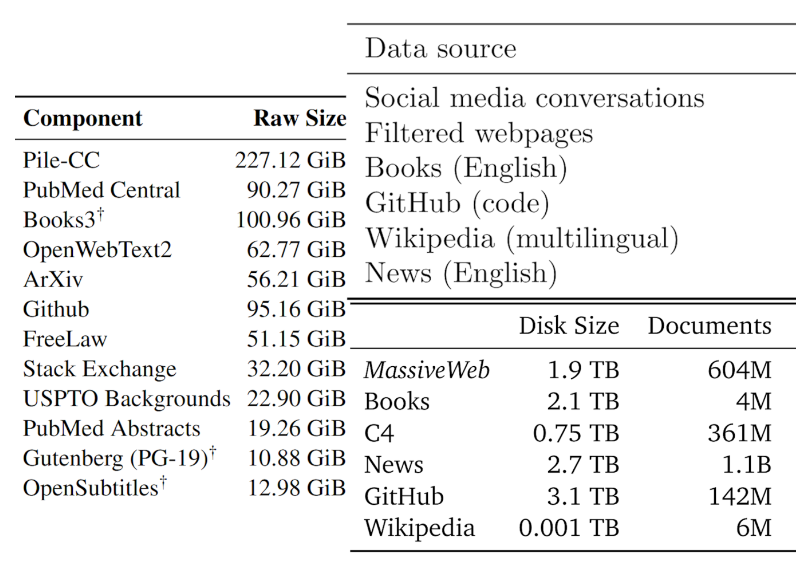
Pre-training is the foundational stage where the model develops its general understanding of language. It's trained on a massive, diverse dataset of text from the internet, books, and other sources. During this phase, the model learns grammar, facts about the world, reasoning abilities, and even some biases present in the data. The goal is simple: given a piece of text, predict the next word. By doing this billions of times, the model builds a powerful internal representation of language.
Fine-tuning comes next. After pre-training, the general model is adapted for specific tasks, like answering questions or following instructions. This is often done using a technique called Reinforcement Learning with Human Feedback (RLHF). Human reviewers interact with the model, rating its responses for helpfulness and safety. This feedback is used to "fine-tune" the model, steering it toward generating more useful and less harmful outputs. This stage is what makes a raw, pre-trained model into a helpful assistant.
What Are LLMs Used For?
The general-purpose nature of LLMs allows them to be applied to a wide range of tasks. You've likely already interacted with them.
| Application | Description |
|---|---|
| Content Creation | Writing articles, marketing copy, emails, and even poetry. |
| Summarization | Condensing long documents, articles, or conversations into key points. |
| Chatbots & Assistants | Powering conversational AI for customer service and personal assistance. |
| Code Generation | Writing, debugging, and explaining code in various programming languages. |
| Translation | Translating text between languages with greater contextual accuracy. |
| Sentiment Analysis | Determining the emotional tone of a piece of text (e.g., in product reviews). |
These applications are just the beginning. As the models become more capable, they are being integrated into more complex workflows, from scientific research to creative arts.
At its most fundamental level, what is the primary task of a Large Language Model?
The 'Large' in Large Language Model refers to the physical size of the servers it runs on.
This foundational knowledge of what LLMs are, how they're built, and how they learn is the first step. It sets the stage for understanding how these models can be extended to interact with the world in more complex ways.