LLM Showdown ChatGPT Gemini You
Introduction to Large Language Models
The Brains Behind the Chat
A large language model (LLM) is an AI model trained on massive amounts of text data that can understand and generate human-like text, recognize patterns in language, and perform a wide variety of language tasks without task-specific training.
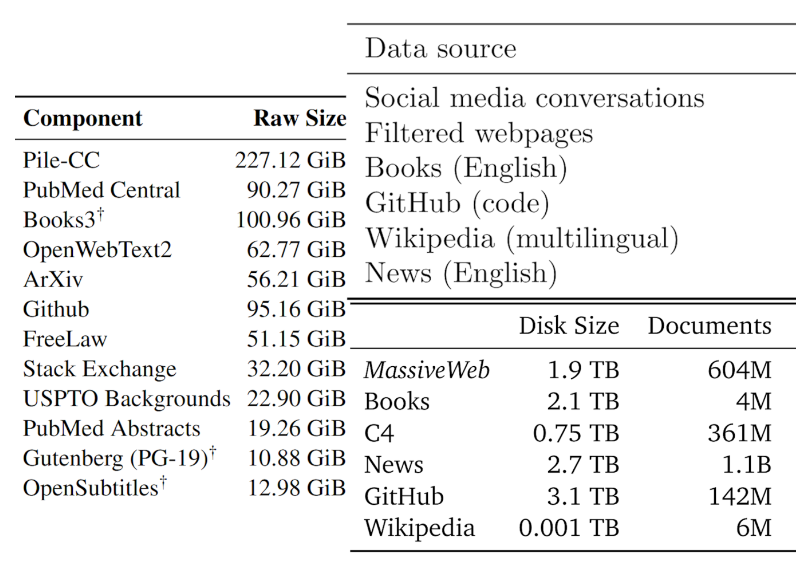
At its heart, a large language model is a sophisticated pattern-matching machine. It's trained on a colossal amount of text from the internet, books, and other sources. This training doesn't teach it to understand language in the human sense. Instead, it learns the statistical relationships between words and phrases. It becomes incredibly good at predicting the next word in a sequence.
transformer
noun
A type of neural network architecture that is particularly well-suited for handling sequential data like natural language. It is the foundational technology for most modern LLMs.
The key innovation that made modern LLMs possible is the Transformer architecture. Before Transformers, models processed text sequentially, word by word. This was slow and made it hard to grasp long-range connections in a text. A word at the beginning of a long paragraph might be crucial for understanding a word at the end, but older models often lost that context.
Transformers can process all the words in a sentence at once. They use a mechanism called "self-attention," which allows the model to weigh the importance of different words when processing any given word. It's like reading a sentence and mentally highlighting the words that are most relevant to the main idea, giving them more focus.
Training an LLM
Creating an LLM is a two-step process: pre-training and fine-tuning.
Pre-training is the heavy lifting. The model is fed an enormous dataset of text and given a simple goal: predict the next word in a sentence. It does this over and over, billions of times. During this process, the model adjusts its internal parameters—the mathematical weights that define the connections in its neural network—to get better at this prediction task. This phase is incredibly resource-intensive, requiring immense computing power and data.
Fine-tuning comes next. After pre-training, the model has a general grasp of language, grammar, and facts about the world. Fine-tuning adapts this general model for a specific task, like carrying on a conversation or summarizing articles. This is done using a smaller, more specialized dataset. For a conversational AI, this dataset might consist of high-quality dialogues. This step refines the model's behavior, making it more useful and aligned with human expectations.
What Can LLMs Do?
The capabilities of LLMs are broad because their core function—predicting text—can be applied in many ways. They are not just for chatbots.
| Capability | Description | Example Application |
|---|---|---|
| Text Generation | Creating original text in a specific style or on a certain topic. | Writing emails, marketing copy, or poetry. |
| Summarization | Condensing long documents into key points. | Getting the gist of a scientific paper or a news article. |
| Translation | Translating text from one language to another. | Real-time language translation apps. |
| Code Generation | Writing computer code based on a natural language description. | A programmer asks for a function to sort a list, and the LLM writes it. |
| Question Answering | Providing direct answers to questions based on its training data. | Search engines that provide answers instead of just links. |
By mastering the statistical patterns of language, LLMs can manipulate text in ways that appear intelligent, making them powerful tools for a growing number of applications.
Ready to check your understanding?
At its most fundamental level, what is a large language model designed to do?
What is the main advantage of the Transformer architecture's "self-attention" mechanism compared to older, sequential models?
This foundational knowledge sets the stage for understanding how specific models like ChatGPT and Gemini operate, building upon this core architecture and training methodology.