LLM Security and Text Processing
Introduction to LLMs
What Are Large Language Models?
Large Language Models, or LLMs, are a type of artificial intelligence designed to understand and generate human language. At their core, they are prediction engines. Given a piece of text, an LLM calculates the most probable next word, then the next, and so on, to form coherent sentences and paragraphs.
A Large Language Model (LLM) is a type of artificial intelligence program designed to understand, generate, and work with human language.
Think of it like the autocomplete feature on your phone, but far more powerful. Instead of just suggesting the next word, an LLM understands grammar, context, style, and even nuanced concepts from the vast amounts of text it was trained on.
The "large" in LLM refers to two things: the size of the model itself, which can have billions or even trillions of parameters, and the massive amount of data it learns from. These parameters are like knobs that the model tunes during training to capture the patterns of language.
The Transformer Architecture
The breakthrough that enabled modern LLMs was a new architecture introduced in 2017 called the Transformer. Before the Transformer, models processed text sequentially, word by word. This made it difficult to keep track of long-range context in a lengthy paragraph.
The Transformer can process all the words in a sentence at once. Its key innovation is the attention mechanism. Attention allows the model to weigh the importance of different words when producing an output. It can "pay attention" to the most relevant parts of the input text to better understand the context.
For example, in the sentence "The robot picked up the ball and threw it to the dog," the attention mechanism helps the model understand that "it" refers to the "ball," not the "robot" or the "dog."
This ability to dynamically focus on relevant context is what makes Transformers so powerful at understanding the complex relationships within language.
How LLMs Learn
Training an LLM involves several stages. The initial and most resource-intensive phase is called pre-training.
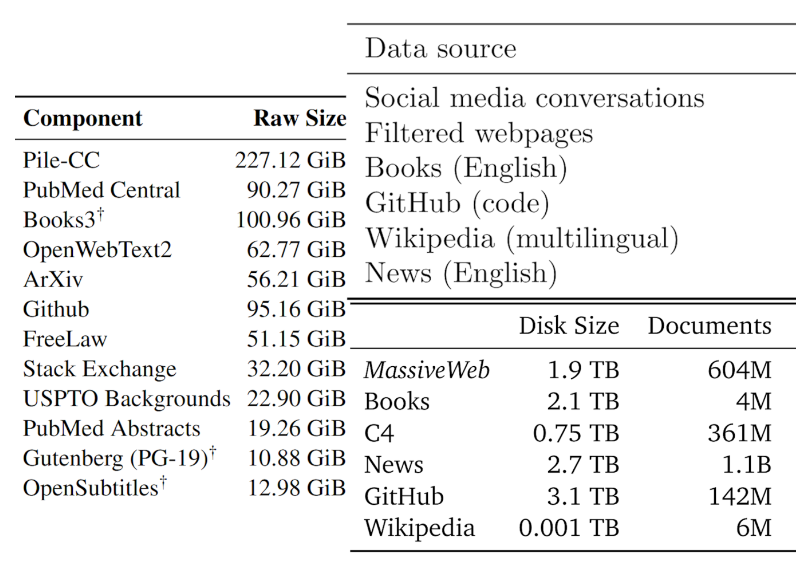
During pre-training, the model is fed a colossal amount of unlabeled text from the internet, books, and other sources. Its task is simple: predict the next word in a sequence or fill in missing words. By doing this billions of times, the model learns grammar, facts, reasoning abilities, and even biases present in the training data. This process is self-supervised because the training data itself provides the labels (the correct next word).
After pre-training, the model is a generalist. To make it more useful for specific tasks, it undergoes fine-tuning. This involves training the model on a smaller, curated dataset tailored to a particular goal, like answering questions or writing code. A common fine-tuning technique is Reinforcement Learning from Human Feedback (RLHF), where human reviewers rate the model's responses, teaching it to generate more helpful, accurate, and safe outputs.
What Are LLMs Used For?
The general-purpose nature of LLMs allows them to be applied to a wide array of tasks. You've likely already interacted with them.
| Application | Description |
|---|---|
| Content Creation | Writing emails, articles, marketing copy, and even creative fiction. |
| Information Synthesis | Summarizing long documents, research papers, or meeting transcripts. |
| Chatbots & Assistants | Powering conversational agents for customer service and personal assistance. |
| Code Generation | Writing, debugging, and explaining code in various programming languages. |
| Translation | Translating text between different languages with improved context and nuance. |
Because they can be adapted to so many different needs, LLMs are becoming a foundational technology, much like the internet or the smartphone. They represent a significant step forward in making computers that can understand and interact with us in a more natural, human-like way.
Ready to test your understanding?
At its most fundamental level, what is a Large Language Model designed to do?
The key innovation of the Transformer architecture, which allows it to weigh the importance of different words when processing text, is known as the __________.
That covers the basics of what LLMs are, how they're built, and what they do. By understanding these fundamentals, you're better equipped to explore their capabilities and limitations.