LLM Recommendation System Infrastructure
Introduction to LLMs
What Are Large Language Models?
A Large Language Model, or LLM, is a type of artificial intelligence trained to understand and generate human language. Think of it as a super-powered version of the autocomplete on your phone. While your phone might suggest the next word in a sentence, an LLM can write entire paragraphs, answer complex questions, summarize long documents, and even write computer code.
At its core, an LLM is a complex mathematical model that has learned patterns, grammar, context, and facts from an enormous amount of text data. This training allows it to predict the most likely sequence of words to follow a given prompt, creating responses that are often coherent and contextually relevant. These models are the engines behind many of the AI tools we use today, from sophisticated chatbots to advanced search engines.
Large Language Models—or LLMs—are a subset of deep learning models trained on massive corpus of text data.
The Engine Inside an LLM
The breakthrough technology that powers most modern LLMs is called the Transformer architecture. Before Transformers, AI models struggled to keep track of context in long sentences. The Transformer solved this with a clever mechanism called self-attention.
Self-attention allows the model to weigh the importance of different words in a sentence when processing it. When you read the sentence, "The delivery truck blocked the driveway, so it was late," you instantly know "it" refers to the "truck." Self-attention gives the LLM a similar ability to link words and ideas together, no matter how far apart they are in the text. This is crucial for understanding nuance, resolving ambiguity, and maintaining a coherent train of thought.
A full Transformer model typically consists of two main parts: an encoder and a decoder. The encoder reads and understands the input text, while the decoder generates the output text one word at a time, using both the encoder's understanding and the words it has already generated.
How an LLM Learns
Training an LLM is a monumental task that requires two key ingredients: a massive dataset and an immense amount of computing power. The training process itself is surprisingly simple in concept. The model is fed a huge chunk of text and its only job is to predict the next word. It does this over and over, billions of times.
For example, if the model sees the text "The quick brown fox jumps over the lazy...," its goal is to predict "dog." At first, its predictions are random. But with each attempt, it adjusts its internal parameters to get closer to the correct answer. By repeating this process across a dataset containing a significant portion of the internet, books, and other text sources, the model gradually learns grammar, facts, reasoning abilities, and even styles of writing.
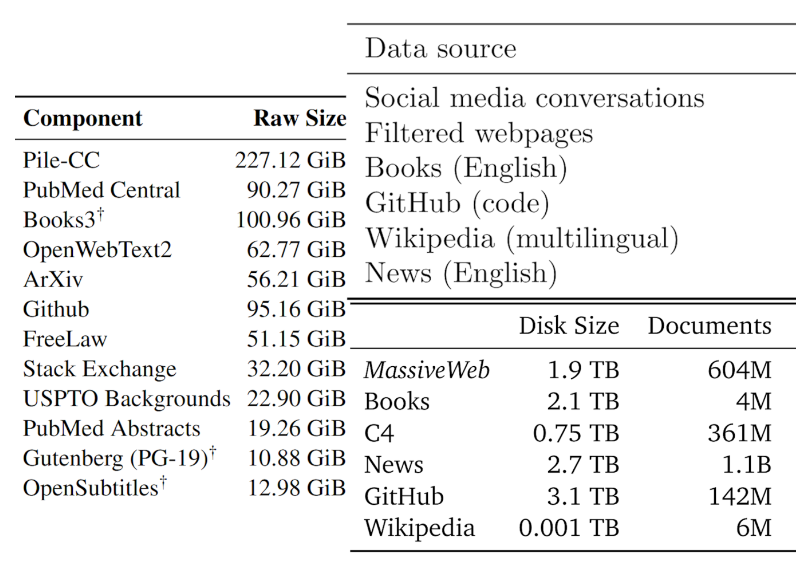
This initial, general-purpose training is called pre-training. Afterward, many models go through a second stage called fine-tuning, where they are trained on a smaller, more specialized dataset to become better at specific tasks, like holding a conversation or writing code.
Applications and Challenges
LLMs have found applications in countless fields. They power customer service chatbots, help developers write code faster, assist writers in drafting articles, and enable powerful new ways to search for information. They can translate languages, create marketing copy, and even help scientists analyze research papers.
Despite their power, LLMs have significant limitations. One of the biggest challenges is their tendency to "hallucinate," or invent facts confidently. Because they are designed to generate plausible-sounding text, they can sometimes make up information that is incorrect or nonsensical. They also inherit biases from their training data, which can lead to unfair or prejudiced outputs.
Additionally, the massive computational resources required for training and running LLMs raise concerns about their environmental impact and the high costs associated with their development. These are active areas of research as scientists and engineers work to make LLMs more reliable, fair, and efficient.
What is the primary function of a Large Language Model (LLM)?
What is the key technological breakthrough that enables modern LLMs to effectively understand long-range context in text?
Large Language Models represent a major leap forward in artificial intelligence, changing how we interact with information and technology. Understanding their basic mechanics is the first step to harnessing their capabilities responsibly.