LLM-Powered Blog Creation
Understanding Large Language Models
What Are Large Language Models?
At its core, a Large Language Model, or LLM, is a powerful pattern-matching machine for words. Think of it as an incredibly advanced autocomplete. When you type "The quick brown fox jumps over the lazy...", you instinctively know the next word is likely "dog." An LLM does the same thing, but on a massive scale and with a much deeper understanding of how words relate to each other.
These models are trained on vast quantities of text from the internet, books, and other sources. By analyzing all this data, they learn the patterns, grammar, context, and even the subtle nuances of human language. They don't "understand" in the human sense, but they become exceptionally good at predicting the next most probable word in a sequence, allowing them to generate coherent and contextually relevant text.
Large Language Model (LLM)
noun
An artificial intelligence model trained on massive amounts of text data to understand, summarize, generate, and predict new content.
The Engine Inside an LLM
The major breakthrough that enabled modern LLMs was an architecture called the Transformer, introduced in 2017. Before the Transformer, models struggled to keep track of context in long sentences. If you gave them a long paragraph, they might forget what the beginning was about by the time they reached the end.
The Transformer solved this with a clever mechanism called attention. Attention allows the model to weigh the importance of different words in the input text when it's generating a new word. It can "pay attention" to words that are far apart but crucial for meaning.
For example, in the sentence, "The cat, which was sitting on the warm windowsill, lazily flicked its tail," the attention mechanism helps the model understand that "its" refers to the "cat," not the "windowsill," even though they are separated by several words. This ability to handle long-range dependencies is what makes LLM-generated text so coherent.
How an LLM Learns
Training an LLM is a monumental task that requires two key ingredients: a massive dataset and an enormous amount of computing power. The dataset is a collection of text and code numbering in the trillions of words. The model processes this data, learning to predict the next word in a sequence over and over again. Each time it makes a wrong prediction, it adjusts its internal parameters to improve its accuracy for the next time. This process is repeated billions or even trillions of times.
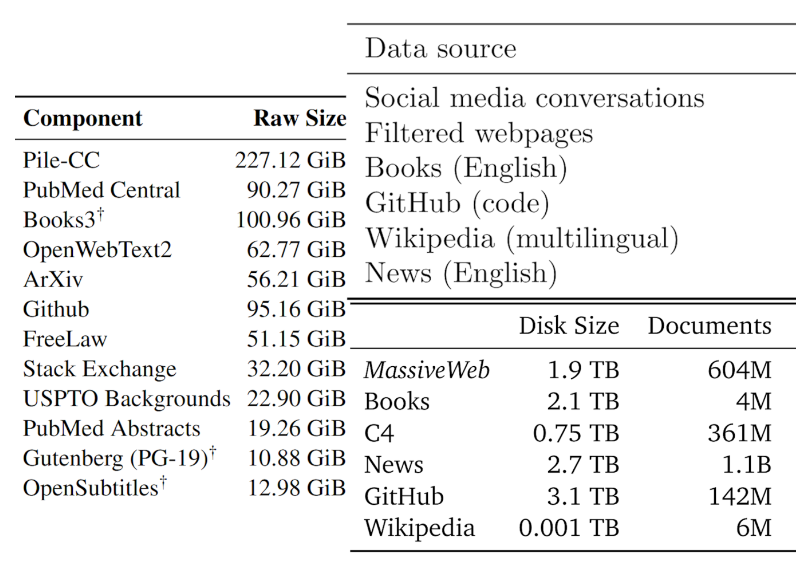
This foundational training is called pre-training. Once a model is pre-trained, it has a general grasp of language. It can then be fine-tuned on smaller, more specific datasets to become specialized for certain tasks, like answering customer service questions or writing code.
Some of the most well-known LLMs include OpenAI's GPT (Generative Pre-trained Transformer) series, which powers applications like ChatGPT, and Google's Gemini, another powerful family of models with advanced reasoning capabilities.
What Can LLMs Do?
The primary function of LLMs is generating text. This simple capability unlocks a vast range of applications in content creation and information processing. They can act as powerful assistants for writers, developers, and researchers.
LLMs excel at tasks that involve understanding or creating human language. This includes everything from writing an email to summarizing a dense research paper or even generating computer code from a plain English description.
Here are a few common applications:
- Content Generation: Writing articles, blog posts, marketing copy, and social media updates.
- Summarization: Condensing long documents into key bullet points or a brief summary.
- Translation: Translating text between different languages with impressive accuracy.
- Code Generation: Writing snippets of code in various programming languages based on a natural language prompt.
- Chatbots and Virtual Assistants: Powering conversational agents that can answer questions and perform tasks.
While incredibly powerful, LLMs have limitations. They can sometimes produce incorrect information (a phenomenon called "hallucination"), reflect biases from their training data, or fail to grasp the true nuance of a complex situation. Despite this, they are transformative tools that are reshaping how we interact with information and technology.
Ready to check your understanding of these powerful models? Let's see what you've learned.
At its most fundamental level, what is the primary function of a Large Language Model (LLM)?
What key architectural innovation, introduced in 2017, allowed models to effectively handle long-range dependencies in text, such as understanding that 'its' refers to 'cat' in a long sentence?
Understanding these core concepts is the first step to effectively using and building with large language models.