LLM Math for Everyone
Introduction to Large Language Models
Models That Understand Language
Large Language Models, or LLMs, are a type of artificial intelligence designed to understand, generate, and interact with human language. Think of them as incredibly advanced pattern-recognition machines. They are trained on vast amounts of text data—from books, articles, websites, and more—allowing them to learn the nuances of grammar, context, style, and even reasoning.
Large language models (LLMs) are AI systems that understand and create human language, doing tasks like summarizing articles, answering questions, writing code, and more.
The "large" in their name refers to two things: the immense size of the dataset they learn from and the huge number of parameters they use. A parameter is like a knob the model can tune during training to improve its performance. Modern LLMs have billions or even trillions of these parameters, which gives them a powerful ability to capture the complexities of language.
Parameter
noun
In machine learning, a parameter is an internal variable in a model that is adjusted during the training process to make more accurate predictions.
Their main purpose is to process text-based tasks that would typically require human intelligence. This could be anything from answering a simple question to writing a complex computer program or composing a poem.
A Brief History
The idea of teaching machines to understand language isn't new. Early attempts in the mid-20th century relied on hand-coded rules, which were brittle and couldn't handle the endless exceptions and variations of human language. Later, statistical methods emerged, where models learned probabilities of word sequences from text. These were better, but they often lacked a deeper understanding of context.
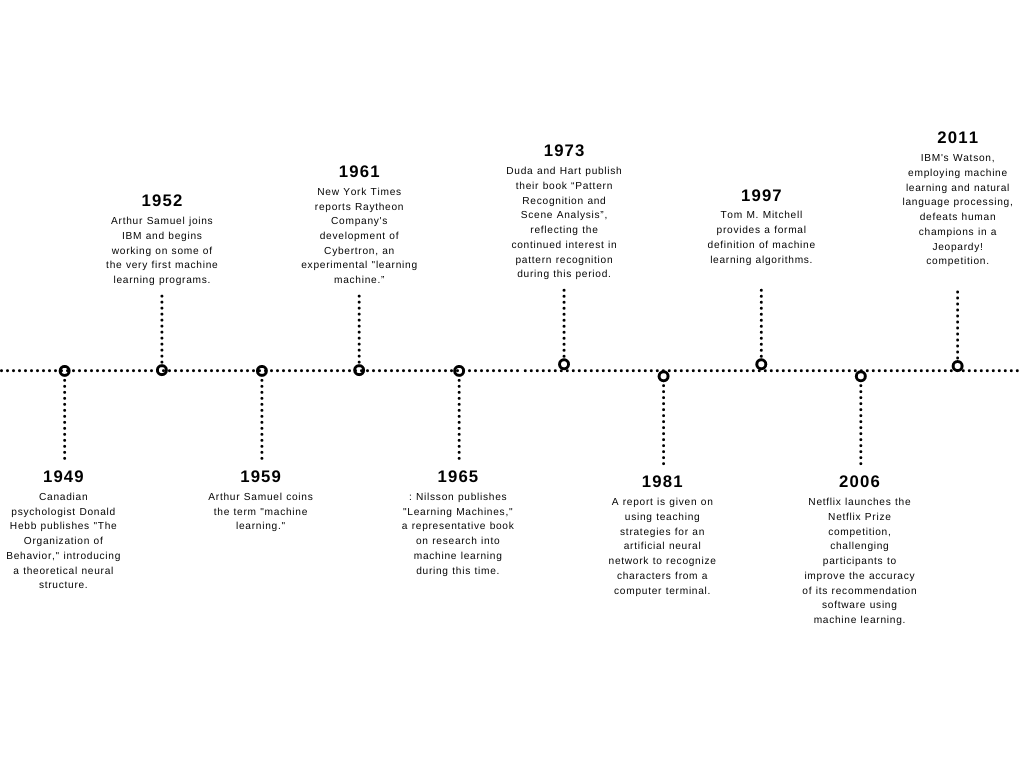
The modern era of LLMs began with the development of neural networks, which are computing systems inspired by the human brain. A major breakthrough came in 2017 with the invention of the "transformer" architecture. This new design was exceptionally good at handling long sequences of text and understanding the relationships between words, even if they were far apart in a sentence.
This innovation, combined with access to more powerful computers and massive datasets, led to a rapid acceleration in capability. Models like OpenAI's GPT series demonstrated a stunning ability to generate coherent, context-aware, and human-like text, setting a new standard for what was possible.
LLMs in the Wild
LLMs are no longer just a subject of academic research; they are integrated into many tools we use every day. They power chatbots that provide customer support, assist with writing emails and reports, and even help developers write and debug code. Their versatility makes them useful across a wide range of industries.
| Field | Common Application | Example |
|---|---|---|
| Customer Service | Automated Support | Answering common customer questions via a chatbot. |
| Content Creation | Writing Assistance | Drafting emails, articles, or marketing copy. |
| Software Dev | Code Generation & Debugging | Writing a function or explaining an error message. |
| Education | Personalized Tutoring | Explaining complex topics and answering questions. |
| Healthcare | Summarizing Medical Records | Creating concise summaries of patient histories. |
| Translation | Language Translation | Translating a document from one language to another. |
From enhancing search engines to making creative tools more powerful, LLMs are fundamentally changing how we interact with information and technology. As they continue to evolve, they promise to unlock new possibilities for communication, problem-solving, and creativity.
What does the 'large' in Large Language Model (LLM) primarily refer to?
What was the name of the breakthrough neural network architecture introduced in 2017 that significantly advanced LLM capabilities?