LLM Engineering Fundamentals
Introduction to LLMs
What Are LLMs?
Large Language Models, or LLMs, are advanced AI systems designed to understand and generate human-like text. Think of them as incredibly well-read students of language. They've been trained on a massive library of books, articles, and websites, allowing them to grasp grammar, context, facts, and even nuanced styles of writing.
Their significance lies in their versatility. Instead of being designed for one specific task, like a chess program, a single LLM can summarize a document, write an email, translate a sentence, or even generate computer code. This ability to handle a wide range of language-based tasks makes them a foundational technology in modern AI.
At its core, an LLM is a prediction engine. Given a sequence of words, its main job is to predict what the next word should be.
A Quick Trip Through Time
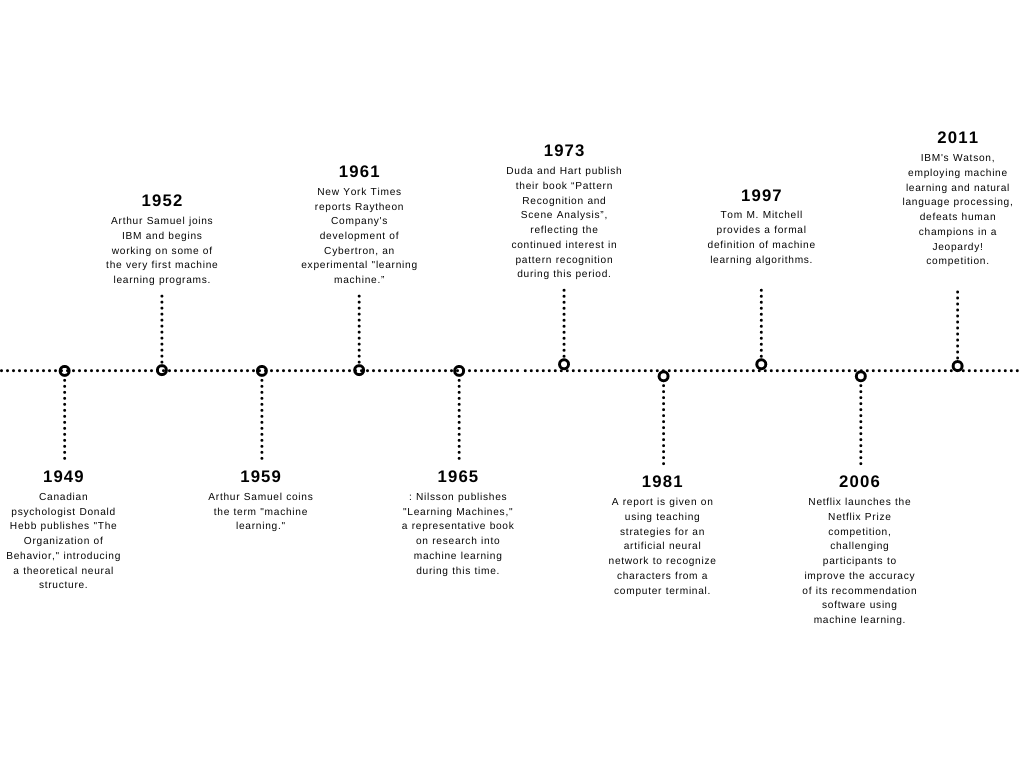
The idea of teaching machines language isn't new. Early attempts relied on complex, hand-written rules about grammar. These systems were brittle and couldn't handle the messy, unpredictable nature of real human language.
The next step was statistical models, which learned patterns by analyzing large amounts of text. They were better, but still limited. The real breakthrough came with the rise of neural networks, computer systems modeled loosely on the human brain. These models could learn more complex patterns, leading to significant improvements.
LLMs represent the latest leap forward in this journey, powered by a specific type of neural network architecture that changed everything.
The Transformer Architecture
The engine driving modern LLMs is the transformer architecture, introduced in 2017. Before transformers, models processed text sequentially, word by word. This was like reading a sentence through a tiny pinhole, making it hard to grasp the overall context.
The transformer's key innovation is a mechanism called self-attention. It allows the model to look at all the words in a sentence at once and weigh their importance relative to each other. When processing the word "it" in the sentence "The cat chased the mouse because it was fast," the self-attention mechanism can figure out that "it" refers to the mouse, not the cat.
This ability to understand relationships between words, no matter how far apart they are in the text, gives transformers a much deeper understanding of context. The architecture is typically split into two parts: an encoder that reads and understands the input text, and a decoder that generates the output text, one word at a time.
How LLMs Learn
Training an LLM is a two-stage process: pretraining and fine-tuning.
Pretraining is the foundational learning phase. During this stage, the model is fed an enormous amount of unlabeled text from the internet, books, and other sources. Its task is simple: predict the next word in a sentence. For example, given "The sky is ____," it learns to predict "blue." By doing this billions of times, the model develops a deep understanding of language, grammar, reasoning, and world knowledge. This creates a powerful, general-purpose base model.
Fine-tuning comes next. This process takes the pretrained base model and trains it further on a smaller, specialized dataset. This dataset is tailored to a specific task, like answering medical questions or writing in a particular brand's voice. Fine-tuning adapts the general knowledge of the base model to excel at a specific job, making it more accurate and reliable for that purpose.
Now that you have a foundational understanding of what LLMs are and how they work, let's test your knowledge.
What is the primary characteristic that makes Large Language Models (LLMs) so versatile compared to older AI systems?
What is the key innovation of the transformer architecture that allows it to understand relationships between words in a sentence, regardless of their distance from one another?
By understanding these core concepts—the model's purpose, its transformer architecture, and the two-phase training process—you have a solid foundation for exploring the world of LLMs.