LLM Development Fundamentals
Introduction to Large Language Models
What Are Large Language Models?
A Large Language Model, or LLM, is an AI trained to understand and generate human language. Think of it like a student who has read a massive library—everything from novels and websites to scientific papers and code. By analyzing all this text, it learns the patterns, rules, grammar, and even the nuances of how we communicate.
The core task of an LLM is simple: predict the next word in a sequence. By doing this over and over, it can write sentences, answer questions, translate languages, and summarize long documents.
This ability makes LLMs the engine behind many modern Natural Language Processing (NLP) applications. They've moved AI from clunky, rule-based systems to fluid, conversational partners. Their significance lies in making human-computer interaction feel more natural and intuitive than ever before.
A Brief Evolution
Early language models were statistical. They looked at huge amounts of text and calculated the probability of which word would follow another. For example, they'd know that "San Francisco" is a more likely pair of words than "San Giraffe." These were useful but limited, lacking a deeper understanding of context.
Later, neural networks like Recurrent Neural Networks (RNNs) brought a kind of memory to the process, allowing models to consider previous words in a sentence. This was a big step up, but they struggled with long-term dependencies. If a key piece of context was at the beginning of a long paragraph, an RNN might forget it by the end.
The game changed in 2017 with the introduction of the Transformer architecture.
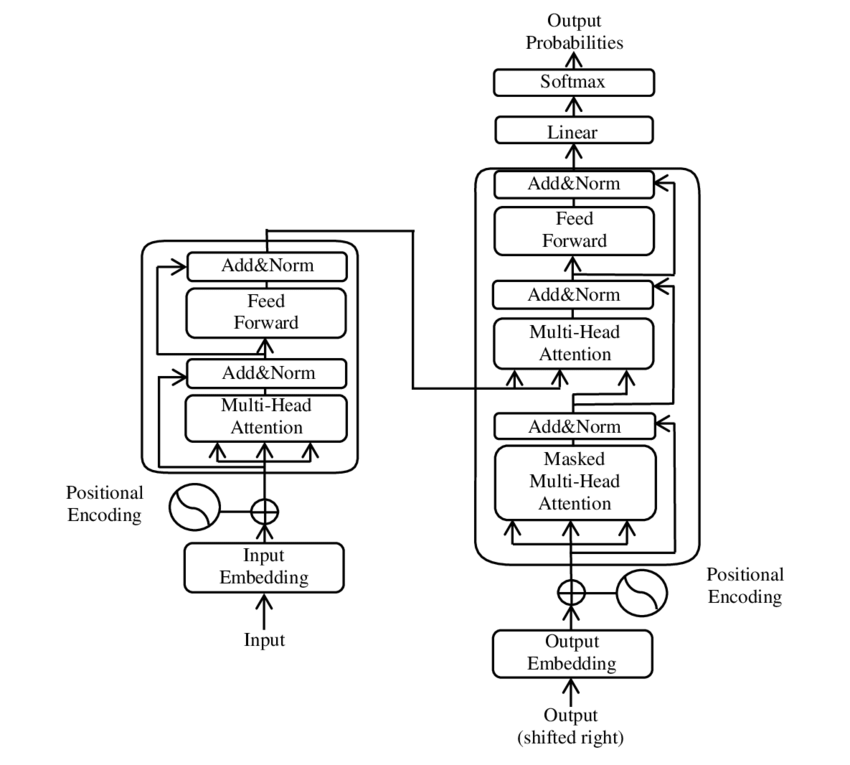
The Transformer Breakthrough
The Transformer model solved the memory problem with a mechanism called attention. Attention allows the model to weigh the importance of different words in the input text when processing and generating language. It can "pay attention" to the most relevant parts of the source text, no matter where they are.
When translating the sentence, "The robot picked up the ball, because it was heavy," the attention mechanism helps the model understand that "it" refers to the "ball," not the "robot." This ability to handle context is what makes LLMs so powerful.
Most Transformers have two main parts: an encoder and a decoder. The encoder reads and understands the input text, creating a numerical representation that captures its meaning. The decoder then takes that representation and generates the output text, word by word.
How an LLM Learns
Training an LLM happens in two main stages: pre-training and fine-tuning.
Pre-training is the general education phase. The model is trained on a vast, diverse dataset of text and code. During this stage, it's not learning to do any specific task. Instead, it's learning the fundamentals of language: grammar, facts, reasoning abilities, and how ideas connect. This process is computationally expensive and can take weeks or months.
Fine-tuning comes next. After pre-training, the general-purpose model is further trained on a smaller, task-specific dataset. For example, to create a chatbot for customer service, you would fine-tune the base model on thousands of customer service conversations. This step adapts the general model to excel at a specific job, making it more accurate and helpful for that use case.
Data: The Foundation and Its Flaws
The training data is the single most important factor in an LLM's performance. The principle of "garbage in, garbage out" applies perfectly. High-quality, clean, and diverse data leads to a more capable and reliable model.
However, this data often comes with challenges. A major concern is bias. LLMs are trained on text from the internet, which reflects the biases of the people who wrote it. If the training data contains stereotypes or prejudices about certain groups, the model will learn and potentially amplify those biases in its responses.
For example, if a model is trained on text where doctors are usually referred to as "he" and nurses as "she," it may struggle to generate gender-neutral text or reinforce those stereotypes in its own writing. Acknowledging and trying to mitigate this bias is one of the biggest ongoing challenges in the field of AI.
What is the primary function of a Large Language Model (LLM)?
What was the key architectural innovation introduced in 2017 that significantly improved upon older models like Recurrent Neural Networks (RNNs)?
Understanding these core concepts—what LLMs are, the role of the Transformer architecture, the training process, and the importance of data—is the first step toward grasping the power and complexity of modern AI.