LLM Content Generation with Oboe
Introduction to Large Language Models
What Are Large Language Models?
A large language model, or LLM, is a type of artificial intelligence trained to understand and generate human-like text. At its core, an LLM is a prediction engine. It looks at a sequence of words and calculates the most probable next word, then the next, and so on, to build sentences and paragraphs.
Imagine reading the sentence, "The cat sat on the ____." Your brain instantly fills in the blank with a word like "mat" or "couch." LLMs do something similar, but on a massive scale. They are trained on enormous datasets of text and code from the internet, books, and other sources. This training teaches them the patterns, grammar, context, and nuances of human language.
A Large Language Model (LLM) is a type of artificial intelligence program designed to understand, generate, and work with human language.
This process allows them to perform a wide range of tasks, from answering questions and summarizing articles to translating languages and writing code.
The Transformer Architecture
The key technology behind most modern LLMs is the Transformer architecture. Introduced in 2017, it revolutionized how machines process language. Before Transformers, models processed text sequentially, word by word, which made it difficult to keep track of long-range relationships in the text.
The Transformer's big innovation is a mechanism called attention. Attention allows the model to weigh the importance of different words in the input text when processing any given word. It can look at the entire sentence at once, not just the words that came immediately before. This helps it understand context, ambiguity, and complex relationships.
For example, in the sentence, "The robot picked up the heavy metal block because it was in the way," the attention mechanism helps the model understand that "it" refers to the "block," not the "robot."
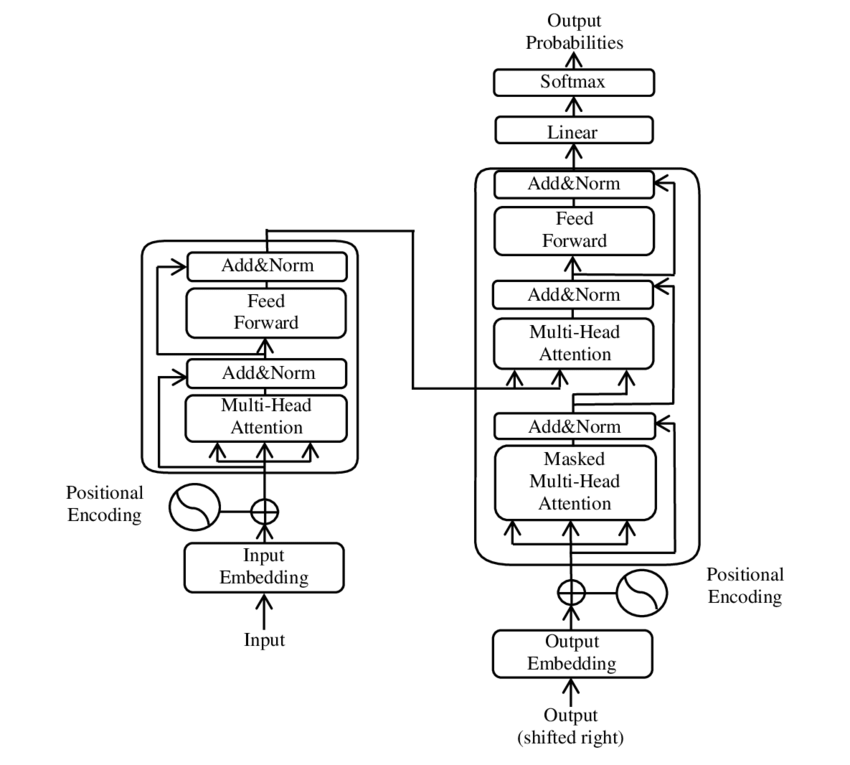
This ability to handle context is what makes LLMs so powerful and versatile. The architecture consists of two main parts: an encoder, which reads and understands the input text, and a decoder, which generates the output text.
Training Data and Process
LLMs are not explicitly programmed with grammatical rules. Instead, they learn from data. The training process involves feeding the model a colossal amount of text—often hundreds of gigabytes or even terabytes of data from the web, books, and more.
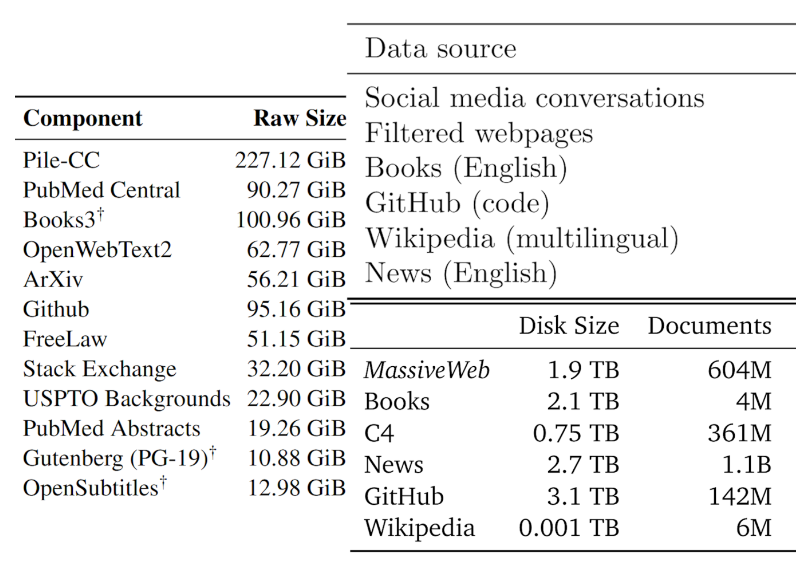
During this pre-training phase, the model's primary task is simple: predict the next word in a sentence or fill in missing words. The model makes a prediction, compares it to the actual word in the training text, and adjusts its internal parameters—millions or billions of them—to reduce the error. This process is repeated trillions of times.
After pre-training, many LLMs undergo a fine-tuning stage. Here, they are trained on a smaller, more specialized dataset to optimize their performance for specific tasks, like following instructions or carrying on a conversation. This is often done with human feedback to align the model's responses with human preferences and safety guidelines.
Applications in NLP
The capabilities learned during training allow LLMs to be applied to a huge range of Natural Language Processing (NLP) tasks. Because they have a general understanding of language, they can often perform these tasks with little to no task-specific training.
| Application | Description |
|---|---|
| Text Generation | Writing articles, emails, poetry, and other creative content. |
| Question Answering | Providing direct answers to user queries based on input context. |
| Translation | Translating text from one language to another. |
| Summarization | Condensing a long document into a short, coherent summary. |
| Sentiment Analysis | Determining the emotional tone of a piece of text (positive, negative, neutral). |
| Code Generation | Writing computer code in various programming languages based on a description. |
These applications show the versatility of LLMs. They have become foundational tools not just for chatbots and search engines, but also for software development, content creation, and data analysis.
Ready to check your understanding?
What is the fundamental task a large language model (LLM) performs during its pre-training phase?
What key architectural innovation allows modern LLMs to effectively understand long-range relationships and context within a sentence?
By understanding the core components of LLMs—the Transformer architecture, the massive datasets, and the training process—we can better appreciate how these powerful tools work.