LLM Code Generation Mastery
Introduction to LLMs
What Are LLMs?
A Large Language Model (LLM) is a type of AI designed to understand and generate human-like text. At its core, an LLM is a complex neural network trained on a massive amount of text data. Its primary function is surprisingly simple: predicting the next word in a sequence. By doing this over and over, it can write sentences, paragraphs, and even entire articles.
A large language model (LLM) is an AI model trained on massive amounts of text data that can understand and generate human-like text, recognize patterns in language, and perform a wide variety of language tasks without task-specific training.
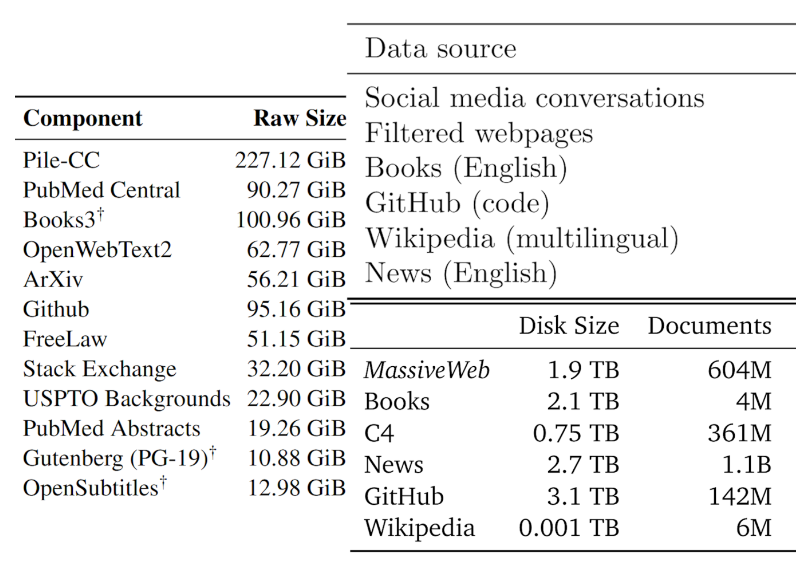
The "large" in LLM refers to two things: the size of the dataset it's trained on and the number of parameters in the model. The training data can include terabytes of text from the internet, books, and other sources. The parameters, which can number in the billions, are the internal variables the model uses to make predictions. Think of them as the knobs and dials that the model tunes during training to capture the nuances of language.
How LLMs Are Built
Modern LLMs are built on an architecture called the Transformer, introduced in 2017. Before the Transformer, models processed text sequentially, word by word. This made it difficult to keep track of long-range dependencies, like how a pronoun at the end of a paragraph relates to a name mentioned at the beginning.
The Transformer architecture processes all the words in a sequence at once. It uses a mechanism called self-attention to weigh the importance of different words in the input text when producing an output. This allows the model to understand context far more effectively.
The training process for an LLM typically involves two main stages:
- Pre-training: The model learns grammar, facts, reasoning abilities, and language patterns from a vast, general corpus of text. This is an unsupervised process where the model is simply tasked with predicting the next word in sentences from the training data. This phase requires immense computational power and can take weeks or months.
- Fine-tuning: After pre-training, the general model is refined for specific tasks, like following instructions or engaging in conversation. One common technique is Reinforcement Learning from Human Feedback (RLHF). In RLHF, humans rank different model responses to the same prompt. This feedback is used to train a separate "reward model," which then guides the LLM to generate outputs that align better with human preferences.
The Evolution of LLMs
The capabilities of LLMs have grown rapidly. Early models could generate plausible-sounding text but often struggled with coherence and factual accuracy. The introduction of GPT-3 in 2020 was a major milestone. Its sheer scale allowed it to perform a wide range of tasks with minimal examples, a capability known as few-shot learning.
GPT-4, released in 2023, represented another significant leap. It demonstrated improved reasoning, better accuracy, and the ability to understand and process both text and images (multimodality). This progression showcases a trend: as models get larger and are trained on more diverse data, they develop more sophisticated and generalizable skills.
The core improvement in LLMs often comes from scaling up: more data, more parameters, and more computation during training.
Alongside these general-purpose models, specialized LLMs have emerged. These models are fine-tuned on specific domains to achieve higher performance on niche tasks. For example, some models are trained on medical literature to assist with diagnostics, while others are trained on legal documents.
A prominent example in software development is Code Llama. It's a version of the Llama model that has been further trained on a massive dataset of public code. This specialization makes it exceptionally good at generating code, completing code snippets, and debugging. By focusing on the specific patterns and syntax of programming languages, it can outperform more general models on coding tasks.
| Model | Released | Key Characteristic |
|---|---|---|
| GPT-3 | 2020 | Mastered few-shot learning through massive scale. |
| GPT-4 | 2023 | Introduced multimodality and superior reasoning. |
| Code Llama | 2023 | Specialized for code generation and completion. |
Ready to test what you've learned about the fundamentals of LLMs?
What is the fundamental task a Large Language Model is trained to perform?
The "large" in Large Language Model refers to the size of its training dataset and what else?
Understanding these foundational concepts is the first step. Next, we'll explore how these powerful models are specifically applied to the task of generating code.