LLM Agent Orchestration Patterns
Introduction to Multi-Agent Systems
When One Agent Isn't Enough
Imagine trying to build a house all by yourself. You'd have to be a plumber, an electrician, a carpenter, and an architect all at once. It’s possible, but it would be incredibly slow and difficult. A better approach is to hire a team of specialists who can work together. This is the core idea behind a multi-agent system (MAS).
Multi-Agent System
noun
A computerized system composed of multiple interacting intelligent agents. These agents are autonomous and work together to solve problems that are beyond the individual capabilities or knowledge of any single agent.
In a MAS, each agent is a self-contained program that can act on its own. They have a few key traits:
- Autonomy: Agents operate without direct human intervention and have control over their own actions and internal state.
- Reactivity: They can perceive their environment (which can include other agents) and respond to changes in a timely fashion.
- Pro-activeness: They don’t just react to the environment; they can take the initiative to pursue their goals.
- Social ability: They can interact and communicate with other agents.
How Agents Communicate
A team can't function without communication. The same is true for agents. They need a shared language and a set of rules, or protocols, to interact effectively. This is where Agent Communication Languages (ACLs) come in.
An ACL is a standardized language that defines the types of messages agents can send to each other. Instead of just sending raw data, agents wrap their messages in "performatives" that describe the message's intent. Common performatives include request, inform, propose, and agree.
For example, one agent might send another a message like
(request (recipient AgentB) (content (get-weather-forecast 'Paris'))).Agent B understands this isn't just data; it's a direct request for an action. It can then reply with something like
(inform (recipient AgentA) (content (weather-forecast 'Paris' 'sunny'))).
This structured communication prevents misunderstandings. The underlying protocols ensure messages are delivered reliably, much like how the internet's protocols (like TCP/IP) make sure your emails arrive safely.
Working as a Team
Clear communication is just the first step. Agents also need strategies to coordinate their actions and cooperate toward a shared goal. There are many ways to achieve this, from simple negotiations to complex auctions.
One classic coordination method is the Contract Net Protocol. It works just like hiring a contractor:
- Task Announcement: An agent, acting as a manager, has a task it can't do alone. It broadcasts a message announcing the task to other agents.
- Bidding: Other agents, the potential contractors, evaluate the announcement. If they can perform the task, they submit a bid.
- Contract Award: The manager agent evaluates the bids and awards the contract to the most suitable agent.
- Execution: The contractor agent performs the task and reports the result back to the manager.
This simple mechanism allows for dynamic task allocation. The system can adapt to which agents are available and best suited for a job at any given moment.
Applications and Challenges
Multi-agent systems are more than just an academic concept; they're used to solve complex, real-world problems. You can find them in:
- Supply Chain Management: Agents representing suppliers, warehouses, and shipping companies negotiate and coordinate to move goods efficiently.
- Smart Grids: Agents manage energy production and consumption across a power grid, balancing loads and preventing blackouts.
- Robotics: Swarms of autonomous drones or robots collaborate to explore an unknown area or perform search-and-rescue operations.
- Air Traffic Control: Systems use agents to monitor aircraft and deconflict flight paths to ensure safety.
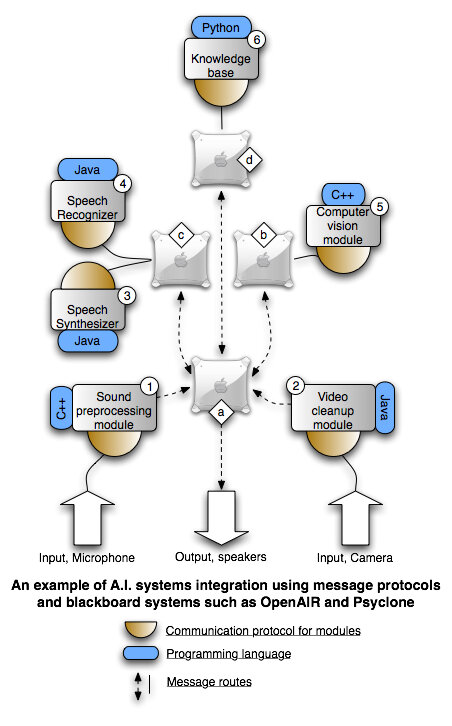
However, building these systems comes with challenges. It can be difficult to ensure that a group of autonomous agents will behave coherently and not work at cross-purposes. Designing effective communication protocols and coordination strategies is key. As systems grow, managing the communication overhead between dozens or even thousands of agents can also become a significant hurdle.
What is the central idea behind using a multi-agent system (MAS)?
An agent managing a robotic warehouse, without being prompted, analyzes inventory levels and preemptively orders new stock for an item it predicts will be popular next month. Which key agent trait is it demonstrating?
By breaking down large problems and assigning specialized agents to each part, multi-agent systems offer a powerful and flexible way to tackle complexity.