Lithium Essentials
Lithium Basics
Meet Lithium
Lithium is the third element on the periodic table, with the symbol Li and atomic number 3. It kicks off the second row, or period, of the table and belongs to Group 1, a family of elements known as the alkali metals. These metals are all highly reactive.
alkali metal
noun
Any of the elements in Group 1 of the periodic table, characterized by being highly reactive, having one electron in their outermost shell, and readily forming positive ions.
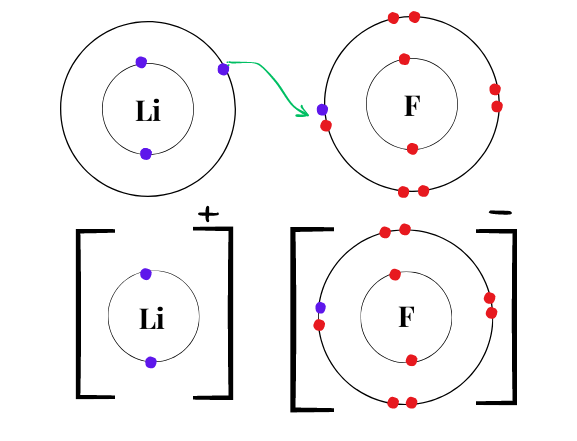
A neutral lithium atom has three protons and three electrons. The most common form, or isotope, also has four neutrons in its nucleus. The electrons are arranged in two energy shells: two electrons fill the inner shell, and a single, solitary electron occupies the outer shell. This lone outer electron is the key to lithium's personality. It's not held very tightly, making it easy for lithium to give it away and react with other elements.
A Featherweight Metal
Lithium holds the title for the least dense of all solid elements. With a density of just 0.534 grams per cubic centimeter, it's about half as dense as water. This means a block of pure lithium would float on water—if it didn't react so violently first. It's even light enough to float on oil.
In its pure form, lithium is a soft, silvery-white metal. It's so soft you could cut it with a butter knife, revealing a shiny surface that quickly tarnishes as it reacts with air.
Eager to React
That single electron in its outer shell makes lithium extremely reactive. It's always looking to donate that electron to another element to achieve a more stable electron configuration. This eagerness is what defines its chemical properties.
Because it reacts so readily with air and water, lithium is never found in its pure form in nature. It's always locked away in chemical compounds.
When lithium does react, it forms what's called an ionic bond. It gives up its electron and becomes a positively charged ion (). The element that takes the electron becomes a negatively charged ion. These opposite charges attract, pulling the two ions together to form a stable compound.
Where Lithium Comes From
Since it doesn't exist on its own, we have to find lithium in minerals and saltwater deposits. The two main sources are hard-rock minerals and underground brines.
One of the most common lithium-bearing minerals is spodumene. It's often found in rock formations called pegmatites, which are known for their large crystals. Other minerals like petalite and lepidolite also contain lithium.
Lithium is also found dissolved in salty, mineral-rich groundwater called brine. These brine deposits are typically located in arid regions, such as the high-altitude salt flats of South America. The lithium is concentrated in underground pools that can be pumped to the surface.
Ready to check your understanding of lithium's fundamental properties?
What is the atomic number of Lithium?
What is the primary reason for lithium's high reactivity?
Understanding these basic properties—its structure, physical nature, reactivity, and origins—is the first step to appreciating why this lightweight metal plays such a huge role in our world.