Literature Review and Gap Identification
Understanding Literature Reviews
What is a Literature Review?
Think of a literature review as the conversation happening among researchers about a specific topic. Before you can add your own voice, you need to listen to what's already been said. It’s not just a list of summaries of books and articles. Instead, it’s a critical synthesis of existing research.
The purpose of a literature review is to summarize what knowledge and ideas have been established on a topic, and what their strengths and weaknesses are.
By mapping out the existing knowledge, you can see the whole landscape. You'll find out what's well-understood, where researchers disagree, and most importantly, what questions haven't been answered yet. This is how you identify a "gap" in the research—an area where your own work can make a new contribution.
Types of Reviews
Not all literature reviews are the same. They can be broad overviews or incredibly detailed analyses. The type you choose depends on your goal. Let's look at three common types.
Narrative Review
noun
A review that provides a broad overview of a topic, often from a particular perspective. It tells the 'story' of the research in a field.
Narrative reviews are great for getting a general understanding of a topic. They summarize the literature and draw conclusions, but they don't always follow a strict, repeatable method for selecting sources. This makes them potentially biased, as the author might select articles that support their viewpoint.
Systematic Review
noun
A review that uses a rigorous and transparent method to find, evaluate, and synthesize all available evidence on a specific research question.
This type is all about being thorough and unbiased. Researchers define their search strategy in advance and document every step, from how they searched for studies to why certain ones were included or excluded. The goal is to find all the relevant research on a question, not just a sample. This detailed process makes the conclusions highly reliable.
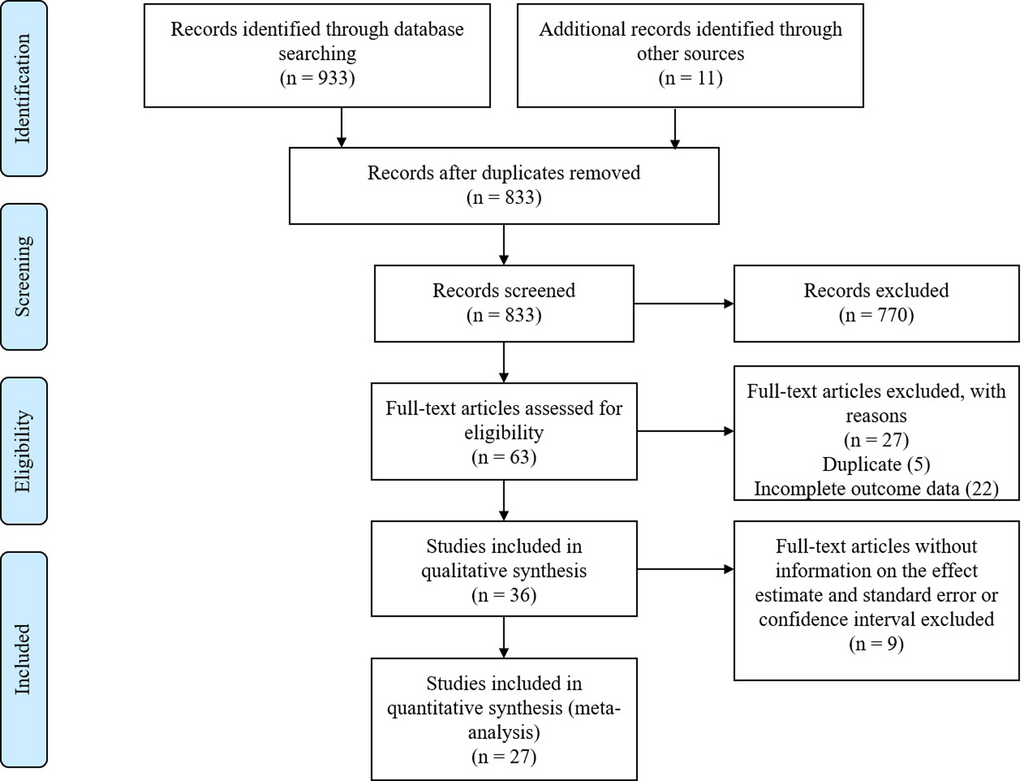
Finally, we have the most statistically powerful type of review.
Meta-analysis
noun
A statistical technique for combining the findings from multiple independent studies to reach an overall conclusion.
A meta-analysis often follows a systematic review. After gathering all the relevant studies, researchers use statistical methods to pool the data together. This allows them to see patterns that might not be visible in any single study. It’s like turning the results of many small studies into one large, powerful one.
Anatomy of a Review
Regardless of the type, most literature reviews share a common structure: an introduction, a body, and a conclusion.
| Part | Purpose |
|---|---|
| Introduction | Sets the stage. It introduces the topic, explains its importance, and outlines the scope of the review. |
| Body | The core of the review. It organizes and discusses the literature, synthesizing findings and highlighting key themes. |
| Conclusion | Wraps everything up. It summarizes the main takeaways, identifies gaps in the research, and suggests avenues for future study. |
The introduction grabs the reader's attention and defines the focus. It clarifies what the review will cover and, just as importantly, what it won't.
The body is where the real analysis happens. It’s crucial to organize this section thematically. Instead of just summarizing one paper after another, you should group related studies to discuss a common theme, debate, or methodology. This is where you connect the dots and create a coherent narrative from different sources.
A literature review should synthesize, or connect ideas to one another under a unified theme.
The conclusion provides a concise summary of what the literature says as a whole. It answers the question, "So what?" by pointing out the main findings, the weaknesses in the current body of research, and where the conversation should go next. This final step is what bridges the gap between existing knowledge and your own future research.
Ready to check your understanding?
What is the primary purpose of conducting a literature review?
Which type of literature review is most susceptible to author bias because it doesn't require a strict, repeatable method for selecting sources?
Understanding how to read and structure a literature review is a foundational skill in any research field. It ensures your work is built on a solid understanding of what has come before.