Lipoproteins and Heart Health
Introduction to Lipoproteins
Oil and Water Don't Mix
Think about what happens when you mix oil and vinegar for a salad dressing. No matter how hard you shake it, the oil and water-based vinegar eventually separate into layers. Your bloodstream is a bit like that. It's mostly water, while the fats (lipids) and cholesterol from your food are oily.
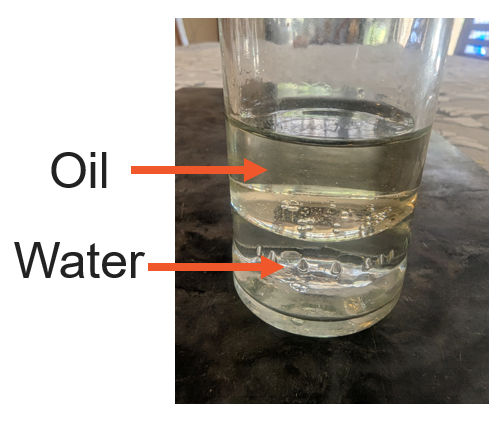
For your body to use these essential fats and cholesterol, they need a way to travel through the watery highway of your circulation. If they were just dumped into the blood, they would clump together into useless, greasy blobs. To solve this problem, your body creates special packages called lipoproteins.
Lipoproteins are particles that act as tiny transport vehicles, carrying fats and cholesterol through the bloodstream.
The Anatomy of a Lipoprotein
Imagine a microscopic sphere. The cargo, consisting of water-fearing lipids like triglycerides and cholesterol, is tucked away safely in the center. The outer shell of this sphere is made of phospholipids, which have a clever two-part structure. One end loves water, and the other loves fat. This allows the shell to face the watery blood on the outside while containing the oily fats on the inside.
Embedded in this shell are special proteins called apolipoproteins. These aren't just for structure; they act like a shipping label and a key. They tell the lipoprotein where to go in the body and allow it to dock with specific cells to deliver its fatty cargo.
The Lipoprotein Family
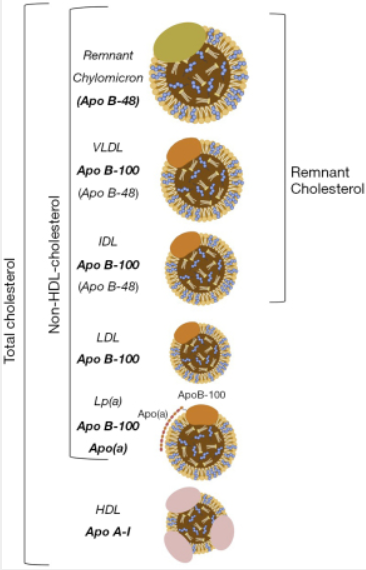
Lipoproteins aren't all the same. They're classified by their density, which is determined by how much protein (denser) they have compared to fat (less dense). Each type has a specific job in your body's lipid transport system.
| Lipoprotein Type | Primary Cargo | Main Function |
|---|---|---|
| VLDL (Very Low-Density) | Triglycerides | Delivers triglycerides from the liver to your body's cells for energy. |
| LDL (Low-Density) | Cholesterol | Delivers cholesterol to cells that need it for building and repair. |
| HDL (High-Density) | Cholesterol | Picks up excess cholesterol from tissues and returns it to the liver. |
| Lp(a) (Lipoprotein(a)) | Cholesterol | A specialized form of LDL; its exact role is still being researched. |
Let's look at their roles more closely.
Very Low-Density Lipoprotein (VLDL) Think of VLDL as the delivery truck that leaves the warehouse (your liver) loaded with triglycerides. Its main job is to transport this fat to your muscles and tissues to be used as energy. As VLDL unloads its cargo, its composition changes.
Low-Density Lipoprotein (LDL) After a VLDL particle has dropped off most of its triglycerides, it transforms into an LDL particle. LDL is much richer in cholesterol. Its job is to be the final-mile delivery service, bringing essential cholesterol to cells throughout your body. Cells use this cholesterol to build their membranes, make hormones, and produce vitamin D. Because high levels of LDL can contribute to plaque buildup in arteries, it's often called "bad" cholesterol.
High-Density Lipoprotein (HDL) HDL is the cleanup crew. Its particles travel through the bloodstream scavenging for excess cholesterol that cells don't need. HDL then carries this cholesterol back to the liver, where it can be recycled or removed from the body. This process, called reverse cholesterol transport, is why HDL is often referred to as "good" cholesterol.
Lipoprotein(a) [Lp(a)] Lp(a) is a unique particle. It's essentially an LDL particle with an extra protein, called apolipoprotein(a), attached to it. Its exact function is not fully understood, but high levels of Lp(a) in the blood are considered a risk factor for cardiovascular disease, independent of LDL levels.
Understanding these different couriers is the first step in seeing how your body manages fats and how that process relates to your overall health. Now, let's test your knowledge on these lipid transporters.
Why are lipoproteins necessary for transporting fats and cholesterol in the bloodstream?
Which lipoprotein is primarily responsible for transporting triglycerides from the liver to muscles and tissues for energy?