Linux Fundamentals for Beginners
Introduction to Linux
What is Linux?
At its heart, Linux is an operating system, much like Windows or macOS. It's the software that manages all of the hardware resources associated with your desktop or laptop. To be more specific, Linux is actually the kernel, the core part of the operating system. We'll get into that more in a bit.
What makes Linux truly different is its open-source nature. Unlike proprietary systems, its source code is freely available for anyone to view, modify, and distribute. This philosophy has fostered a massive global community of developers who collaborate to improve and secure the system.
The kernel is the core of the system and manages the CPU, memory, and peripheral devices.
A Brief History
The story of Linux begins in 1991 with a Finnish student named Linus Torvalds. He wanted to create a free and open-source alternative to MINIX, another Unix-like operating system. He started it as a hobby, announcing his project on a newsgroup.
What began as a personal project quickly attracted other developers. They were drawn to the idea of a collaborative, open operating system. This community effort is what allowed Linux to grow from a simple kernel into the robust and versatile system it is today.
The Core Components
A complete Linux system isn't just one piece of software. It's a collection of components working together. The three fundamental parts are the kernel, the shell, and the file system.
Kernel
noun
The core of the operating system. It acts as a translator between the software you use and the computer's physical hardware, managing resources like the CPU, memory, and peripherals.
Next is the shell. The shell is a program that provides the user interface. It takes your commands and passes them to the kernel to execute. While there are graphical interfaces, the command-line shell is a hallmark of Linux, offering powerful control over the system.
Finally, the file system is the structure that organizes how data is stored and retrieved. It's like a library's card catalog, providing a hierarchical tree of directories and files that starts from a single root directory (/). This consistent structure makes it easy to navigate and locate files.
A World of Distributions
You won't find a single version of "Linux" to download. Instead, it comes in many different forms called distributions, or "distros."
A distribution is a complete operating system built around the Linux kernel. It bundles the kernel with other software, like the shell, a graphical user interface (also called a desktop environment), and pre-installed applications. Each distro is curated by a community or company with a specific goal in mind.
Think of the kernel as the engine of a car. A distribution is the complete car, built around that engine, with a body, seats, and a dashboard. Different car models (distros) use the same engine (kernel) but are designed for different purposes.
Some popular distributions include Ubuntu, which is known for its user-friendliness, Fedora, which often features the latest software, and Debian, which is prized for its stability. The sheer number of options is a testament to the flexibility of Linux. There is a distribution tailored for almost any need, from web servers and supercomputers to old laptops and tiny embedded devices.
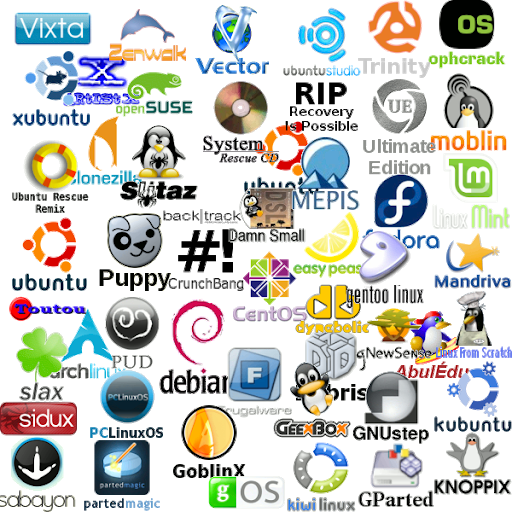
This diversity is a direct result of the open-source philosophy. Because the source code is free, anyone can take it, package it with their own selection of software, and create a new distribution. This freedom to adapt and innovate is what keeps Linux a dynamic and constantly evolving force in the world of computing.