Linux Fundamentals Explained
Introduction to Linux
What is Linux?
At its core, Linux is an operating system kernel. Think of the kernel as the engine of a car. It’s the central component that manages all the computer’s hardware resources, from the CPU to the memory and storage. It acts as a bridge, allowing software to communicate with the physical hardware.
Linux itself isn't a complete operating system you can install and use. It’s just the kernel. What we typically call “Linux” is actually the Linux kernel combined with a collection of software tools and a graphical user interface.
Crucially, Linux is open-source. This means its source code is freely available for anyone to view, modify, and distribute. This single fact has been the driving force behind its widespread adoption and continuous evolution.
A Brief History
The story of Linux begins in 1991 with a Finnish student named Linus Torvalds. He started developing his own operating system kernel as a personal project, inspired by a simpler version of the powerful UNIX operating system called MINIX.
Torvalds announced his project on the internet, sharing the source code and inviting others to contribute. The response was enthusiastic. Programmers from around the world began to help, adding features and fixing bugs.
At the same time, another important project was underway: the GNU Project, led by Richard Stallman. GNU's goal was to create a complete, free, and UNIX-compatible operating system. By the early 90s, they had developed almost all the necessary components, except for one critical piece: the kernel.
The combination of Torvalds' new kernel and the existing GNU software tools created a fully functional, free operating system. This is why some people refer to the system as GNU/Linux, to credit both projects for their essential contributions.
The World of Distributions
Because the Linux kernel is open-source, anyone can package it with their own selection of software to create a complete operating system. These packages are called distributions, or "distros."
There are hundreds of Linux distros, each tailored for a different purpose or user preference. Some are designed to be extremely user-friendly for desktop users, while others are stripped-down for running servers or specialized devices.
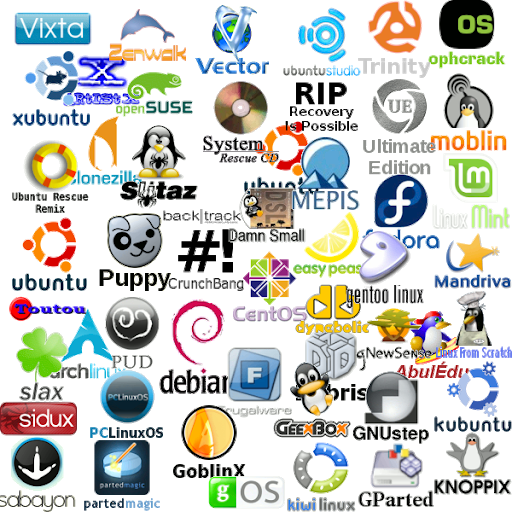
Choosing a distribution is the first step for any new Linux user. While the core kernel is the same, the user experience can vary greatly. Here are a few of the most popular ones:
| Distribution | Best For | Key Feature |
|---|---|---|
| Ubuntu | Beginners | Very user-friendly and has a large support community. |
| Fedora | Developers | Features the latest software and technologies. |
| Debian | Servers, Stability | Known for its rock-solid stability and rigorous testing. |
| Arch Linux | Experts | A do-it-yourself approach that gives you full control. |
Think of it like this: the Linux kernel is the engine, but a distribution is the entire car. You can get a simple family sedan (Ubuntu), a high-performance sports car (Fedora), or a rugged truck (Debian).
Why Linux Matters Today
You might not see it on most desktop computers, but Linux runs the world. Its stability, security, and flexibility have made it the backbone of modern computing.
Where is Linux used?
- The Internet: The vast majority of web servers that deliver websites to your browser run on Linux.
- Smartphones: Android, the world's most popular mobile operating system, is built on top of the Linux kernel.
- Cloud Computing: Major cloud providers like Amazon Web Services and Google Cloud rely heavily on Linux.
- Supercomputers: Nearly all of the world's fastest supercomputers use Linux to perform massive calculations.
- Embedded Devices: From smart TVs and routers to car infotainment systems, many everyday electronics are powered by Linux.
At its core, Linux is a kernel—the core of an operating system that manages hardware resources (CPU, memory, storage) and enables communication between software and hardware.
The open-source nature of Linux has fostered a global community of developers who collaborate to improve it. This collaborative model means that security vulnerabilities are often found and fixed quickly, and innovation happens at a rapid pace. Its influence is a powerful testament to the success of free and open-source software.
What is the primary function of the Linux kernel?
Who initiated the development of the Linux kernel in 1991?
This introduction just scratches the surface of the Linux world. By understanding its origins and the concept of distributions, you're now ready to explore how this powerful operating system works.