Linux Fundamentals
Introduction to Linux
What is Linux?
You've probably heard of Windows and macOS. Linux is another operating system, but it's a bit different. At its heart, Linux is just the core component, called a kernel. Think of a kernel as the engine of a car. It manages the computer's memory, processes, and all of its hardware and software. It's the essential bridge between the computer's physical parts and the applications you run.
At its core, Linux is a kernel—the core of an operating system that manages hardware resources (CPU, memory, storage) and enables communication between software and hardware.
But when people say they use "Linux," they usually mean a complete operating system built around that kernel. These are called Linux distributions (or "distros"), and they bundle the Linux kernel with other software, like user interfaces and applications, to create a full-featured experience. There are hundreds of distros, like Ubuntu, Fedora, and Debian, each with its own look and feel.
A Brief History
The story of Linux begins in 1991 with a Finnish student named Linus Torvalds. He was studying computer science and wanted to create a free operating system kernel that he could tinker with on his own PC. It started as a personal project, a hobby. He was inspired by MINIX, a smaller version of the powerful UNIX operating system widely used in academia and large corporations since the 1970s.
At the same time, another project called GNU, led by Richard Stallman, was building a complete set of free software tools—everything needed for an operating system except for the kernel. When Torvalds released his Linux kernel, it was the missing piece. The combination of the GNU tools and the Linux kernel created a complete, free, and open-source operating system.
The Power of Open Source
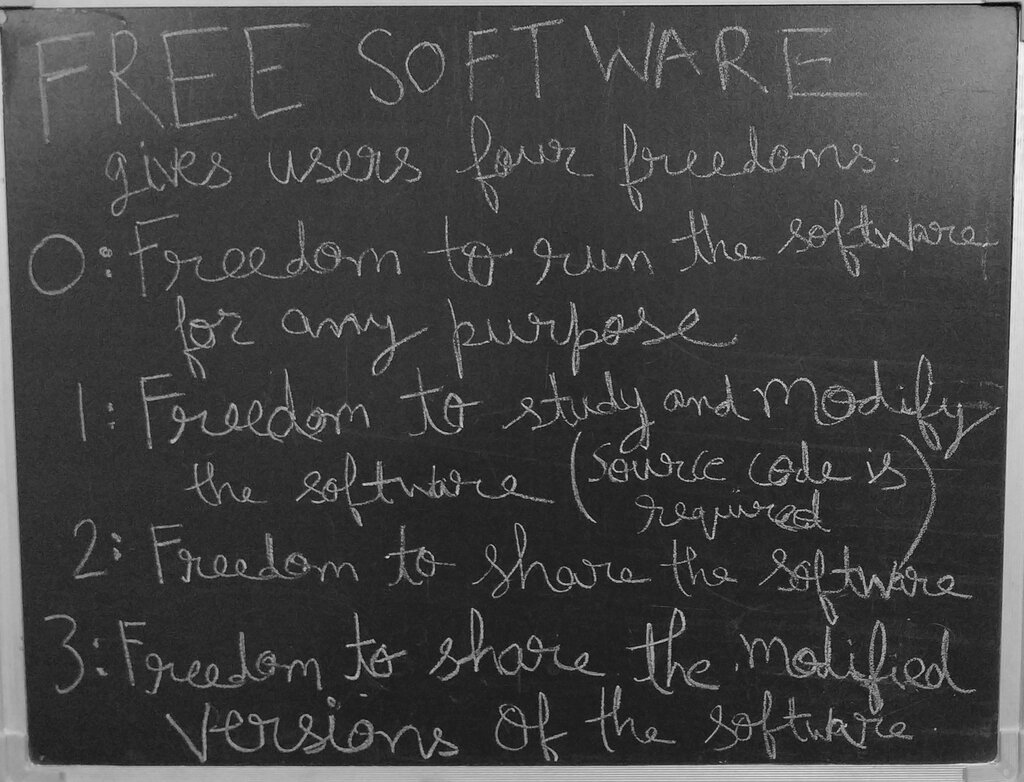
The most important concept behind Linux is its open-source philosophy. Unlike proprietary software like Windows or macOS, where the internal code is a secret, open-source software makes its source code available to everyone. Anyone can view, study, modify, and share the code for any purpose.
open source
adjective
A model of software development where the source code is made publicly and freely available, allowing anyone to view, use, modify, and distribute it.
This approach has several key benefits:
- Community Collaboration: Thousands of volunteer developers from around the world contribute to Linux, constantly improving it and adding new features. It's a massive team effort.
- Transparency and Security: With so many eyes on the code, security vulnerabilities are often found and fixed much faster than in closed-source software.
- Flexibility and Freedom: Users aren't locked into one company's vision. You can customize a Linux system to do exactly what you want, from running a web server to powering a robot.
- No Cost: Most Linux distributions and the software for them are free to download, install, and use.
Why Linux Matters
Even if you've never installed Linux on a desktop computer, you use it every day. Its stability, security, and flexibility have made it the backbone of the modern internet. The vast majority of web servers run on Linux. It powers the world's supercomputers, the stock exchanges, and the servers for companies like Google and Facebook.
It's also in your pocket. The Android operating system, which runs on billions of smartphones, is built on top of the Linux kernel. It's found in smart TVs, cars, home appliances, and countless other devices. Linux is everywhere because its open-source nature allows anyone to adapt it for a specific need.
From supercomputers to smartphones, Linux's adaptability makes it one of the most widespread operating systems in the world.
This foundation gives you a sense of what Linux is and why it's so significant. It's not just another operating system; it's a testament to the power of collaboration and open access to technology.
What is the primary role of the Linux kernel?
Who initiated the development of the Linux kernel as a personal project in 1991?