Linux Fundamentals
Introduction to Linux
More Than Just an Operating System
You've likely used Windows or macOS. Linux is another operating system, but with a key difference: it's open source. This means its underlying code is free for anyone to view, modify, and share. This single principle has made Linux one of the most important pieces of software in the world.
It all started in 1991 with a Finnish student named Linus Torvalds. He wanted to create a free version of the powerful UNIX operating system that he could run on his home computer. He posted his hobby project online, and programmers from around the world started contributing. This collaborative effort, powered by the internet, turned a small project into a global phenomenon.
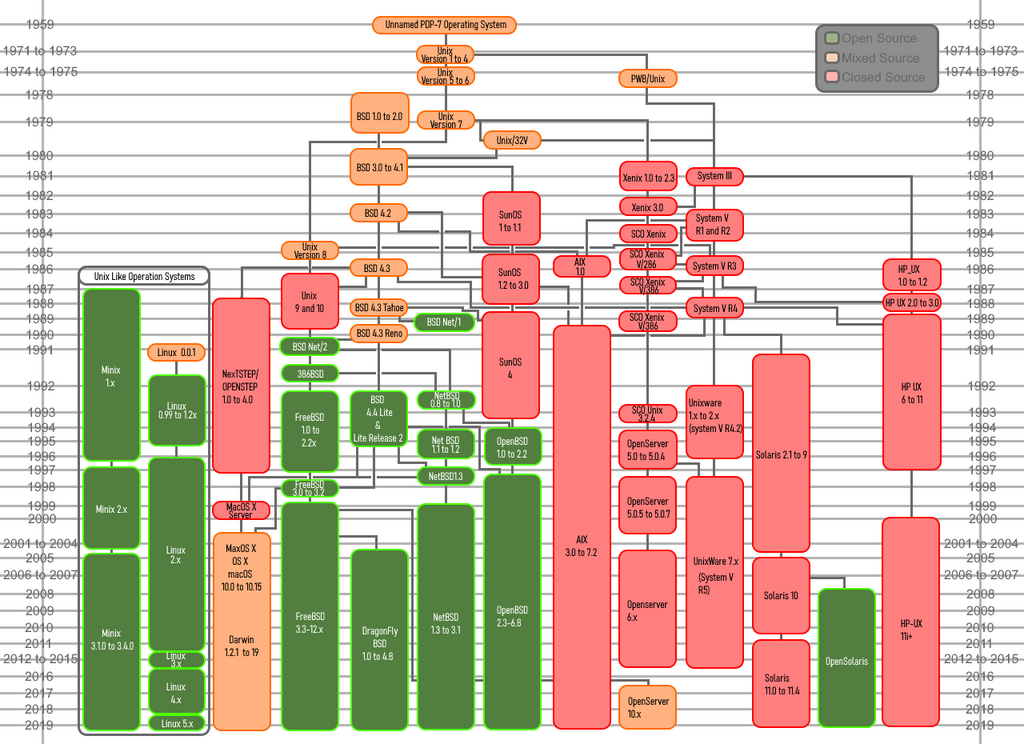
Torvalds created the kernel, which is the core of the operating system. But a kernel alone isn't very useful. It needs other software, like tools for managing files and a user interface. Much of this software already existed, thanks to the GNU Project, an earlier effort to create a free UNIX-like system. When the GNU tools were combined with the Linux kernel, a complete, free operating system was born.
The Structure of Linux
A modern Linux system is built in layers. At the very bottom is the computer's hardware, like the processor, memory, and storage drives. The Linux kernel sits directly on top of the hardware, managing it all.
At its core, Linux is a kernel—the core of an operating system that manages hardware resources (CPU, memory, storage) and enables communication between software and hardware.
On top of the kernel is the user interface. This can be a command-line interface (CLI), where you type commands into a program called the shell, or a graphical user interface (GUI) with windows, icons, and menus, similar to what you'd see on other operating systems. Finally, at the top layer are the applications you use every day, like web browsers, office suites, and games.
Because Linux is so flexible, many different versions, called distributions (or "distros"), exist. Each distribution bundles the Linux kernel with its own selection of software, desktop environments, and system tools. Some popular distros include Ubuntu, Fedora, and Debian. This variety means you can choose a version of Linux that's tailored for a specific purpose, whether for a desktop computer, a server, or a tiny embedded device.
Why Linux Matters
Today, Linux is everywhere. It runs the vast majority of the world's servers, including the ones that power major websites like Google and Facebook. It's the foundation of the Android operating system on your phone. It powers supercomputers, smart TVs, home routers, and countless other devices.
Its open-source nature, stability, and security have made it the backbone of modern computing. It provides a powerful, reliable, and free platform that anyone can use to build new technologies.
Now that you understand the what and the why, you're ready to start exploring the how.
Who initiated the development of the Linux kernel in 1991?
What is the primary characteristic of Linux being "open source"?