Linux Essentials for Beginners
Introduction to Linux
The Accidental Revolutionary
In 1991, a Finnish student named Linus Torvalds started a project. It wasn't meant to be groundbreaking. He just wanted to create a free operating system kernel that he could tinker with on his own computer. He was inspired by MINIX, a smaller version of the powerful UNIX operating system, but he wanted to build his own from scratch.
This project, which Torvalds famously called "just a hobby, won't be big and professional," evolved into the Linux we know today.
kernel
noun
The core component of an operating system. It manages the computer's hardware and allows other software to run.
Torvalds posted his work online and invited others to contribute. To his surprise, developers from around the world started helping. They added features, fixed bugs, and adapted his kernel to work on different types of hardware. This collaborative explosion was fueled by a powerful idea: open-source software.
The Power of Sharing
Most software you use, like Microsoft Windows or Adobe Photoshop, is proprietary. The company that makes it owns the code, and you can't view or modify it. It's like buying a cake but not being allowed to know the recipe.
Open-source software is the opposite. The source code, the 'recipe' for the program, is freely available. Anyone can view it, change it, and share their improvements with the community. This philosophy of collaboration is the heart of Linux.
At its core, Linux is a kernel—the core of an operating system that manages hardware resources (CPU, memory, storage) and enables communication between software and hardware.
While Linus Torvalds created the kernel, many of the essential tools that make the operating system usable (like the command-line interface and other utilities) came from the GNU Project, led by Richard Stallman. That's why many people refer to the operating system as GNU/Linux. It's a combination of the Linux kernel and the GNU toolset.
Many Flavors of Linux
Because Linux is open-source, anyone can package the kernel and a set of software into a complete operating system. These packages are called distributions, or "distros" for short. Think of it like this: the Linux kernel is an engine, but a distro is the entire car, complete with a body, seats, and a dashboard. There are hundreds of distros, each with a different look, feel, and purpose.
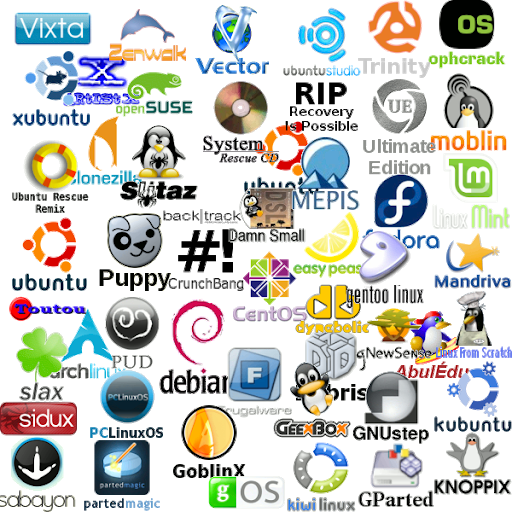
While the choices can seem overwhelming, most people start with one of a few popular, well-supported distributions. Here are three of the most common:
| Distribution | Best For | Key Feature |
|---|---|---|
| Ubuntu | Beginners & Desktops | Very user-friendly and easy to install. |
| Fedora | Developers | Features the latest, cutting-edge software. |
| Debian | Servers & Stability | Extremely stable and reliable. |
All of these distros are built on the same Linux kernel, so the core experience is similar. The main differences are in the software they include by default, how often they're updated, and the user interface. For now, it's just important to know that you have options.
Ready to check your understanding?
Who was the original creator of the Linux kernel?
What is the key difference between open-source software and proprietary software?
Understanding where Linux came from and the philosophy behind it is the first step. This foundation in its history and collaborative nature helps explain why it's such a powerful and flexible operating system.