LinkedIn Personal Branding Mastery
Understanding Personal Branding
What Is Personal Branding?
Your personal brand is essentially your professional reputation. It’s the story people tell about you based on your skills, your personality, and the value you bring. It’s not about creating a fake persona. It’s about consciously shaping how you present your authentic self to the world.
Think of it as the impression you leave behind. Whether you manage it or not, you have a personal brand. When colleagues or potential employers think of you, certain words and ideas come to mind. Personal branding is the process of making sure those words and ideas are accurate, positive, and aligned with your goals.
A personal brand is the acknowledged public perception of an individual, while personal branding is the deliberate process of creating that impression.
This process isn't just for entrepreneurs or online influencers. Everyone from a recent graduate to a seasoned executive can benefit from understanding and cultivating their professional identity. It’s about being intentional.
Why It Matters for Your Career
A strong personal brand can be a powerful career asset. In a crowded job market, it helps you stand out. Imagine a hiring manager looking at two candidates with similar resumes. One has a clear online presence that showcases their passion for the industry and highlights key projects. The other is a virtual ghost. The first candidate has a clear advantage because their brand builds trust and demonstrates their expertise before they even walk into an interview.
A well-defined brand clarifies your professional path, for yourself and for others. It acts as a compass, guiding your decisions and helping you communicate your worth effectively. This clarity attracts opportunities that are a good fit for you, whether it's a new job, a promotion, or a collaboration project.
The Building Blocks of Your Brand
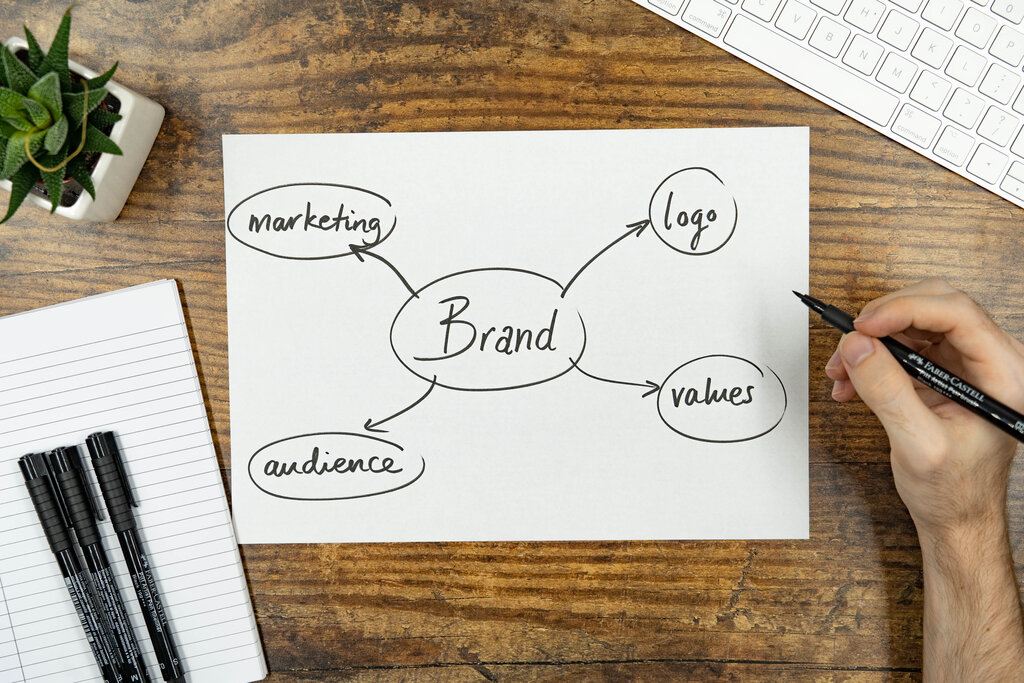
A strong brand is built on a solid foundation. It's not just about a professional headshot or a catchy bio. It's about substance. The core elements are your values, your skills, and your unique way of seeing the world.
Authenticity is key. Your personal brand should be a genuine reflection of who you are. Trying to be someone you're not is exhausting and unsustainable. People connect with realness.
Let's break down the two most critical pieces of this foundation: your unique value proposition and your core values.
Finding Your Unique Value
Your Unique Value Proposition (UVP) is a clear statement that explains the benefit you provide, for whom you do it, and how you do it uniquely well. It’s what makes you different from everyone else who has a similar job title or skill set.
To start identifying your UVP, ask yourself a few questions:
- What am I really good at? Think beyond job descriptions. What skills come naturally to you? What do colleagues ask for your help with?
- What problems do I solve? Consider the results of your work. Do you help teams become more efficient? Do you make complex topics easy to understand? Do you create beautiful designs?
- What makes my perspective unique? Your background, experiences, and even your hobbies shape how you approach your work. This unique combination is a strength.
Your UVP isn't a static slogan. It’s a concise summary of your professional essence. For example, instead of just saying "I'm a marketing manager," a UVP might sound like: "I help small tech startups connect with their first 1,000 customers by creating simple, data-driven content strategies."
Once you have a handle on your unique value, the next step is to ground it in what matters most to you.
Aligning Values with Goals
Your professional goals are what you want to achieve. Your personal values are the principles that guide your behavior. A powerful brand exists at the intersection of these two things. When your actions are aligned with your values, your career feels more meaningful, and your brand feels authentic.
Start by identifying 3-5 core values. These are your non-negotiables. Examples might include creativity, integrity, community, stability, or learning. Be honest with yourself about what truly drives you.
Then, look at your professional goals. Do they align with these values? For example, if one of your core values is "community," but your goal is a highly competitive, individualistic role, there might be a mismatch. You might find more fulfillment in a collaborative environment or a role that involves mentoring others.
Aligning values and goals ensures that as you build your personal brand, you're also building a career that brings you satisfaction and purpose. It's the difference between simply having a job and building a fulfilling professional life.
Ready to check your understanding?
What is the primary purpose of developing a personal brand?
Which of the following is the best example of a Unique Value Proposition (UVP)?
Understanding these foundations is the first step. By defining what you stand for and what you offer, you create a clear and compelling story for your professional journey.