Linear Dynamic Analysis of Structures
Introduction to Structural Dynamics
When Structures Move
Imagine a heavy book sitting on a sturdy table. The book's weight is a constant, predictable force. The table is designed to support it, and as long as nothing changes, it will sit there indefinitely. This is a static load. It’s a force that is applied slowly and doesn't change over time.
Now, imagine someone rhythmically pushing that same table. The force is no longer constant; it changes in magnitude and direction. This is a dynamic load. Dynamic loads vary with time. They include forces from wind gusts, waves crashing against a pier, footsteps on a staircase, or the ground shaking during an earthquake.
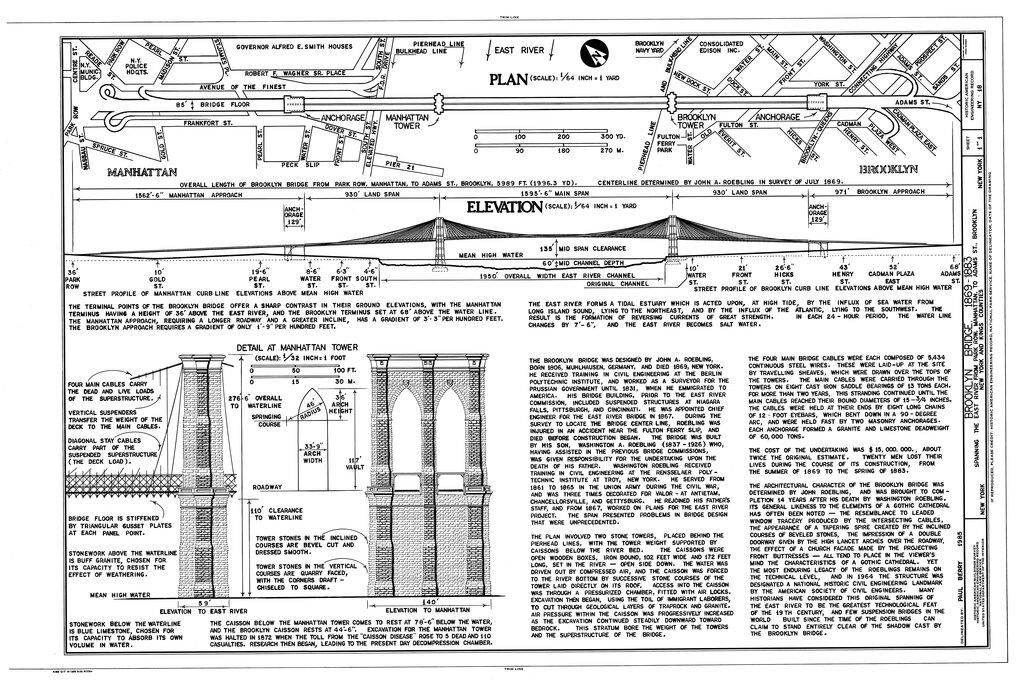
Structural engineering often starts with statics, analyzing forces in equilibrium. But in the real world, structures are rarely perfectly still. Dynamic analysis is crucial because it accounts for how structures behave when pushed and pulled by time-varying forces.
Why Motion Matters
A key reason dynamic analysis is so important is a phenomenon called resonance. Every structure has natural frequencies at which it prefers to vibrate. Think of pushing a child on a swing. If you push at just the right rhythm—the swing's natural frequency—you can make it go higher and higher with very little effort. If you push at the wrong rhythm, you won't accomplish much.
Structures work the same way. If a dynamic load, like persistent wind gusts or the vibrations from an earthquake, happens to match a structure's natural frequency, the vibrations can grow dramatically. The structure starts to sway or shake with increasing amplitude, leading to stresses far greater than the static load would suggest. This is what caused the famous collapse of the Tacoma Narrows Bridge in 1940. The steady wind created a force that matched the bridge's natural frequency, and the resulting vibrations tore it apart.
Dynamic analysis helps engineers predict how a structure will vibrate, allowing them to design buildings and bridges that can safely withstand forces like wind and earthquakes without reaching a state of resonance.
Modeling the Movement
Real-world structures are incredibly complex. To analyze their dynamic behavior, engineers simplify them into models. The simplest model is a single-degree-of-freedom (SDOF) system.
A "degree of freedom" is an independent direction of motion. An SDOF system can only move in one way. Imagine a single mass attached to a spring and a damper. The mass can only move up and down. This simple model helps engineers understand the fundamental principles of vibration, like natural frequency and damping (the dissipation of energy).
Of course, a skyscraper is much more complicated than a single mass on a spring. It can sway from side to side, back and forth, and even twist. To model this, engineers use multi-degree-of-freedom (MDOF) systems.
An MDOF system represents a structure as a series of connected masses, each with its own potential for movement. A simple two-story building could be modeled with two masses (representing the floors), allowing for two primary degrees of freedom—the horizontal movement of each floor. This provides a much more realistic picture of how the building will bend and vibrate.
By understanding these fundamental models, engineers can begin to analyze and predict the behavior of complex structures under the influence of dynamic forces, ensuring they remain safe and stable for everyone who uses them.
Which of the following is the best example of a dynamic load on a structure?
Resonance occurs when the frequency of a dynamic load matches a structure's natural frequency. What is the primary result of this phenomenon?