Linear Algebra Essentials
Vectors and Vector Operations
What Are Vectors?
Many quantities in the world can be described with a single number. The temperature outside is 25°C. A car is traveling at 100 kilometers per hour. These are called scalars. They have magnitude, or size, but that's it.
But what if you need more information? Knowing a car's speed isn't enough to know where it's going. You also need its direction. A quantity that has both magnitude and direction is called a vector. Velocity is a vector—it’s speed in a specific direction. So is force; a push has both a strength and a direction.
Vectors have both magnitude and direction. Scalars only have magnitude.
We can visualize vectors as arrows. The arrow's length represents the vector's magnitude, and the way it points shows its direction. In a coordinate system, a vector is often described by its components. For a 2D vector, that means how far it goes along the x-axis and how far it goes along the y-axis.
We write this vector using its components, typically in a column.
The top number is the x-component, and the bottom number is the y-component. A 3D vector would simply have a third component for the z-axis.
Combining Vectors
Just like numbers, vectors can be manipulated. The two most basic operations are addition and scalar multiplication.
Basic vector operations typically include addition, subtraction, and scalar multiplication—operations that maintain the fundamental properties of vectors while altering their magnitude or direction.
Adding two vectors is like taking two separate journeys and finding the direct path from the start of the first to the end of the second. Geometrically, this is called the "head-to-tail" method. You place the tail of the second vector at the head of the first. The sum, or resultant vector, is the arrow drawn from the tail of the first vector to the head of the second.
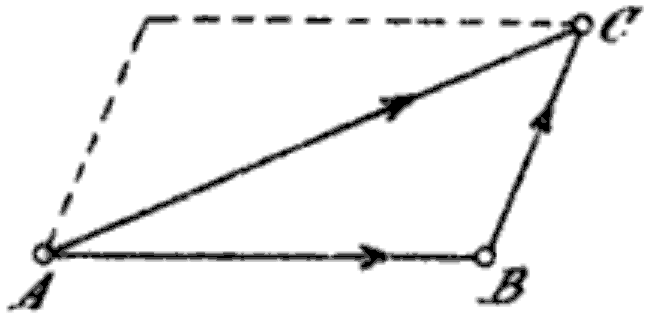
Mathematically, adding vectors is simple: you just add their corresponding components.
Scaling Vectors
Scalar multiplication involves multiplying a vector by a scalar (a regular number). This operation scales the vector's magnitude. Multiplying by 2 doubles the vector's length while keeping its direction the same. Multiplying by 0.5 halves its length. Multiplying by a negative number, like -1, reverses its direction completely.
The calculation is just as straightforward. You multiply each component of the vector by the scalar.
These two simple operations, addition and scalar multiplication, are the foundation for nearly everything else in linear algebra. Mastering them is the first step toward understanding more complex topics.