Linear Algebra and Multivariate Calculus Essentials
Vectors and Vector Spaces
Vectors: More Than Just Numbers
In math, a scalar is a single number, like 5, -10, or 3.14. It just has magnitude. But what if we want to describe something that has both magnitude and direction? For that, we need vectors.
A vector is often visualized as an arrow. The arrow's length represents its magnitude, and the way it points shows its direction. Think about giving directions. "Go three miles" is a scalar instruction. "Go three miles north" is a vector instruction. It gives you both a distance and a direction.
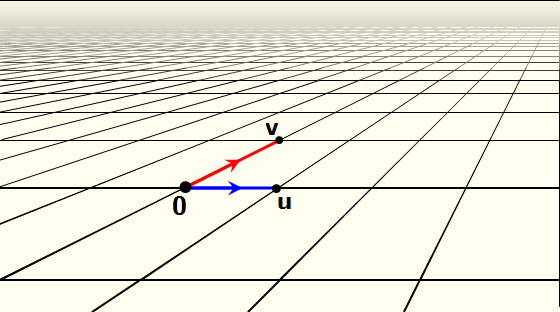
We write vectors as a list of numbers called components. Each component corresponds to a direction in a coordinate system. For example, in a 2D plane, a vector could be written as:
This means "go 2 units along the x-axis, and 3 units along the y-axis."
Basic Vector Operations
Vectors aren't static. We can perform operations with them, just like with regular numbers. The two most basic operations are addition and scalar multiplication.
Vector Addition: To add two vectors, you add their corresponding components. This is like following one set of directions, and then another.
Imagine two vectors, and :
Their sum, , is:
Scalar Multiplication: This involves multiplying a vector by a scalar (a single number). This scales the vector, changing its length. If the scalar is negative, it also reverses the vector's direction.
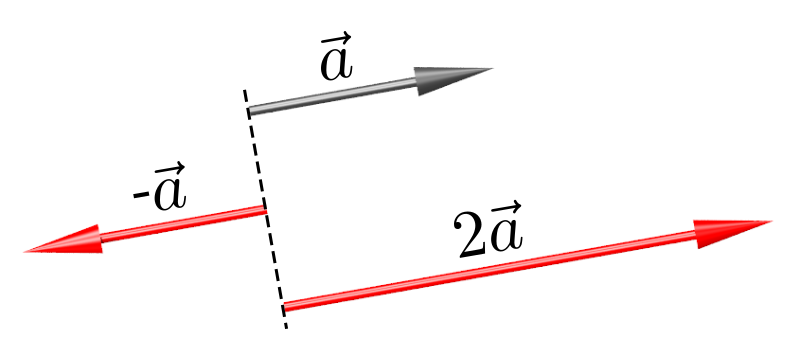
Let's take our vector and multiply it by the scalar 3:
The new vector points in the same direction but is three times longer.
The Rules of the Game: Vector Spaces
Vectors don't just exist in a void. They live in a structured environment called a vector space. A vector space is a collection of vectors where the rules of vector addition and scalar multiplication work in a consistent and predictable way. For a collection of vectors to be a vector space, it must satisfy a set of rules, or axioms.
| Axiom | Description |
|---|---|
| Closure under Addition | If and are in the space, is also in the space. |
| Closure under Scalar Multiplication | If is in the space, then is also in the space for any scalar . |
| Commutativity of Addition | |
| Associativity of Addition | |
| Additive Identity | There is a zero vector such that . |
| Additive Inverse | For every vector , there is a vector such that . |
| Distributivity | and . |
| Scalar Multiplication Identity |
These rules ensure that the system behaves logically. The set of all 2D vectors, often called , is a common example of a vector space.
Vectors and Vector Spaces serve as the cornerstone of linear algebra.
Building Blocks of a Space
Inside a vector space, some vectors are more fundamental than others. They act like the primary colors, which can be mixed to create any other color. In linear algebra, these are called basis vectors.
span
verb
The set of all possible vectors that can be created by linear combinations of a set of vectors.
A key concept here is linear independence. A set of vectors is linearly independent if no vector in the set can be written as a combination of the others. If one can be written as a combination of others, the set is linearly dependent.
Think of it this way: if you're giving directions, "go one block east" and "go one block north" are independent. But "go one block east," "go one block north," and "go one block northeast" are dependent, because the third instruction is just a combination of the first two.
This brings us to the idea of a basis.
A basis for a vector space is a sequence of vectors that are linearly independent and they span the space.
A basis is the smallest set of vectors you need to build every other vector in the space. For the 2D plane (), the most common basis is:
Any 2D vector can be described as a combination of these two. For example, the vector is just .
The number of vectors in a basis is called the dimension of the vector space. Since the basis for has two vectors, its dimension is 2. For , the dimension is 3, and so on. This neatly connects the abstract idea of a vector space back to our intuitive understanding of 1D, 2D, and 3D space.
Time to check your understanding of these foundational concepts.
What fundamental properties distinguish a vector from a scalar?
If a vector , what is the result of the scalar multiplication ?
Understanding vectors and the rules they follow in a vector space is the first major step in mastering linear algebra. These concepts are the foundation for everything that comes next.