Light Wavelengths Explained
Electromagnetic Spectrum
The Electromagnetic Spectrum
The light we see with our eyes is just a tiny slice of a much larger reality: the electromagnetic spectrum. This spectrum is the full range of light, or electromagnetic radiation, that exists in the universe. It includes everything from high-energy gamma rays to long, low-energy radio waves.
All this radiation travels in waves. Three key properties define these waves: wavelength, frequency, and energy. They're all connected.
- Wavelength is the distance from the peak of one wave to the peak of the next.
- Frequency is the number of waves that pass a point in a given amount of time.
- Energy is, well, the energy carried by the wave.
The relationship is simple: the shorter the wavelength, the higher the frequency and the higher the energy. Conversely, a long wavelength means low frequency and low energy.
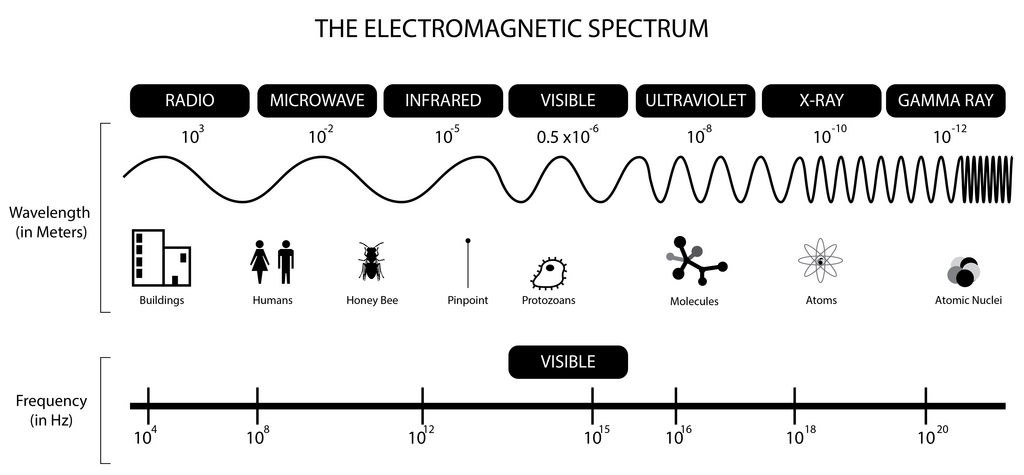
A Tour of the Spectrum
Let's travel across the spectrum, from the highest energy waves to the lowest.
Gamma rays have the shortest wavelengths and the most energy. They are generated by the most extreme events in the cosmos, like supernova explosions.
X-rays are next. They have enough energy to pass through soft tissues but are stopped by denser materials like bone, which is why they're useful in medicine.
Ultraviolet (UV) light follows. It's invisible to the human eye and carries more energy than visible light. This is the radiation that causes sunburns.
Visible light is the narrow band that our eyes can detect. We'll explore this part more closely in a moment.
Infrared (IR) light has longer wavelengths than visible light. We can't see it, but we can feel it as heat.
Microwaves are familiar from the kitchen, but they are also used for communication and radar.
Radio waves have the longest wavelengths and lowest energy. They carry signals for radio, television, and cell phones.
| Radiation Type | Wavelength | Frequency | Energy |
|---|---|---|---|
| Gamma Rays | Shortest | Highest | Highest |
| X-rays | Very Short | Very High | Very High |
| Ultraviolet | Short | High | High |
| Visible Light | Medium | Medium | Medium |
| Infrared | Long | Low | Low |
| Microwaves | Very Long | Very Low | Very Low |
| Radio Waves | Longest | Lowest | Lowest |
The Colors We See
The small sliver of the spectrum that we call visible light is itself a spectrum of colors. When you see a rainbow, you're seeing white light split into its constituent wavelengths. The colors always appear in the same order: red, orange, yellow, green, blue, indigo, and violet.
Each color corresponds to a different wavelength. Red light has the longest wavelength in the visible spectrum, and therefore the lowest frequency and energy. As you move from red toward violet, the wavelengths get shorter, and the energy gets higher. Violet light has the shortest wavelength of any color we can see.
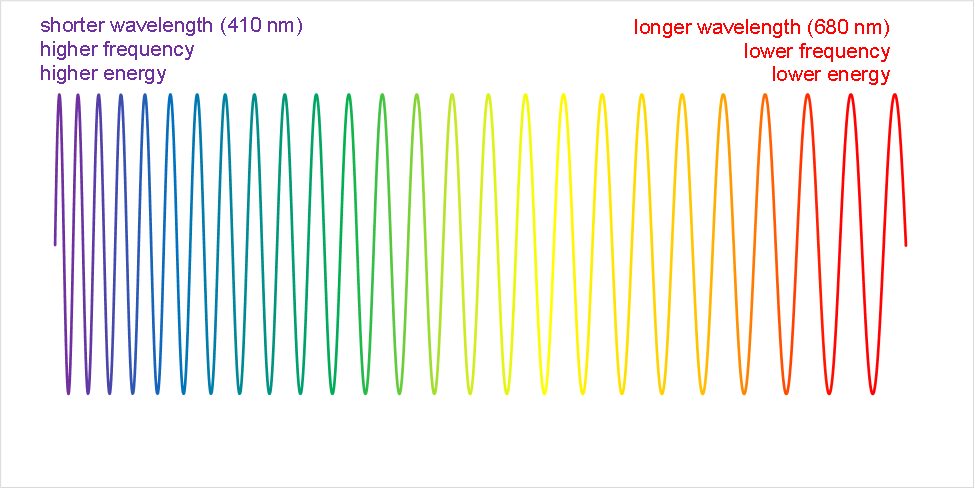
This fundamental knowledge about how wavelength relates to color and energy is the key to understanding how we study everything from distant stars to the molecules in our own bodies.
Which statement correctly describes the relationship between wavelength, frequency, and energy in an electromagnetic wave?
Which of the following lists electromagnetic waves in order from lowest energy to highest energy?