Life's Rules According to Cherie Carter-Scott
Rule 4: A Lesson Is Repeated Until Learned
The Recurring Lesson
Have you ever had that feeling of déjà vu? Not just seeing a familiar place, but finding yourself in the exact same kind of frustrating situation, again? Maybe it’s another job with a micromanaging boss, or a relationship that ends for the same reasons as the last one. This isn't just bad luck. It's Rule Four in action: a lesson is repeated until learned.
Think of life as a curriculum designed just for you. As we've covered, your purpose is to learn lessons, and there are no mistakes along the way. But some lessons are more stubborn than others. If you don't grasp the core principle the first time, life doesn't just move on. It presents the lesson again, perhaps in a different package, with different people, but with the same underlying theme.
The universe isn't punishing you. It's just a very persistent teacher.
The key is to understand that these recurring events are not random. They are signals. Each time a familiar challenge appears, it's an opportunity to finally understand what you missed before and make a different choice.
Recognizing the Pattern
The first step is to see the repetition for what it is. Patterns can be subtle. They hide in our reactions, our choices, and our assumptions. Do you always find yourself taking on too much work and burning out? Do you repeatedly lend money to friends who never pay you back? These are patterns.
To spot them, you have to become a detective in your own life. Look for the common threads. When a situation feels frustratingly familiar, pause and ask yourself:
- Where have I felt this exact feeling before?
- What role did I play in this situation, both now and in the past?
- What is the common outcome every time this happens?
Answering these questions honestly helps you move from blaming circumstances to recognizing your part in the cycle. The pattern isn't just something that happens to you; it's something you participate in.
This cycle continues until you consciously decide to break it. The trigger might be unavoidable, but your reaction is always a choice.
Breaking the Cycle and Growing
Once you recognize a pattern, you have the power to change it. Breaking a negative cycle isn't about a massive, sudden transformation. It starts with one small, different choice. Instead of your automatic reaction, you insert a pause. In that pause, you can choose a new action.
If your pattern is to immediately say "yes" to every request to avoid conflict, the new action might be saying, "Let me think about that and get back to you." If your pattern is to shut down during a disagreement, the new action could be to say, "I need a minute, but I want to resolve this."
Each time you choose a different response, you weaken the old pattern and build a new, more constructive one. This is how the lesson is finally learned.
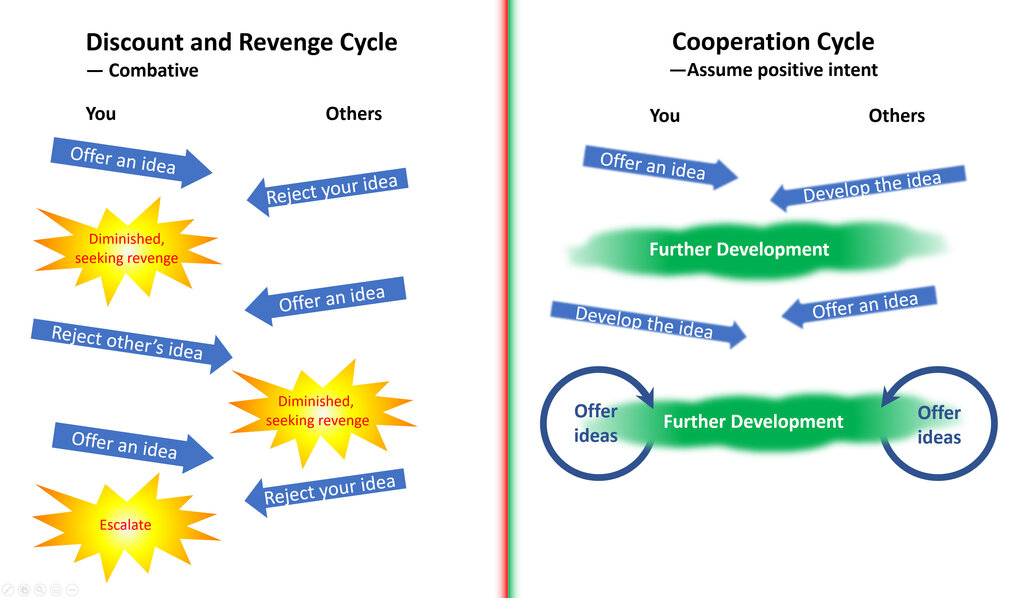
Embracing this process is the heart of personal growth. When you learn the lesson, the test goes away. You stop attracting the same difficult bosses because you've learned to set boundaries. You stop finding yourself in the same arguments because you've learned to communicate differently. The situation changes because you have changed.
Learning the lesson frees you. You're no longer stuck repeating the past. Instead, you're ready for the next part of the curriculum.
Time to check your understanding of this rule.
According to the principle that a lesson is repeated until learned, why do people often experience the same type of frustrating situation multiple times?
To break a recurring negative pattern, you must make a massive, sudden change in your personality and behavior.
Repeated lessons aren't failures. They are simply invitations to grow.