Life Cycle Assessment Explained
Introduction to Life Cycle Assessment
What's a Life Cycle Assessment?
Everything has a story. A simple cotton t-shirt, for example, doesn't just appear on a store shelf. It starts as a seed in the ground, gets harvested, spun into thread, woven into fabric, dyed, cut, sewn, and shipped around the world. After you're done with it, it gets thrown away, donated, or recycled. Each step uses resources and creates waste.
A Life Cycle Assessment, or LCA, is a method for telling that entire story from an environmental perspective. It systematically evaluates the environmental impacts of a product, service, or process from beginning to end—often called a "cradle-to-grave" analysis.
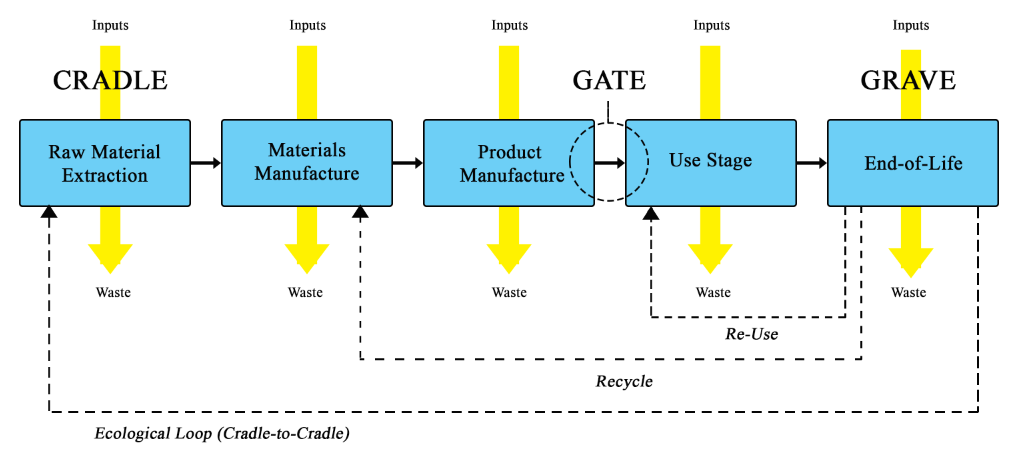
The goal is to get a complete picture. Instead of just focusing on one issue, like manufacturing emissions, an LCA adds everything up: the water used to grow the cotton, the pollution from the dyes, the fuel for transportation, and even the impact of the t-shirt decomposing in a landfill. This holistic view helps businesses, policymakers, and consumers make more informed decisions to reduce our collective environmental footprint.
A Brief History
The basic idea behind LCA isn't new. Companies have been tracking resources and energy for decades to cut costs. But the concept gained environmental focus in the late 1960s and early 1970s, spurred by growing concerns about resource depletion and pollution. The 1973 oil crisis, in particular, made many people realize that resources were finite, prompting studies into the energy required to make different products.
For a long time, there was no single, agreed-upon way to conduct these assessments. Different studies used different methods, making them hard to compare. That changed in the 1990s when the International Organization for Standardization (ISO) developed a set of standards for LCA (the ISO 14040 series). This created a formal, credible framework that is still used today.
The Four Phases of an LCA
The ISO standards break down a Life Cycle Assessment into four distinct, interconnected phases. Think of it as a roadmap for understanding a product's environmental journey.
The ISO 14040 series standards define LCA methodology through four distinct phases: Goal and Scope Definition, Life Cycle Inventory Analysis, Life Cycle Impact Assessment, and Interpretation.
1. Goal and Scope Definition This first phase is all about planning. Here, you define what you're studying and why. You answer key questions like:
- What product or process am I assessing?
- What is the purpose of this study? (e.g., to compare two products, to find ways to improve one product)
- What are the boundaries of the system? (e.g., are we including the transportation of employees to the factory?)
Setting a clear goal and scope is crucial because it ensures the assessment is focused and that its results will be relevant and easy to understand.
2. Life Cycle Inventory (LCI) This is the data-gathering phase. It involves meticulously cataloging all the inputs and outputs for every stage within the system boundaries. Inputs include things like raw materials, energy, and water. Outputs include the product itself, as well as emissions to the air, water, and soil, plus any waste produced.
An LCI is essentially a detailed environmental accounting sheet for a product's entire life.
3. Life Cycle Impact Assessment (LCIA) Once you have your long list of inputs and outputs from the LCI, this phase translates that data into potential environmental impacts. For example, the LCI might show that a process releases 50 kilograms of carbon dioxide and 5 kilograms of methane. The LCIA takes that information and calculates its contribution to a specific environmental problem, such as climate change (global warming potential).
Other common impact categories include ozone depletion, acidification (acid rain), and water pollution (eutrophication).
4. Interpretation In the final phase, you analyze the results from the first three phases to draw conclusions and make recommendations. This involves:
- Identifying the biggest sources of environmental impact—often called "hotspots."
- Checking the results for completeness and consistency.
- Presenting the findings clearly and making recommendations based on the study's original goal.
By following this structured process, LCA provides a powerful tool for promoting sustainability. It moves beyond simple claims and provides a data-driven basis for improving products and reducing our impact on the planet.
What is the primary purpose of a Life Cycle Assessment (LCA)?
An LCA that analyzes a product from resource extraction to disposal is often called a "-to-" analysis.