Life and Legacy of Jose Rizal
European Intellectual Evolution
From Manila to Madrid
When Jose Rizal arrived in Europe in 1882, he stepped into a world buzzing with ideas. The continent was still grappling with the aftershocks of the , a powerful intellectual movement that had championed reason, individual rights, and government by consent. For a young student from a Spanish colony, this atmosphere was electric. He had left the Philippines to complete his medical studies, but he would gain a far more profound education in the cafes and universities of Spain, France, and Germany.
In Spain, Rizal encountered a particularly potent brand of political thought: Spanish Liberalism. The country was in a state of flux, swinging between conservative and liberal governments. This instability created a unique space for colonial subjects like Rizal to voice their grievances. Liberals in Madrid were more inclined to listen to calls for reform, believing that a more just and modern empire would also be a stronger one. This environment gave Rizal and his compatriots an opening to advocate for change within the system.
The Scientific Gaze
Rizal's chosen specialisation in medicine was ophthalmology, the study of eye disorders. This discipline demands meticulous observation and precise diagnosis. A successful ophthalmologist must carefully examine a complex system, identify the root cause of the ailment, and prescribe a specific cure. Rizal began to apply this same clinical method to his analysis of Philippine society.
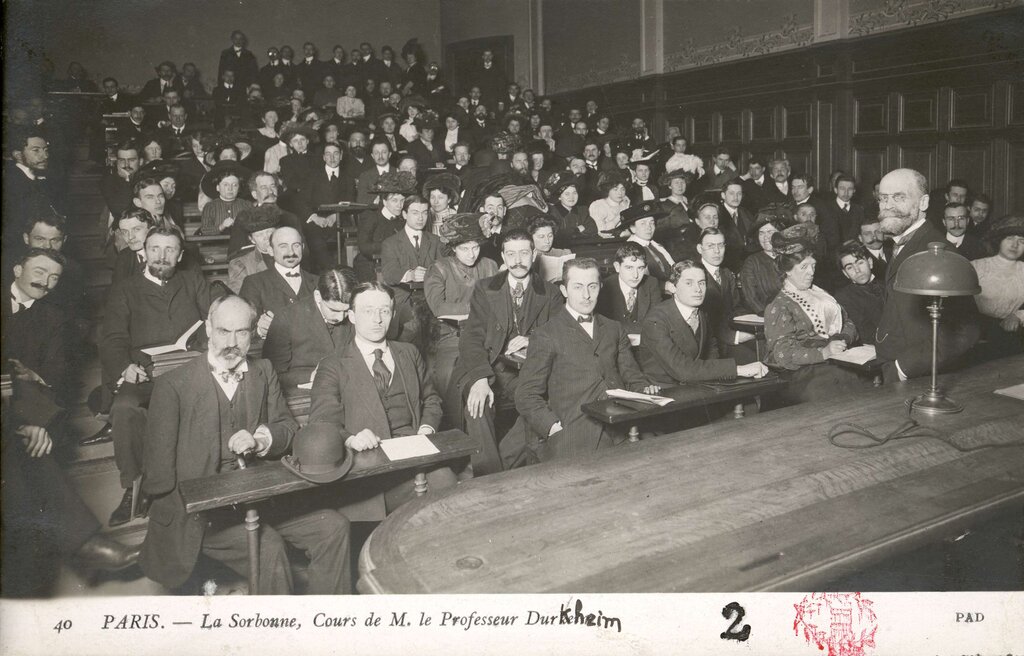
His time in France and Germany, particularly his training under renowned ophthalmologists like Louis de Wecker and Otto Becker, reinforced his commitment to scientific rigour. He saw how progress in medicine came from challenging old assumptions and relying on empirical evidence. He realised that the 'sickness' of the Philippines—the corruption, the inequality, the friar dominance—was not an incurable condition. It was a social malady with specific causes that could be diagnosed and, with the right intervention, treated.
The Pen as a Scalpel
In Madrid, Rizal became an active member of the , a group of Filipinos and sympathetic Spaniards. It was here that he began to hone his skills as a writer and political commentator. Through essays and speeches, he started to dissect the colonial system. His early writings were not calls for independence. Instead, he argued for assimilation—the idea that the Philippines should become a regular province of Spain, with Filipinos granted the same rights and representation as Spanish citizens.
However, as Rizal witnessed the indifference of many Spanish officials and the deep-seated prejudice against his people, his perspective began to shift. He saw that simply asking for equality was not enough. The colonial system itself was the disease. This realisation marked a crucial turning point. Rizal moved beyond advocating for simple assimilation and began to formulate a more profound critique of Spanish rule, one that would require fundamental, sweeping reform.
His European education, steeped in the logic of science and the ideals of liberalism, had given him the intellectual tools he needed. He was no longer just a student from a distant colony; he was becoming the chief diagnostician of his nation's ailments and a leader of the growing reformist movement.
Ready to test your knowledge?
Which major European intellectual movement, championing reason and individual rights, created the 'electric' atmosphere Jose Rizal encountered upon his arrival in 1882?
How did Rizal's chosen medical specialisation, ophthalmology, metaphorically shape his approach to analysing Philippine society?