Leveraged ETH Trading with Lux Algo
Introduction to Ethereum
Beyond Digital Money
You've likely heard of Bitcoin as digital money. Ethereum takes that idea a giant leap forward. Think of it less like a digital currency and more like a global, decentralized computer that anyone can use and no single person owns. While it has its own cryptocurrency, Ether (ETH), the real innovation is its programmable blockchain.
This programmability means developers can build and run applications directly on the Ethereum network. These aren't your typical apps stored on a server owned by Google or Apple. They run on a network of thousands of computers around the world, making them transparent, censorship-resistant, and always online. This opens up a world of possibilities, from new financial systems to decentralized social networks.
Smart Contracts and dApps
The magic behind Ethereum's programmability lies in something called a smart contract.
A smart contract is like a regular contract, but it's written in code and stored on the blockchain. It automatically executes the terms of the agreement when certain conditions are met, without needing a middleman like a lawyer or a bank.
Imagine a vending machine. You put in money (the condition), and the machine automatically gives you a snack (the outcome). A smart contract works similarly but for digital assets and services. For example, a smart contract could be created to automatically release funds to a freelance writer once they submit an article, or to manage the ownership of a digital piece of art.
These smart contracts are the building blocks for decentralized applications, or dApps.
Just as developers build mobile apps for iOS or Android, they build dApps using smart contracts on the Ethereum blockchain. These dApps form an ecosystem known as Decentralized Finance (DeFi), NFT marketplaces, and more.
Ether: The Fuel for the Network
To run applications and execute smart contracts on the Ethereum network, you need to pay for the computational resources used. This payment is made in Ethereum's native cryptocurrency, Ether (ETH).
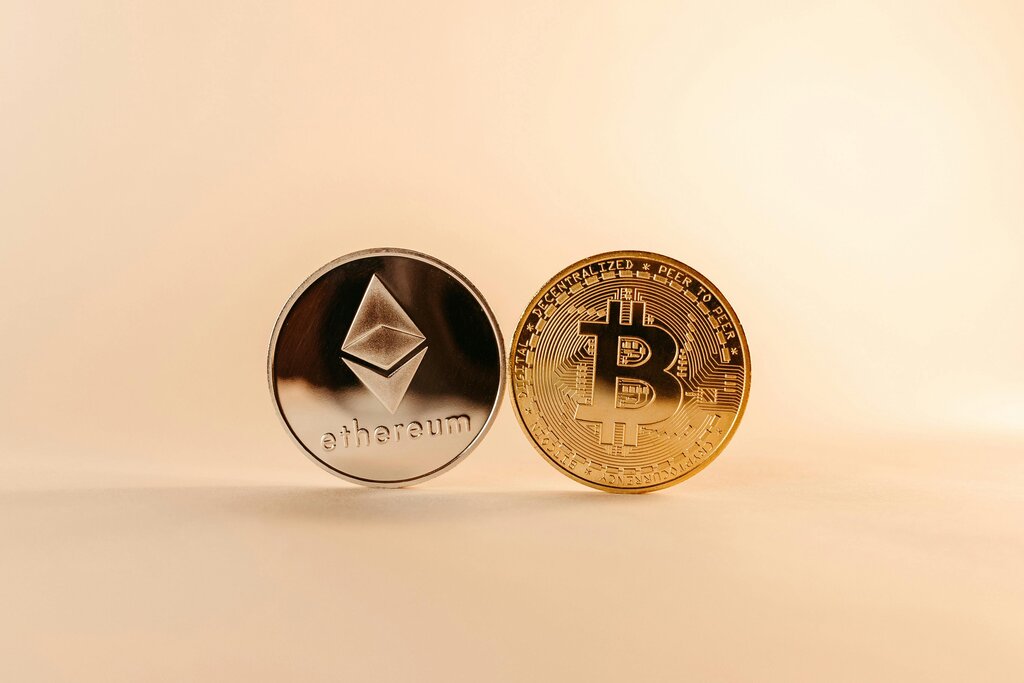
Think of it this way: if Ethereum is the global computer, Ether is the fuel that powers it. Every action, from a simple transaction to a complex operation within a dApp, requires a small amount of ETH as a fee. This fee is called "gas."
Gas
noun
The fee required to successfully conduct a transaction or execute a contract on the Ethereum blockchain. It is paid in Ether (ETH).
This gas fee incentivizes people (called miners or validators) to dedicate their computing power to verifying transactions and securing the network. Besides its role as network fuel, ETH is also a store of value and is traded on cryptocurrency exchanges, much like Bitcoin.
It's a common point of confusion, but Ethereum is the network, and Ether (ETH) is the cryptocurrency that powers it.
Now that you understand the basics of what Ethereum is and how it works, let's test your knowledge.
What is the primary innovation that distinguishes Ethereum from Bitcoin?
A smart contract is most analogous to a...
Understanding these core concepts is the first step to navigating the world of Ethereum. You now know what sets it apart from other cryptocurrencies and the foundational role it plays in the world of dApps and Web3.