Leukocyte Chemotaxis Explained
Introduction to Leukocyte Chemotaxis
Following the Chemical Trail
When you get a cut or an infection, your body launches a rapid and coordinated defense. But how do your immune cells know where to go? They don't have eyes or ears. Instead, they rely on a remarkable process called chemotaxis.
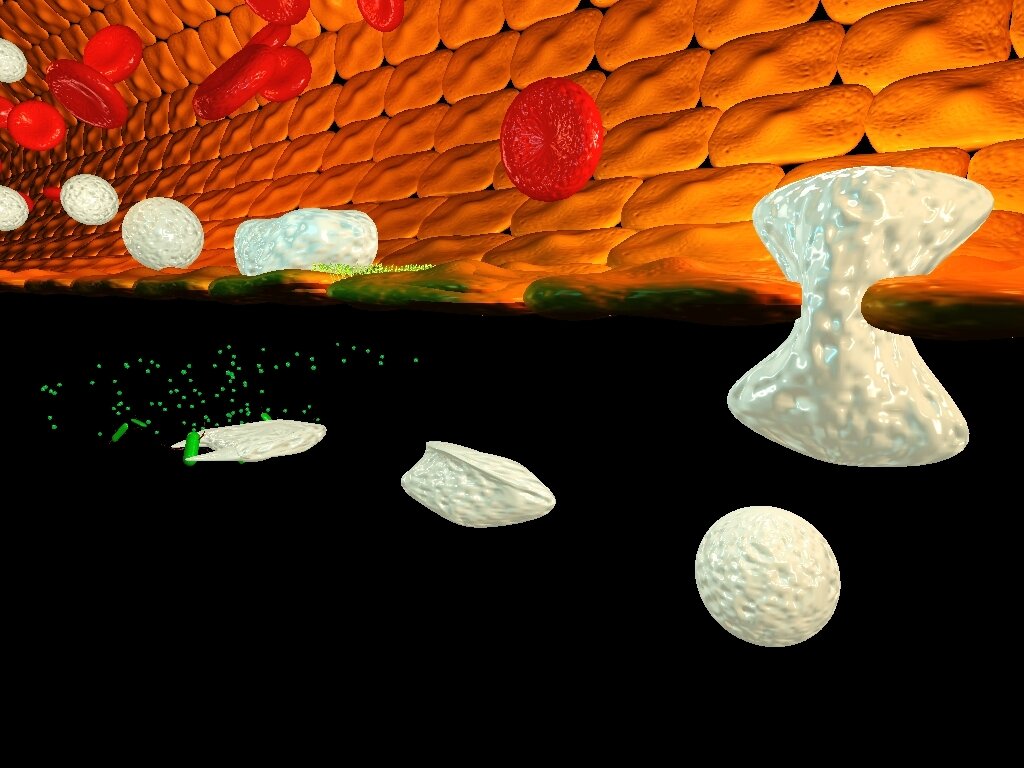
Leukocyte chemotaxis is the directed movement of white blood cells, or leukocytes, toward a chemical signal. Think of it like a cellular breadcrumb trail. The site of an injury or infection releases specific chemical attractants, and your leukocytes are exquisitely sensitive to them. They follow this scent, migrating from the bloodstream into the affected tissue to fight off invaders and begin the healing process.
chemotaxis
noun
The movement of a cell or organism in a direction corresponding to a gradient of increasing or decreasing concentration of a particular substance.
This process is fundamental to your immune response. Without it, your body's defenders would be wandering aimlessly, unable to find the bacteria, viruses, or damaged cells they need to eliminate. It's the 911 call for your immune system, guiding the first responders directly to the emergency.
The First Responders
Different types of leukocytes answer the call, each with a specialized role. While many leukocytes are capable of chemotaxis, a few key players are typically first on the scene.
| Leukocyte Type | Primary Role in Chemotaxis |
|---|---|
| Neutrophils | Often the very first to arrive. They are aggressive phagocytes that engulf and destroy bacteria. |
| Monocytes | Arrive a bit later. They mature into macrophages, which are larger phagocytes that clean up debris and pathogens. |
| Lymphocytes | Key players in the adaptive immune response (T-cells and B-cells). They migrate to lymph nodes and sites of infection to orchestrate a more specific attack. |
These cells don't just move randomly. They sense the concentration of chemical signals, known as chemoattractants. The concentration is highest at the source of the infection or injury and gets weaker farther away. This difference in concentration creates a chemical gradient.
Leukocytes move by crawling along this gradient, constantly sensing the direction where the chemical signal is strongest. This ensures they take the most direct path to their target.
The chemical signals themselves can come from several sources. They might be proteins released by invading bacteria, or they could be signals sent out by your own body's cells when they are damaged or under stress. This system ensures that a response is mounted whether the threat is foreign or domestic.
Now that you know the basics of how these cells are guided, let's test your knowledge.
What is the primary purpose of leukocyte chemotaxis?
Leukocytes are guided by a difference in the concentration of chemical signals. This is known as a chemical __________.
Understanding this guided migration is the first step. Next, we'll explore the specific signals and cellular machinery that make this incredible journey possible.