Lesch-Nyhan Syndrome and Allopurinol
Purine Metabolism
The Cell's Essential Blueprints
At the heart of every cell's operations are molecules called purines. You might know them by their more famous names: adenine (A) and guanine (G). These aren't just letters in the genetic code; they are fundamental components of DNA and RNA, the blueprints for all life.
But their job doesn't stop there. Purines are also crucial for energy. Adenosine triphosphate, or ATP, is the main energy currency of the cell. It powers everything from muscle contraction to nerve signals. The 'A' in ATP stands for adenosine, a molecule built around an adenine purine. Without a steady supply of purines, a cell simply couldn't function.
Building From Scratch
So, how do cells get these vital molecules? They have two options. The first is to build them from the ground up, a process called the de novo synthesis pathway. The term de novo is Latin for "from the beginning."
This pathway is like constructing a complex piece of furniture from raw materials. The cell takes simple molecules, including amino acids like glycine and aspartate, along with carbon dioxide and other small carbon donors, and assembles them through a multi-step process into a complete purine ring. It's an energy-intensive but reliable way to ensure the cell always has the purines it needs for growth and division.
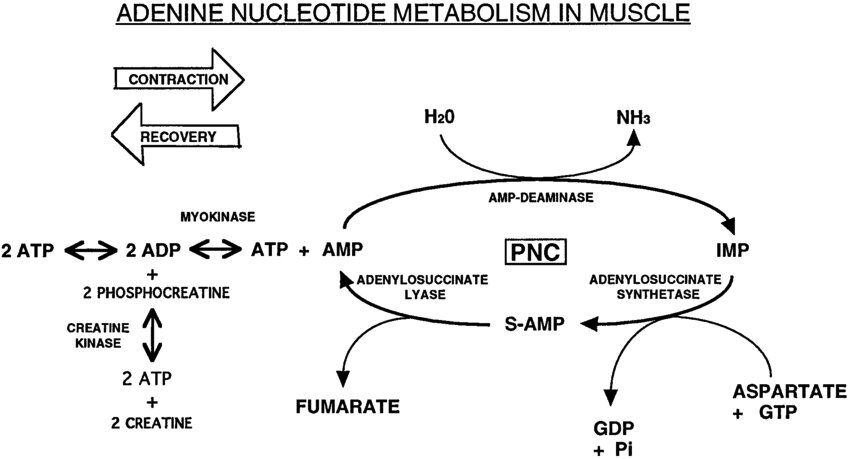
The final products, adenosine monophosphate (AMP) and guanosine monophosphate (GMP), can then be converted into the building blocks for DNA, RNA, or the energy molecule ATP.
The Recycling Program
Building purines from scratch takes a lot of energy. To be more efficient, cells have a second option: the salvage pathway. This is the cell's ultimate recycling program.
The salvage pathway reuses purine bases from the breakdown of old DNA and RNA, saving the cell significant energy.
When nucleic acids are broken down, they release their purine bases, adenine, guanine, and a related molecule called hypoxanthine. Instead of degrading them further, the salvage pathway captures these free bases and attaches them to a sugar-phosphate backbone, quickly converting them back into useful nucleotides. This process is much faster and more energy-efficient than starting from square one.
Both the de novo and salvage pathways are constantly active, working in balance to maintain the perfect supply of purines for the cell's needs. This dual-system approach ensures that the cell has the resources it needs for everything from storing genetic information to powering daily activities.
What are the two primary purine bases that are fundamental components of DNA and RNA?
Which pathway for obtaining purines is analogous to building furniture from raw lumber and materials?