Leopard Gecko Breeding Basics
Leopard Gecko Biology
Native Lands
Leopard geckos (Eublepharis macularius) are native to the dry, rocky grasslands and desert regions of South-Central Asia. Their natural range spans across Afghanistan, Pakistan, northwestern India, and parts of Iran.
They are ground-dwellers, not tree-climbers. In the wild, they spend most of their day seeking shelter from the heat in underground burrows or rocky crevices. This arid, rugged terrain has shaped all of their key physical and behavioral traits.
Physical Traits
As their name suggests, leopard geckos are known for the distinctive dark spots that cover the yellow or white skin of adults. Hatchlings look a bit different, starting with more of a striped or banded pattern that gradually breaks up into spots as they mature.
Unlike most other gecko species, leopard geckos have movable eyelids, which means they can blink and close their eyes. They also lack the sticky toe pads of climbing geckos, equipped instead with small claws suited to their terrestrial lifestyle.
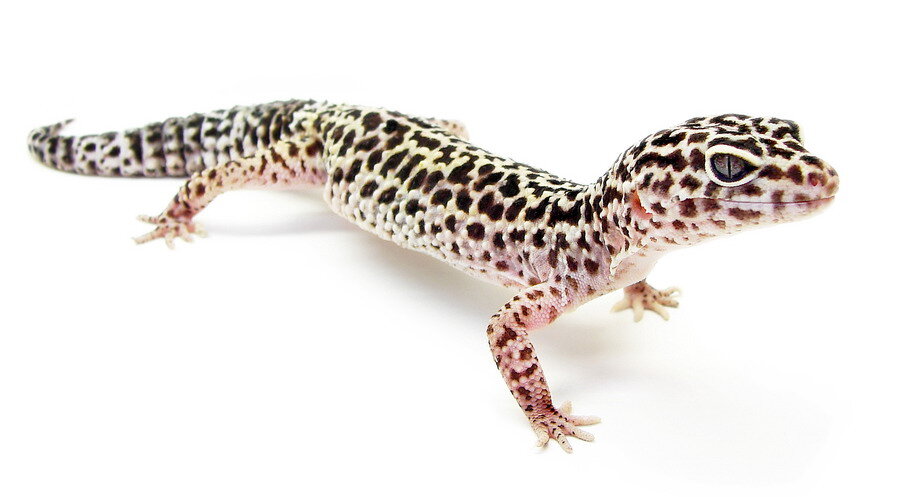
One of their most fascinating features is their thick, fleshy tail. It serves as a fat storage unit, acting as a reserve of energy and nutrients. A plump, thick tail is a good indicator of a healthy, well-fed gecko.
This tail is also a clever defense mechanism. When threatened by a predator, a leopard gecko can detach its tail in a process called caudal autotomy. The wiggling, detached tail distracts the predator, allowing the gecko to escape. A new tail will regrow over several weeks, though it often looks stumpier and different in pattern from the original.
Typical Behaviors
Leopard geckos are primarily crepuscular, meaning they are most active during the twilight hours of dawn and dusk. This allows them to hunt for insects and explore their surroundings while avoiding the extreme daytime heat and the deep cold of the night.
In captivity, they are known for being docile and relatively easy to handle. When they feel threatened, they might emit a small squeak or a short bark-like sound, especially as juveniles. Biting is rare and usually a last resort.
As ectotherms, or “cold-blooded” animals, leopard geckos rely on their environment to regulate their body temperature. They'll move between warmer and cooler areas to maintain their preferred internal temperature, a behavior known as thermoregulation.
Another key behavior is shedding. As they grow, leopard geckos periodically shed their skin in a process called ecdysis. You might notice their skin turning dull or whitish before a shed. They typically pull the old skin off in one piece and will often eat it, which helps them recover nutrients and avoid leaving a trail for predators.
Time to review what you've learned about these fascinating creatures.
Which of the following best describes the natural habitat of a leopard gecko?
What is the primary function of a leopard gecko's thick, fleshy tail?
Understanding a leopard gecko's biology is the first step toward providing proper care and successfully breeding them.