Leopard Gecko Breeding Basics
Leopard Gecko Biology
The Leopard Gecko Blueprint
Leopard geckos are small, ground-dwelling lizards, typically growing to about 7 to 10 inches (18-25 cm) long. Unlike many other geckos you might have seen, they don't have sticky toe pads for climbing walls. Instead, they have small claws, perfect for navigating the rocky terrain of their native homes.
One of their most noticeable features is their skin. It isn't smooth and slimy, but rather bumpy with a texture like a beaded bracelet. This unique scalation is a hallmark of the species. Another key trait is their eyelids. Most geckos can't blink, but leopard geckos can, which gives them an extra layer of protection against dust and debris.
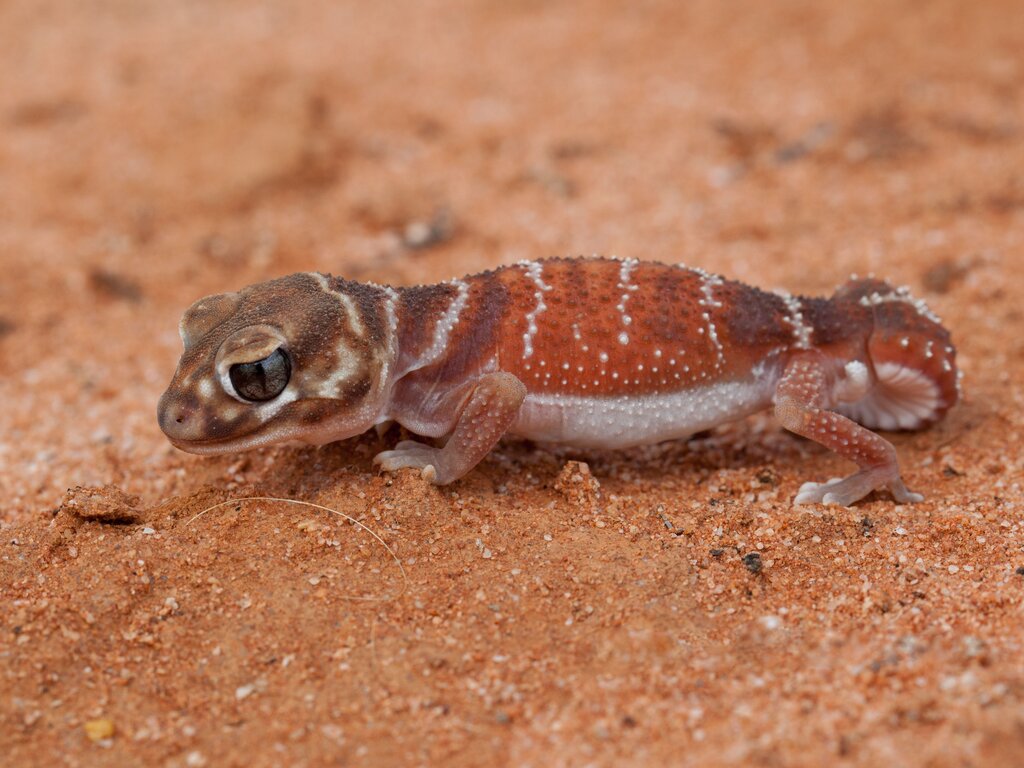
Perhaps the most fascinating part of their anatomy is the tail. It's not just for balance. A leopard gecko's thick, fleshy tail is a fat-storage organ, much like a camel's hump. A plump tail is a sign of a healthy, well-fed gecko. This fat reserve helps them survive when food is scarce.
The tail also serves as a clever defense mechanism. When threatened by a predator, a leopard gecko can detach its tail in a process called caudal autotomy. The dropped tail continues to wiggle, distracting the predator while the gecko makes a quick escape. While they can regrow the tail, the new one is often shorter, bulbous, and lacks the original's detailed pattern.
Home in the Arid Lands
Leopard geckos originate from the arid and semi-arid regions of South Asia. Their natural range spans across the rocky grasslands and dry deserts of Afghanistan, Pakistan, northwestern India, and parts of Iran. They are not jungle or tropical creatures.
These environments are harsh, with hot days and cool nights. To cope, leopard geckos are primarily crepuscular, meaning they are most active during the twilight hours of dawn and dusk. They spend the hottest parts of the day sheltered in underground burrows or rock crevices, where temperatures are more stable and humidity is higher. This behavior, known as thermoregulation, allows them to maintain their body temperature without overheating in the desert sun.
Natural Habitat: Rocky, dry grasslands and deserts of Afghanistan, Pakistan, India, and Iran.
A Hunter's Diet
In the wild, leopard geckos are insectivores. Their diet consists entirely of live insects and other invertebrates. They are opportunistic hunters, stalking and pouncing on anything that moves and is small enough to swallow. Common prey includes crickets, grasshoppers, spiders, beetles, and scorpions.
Their hunting strategy is patient and precise. They move slowly, relying on their keen senses of sight and smell to locate prey. Once a target is spotted, they approach with a slow, cat-like stalk, often twitching the tip of their tail just before striking with a quick lunge.
Proper nutrition is vital. Leopard geckos need a diet rich in protein and calcium. In the wild, they get calcium by eating insects that have themselves consumed plant matter. This mineral is crucial for bone development and, for females, egg production. Without it, they can develop serious health issues like Metabolic Bone Disease.
Life and Behavior
Leopard geckos are generally solitary animals. In the wild, they don't form social groups and typically live alone in their burrows. While they can be housed together in captivity, males are highly territorial and will fight, sometimes to the death. They communicate through a series of subtle body language cues, tail movements, and vocalizations like chirps or barks when startled or threatened.
Their life cycle begins with a soft-shelled egg. After hatching, a young gecko is a miniature version of the adult, fully independent and ready to hunt for small insects. As they grow, they shed their skin in a process called ecdysis. A gecko about to shed will appear dull and pale. They pull the old skin off in one piece and will often eat it, which serves two purposes: it recycles nutrients and removes any trace that could lead predators to their location.
Reproduction is tied to seasonal cycles. Following a winter cooling period, or brumation, males will seek out females for mating. After a successful mating, the female will lay a clutch of one or two eggs. She may lay several clutches throughout the breeding season, typically burying them in a moist, protected spot to keep them safe until they hatch.
Now, let's test your understanding of these fascinating lizards.
What is the primary function of a leopard gecko's thick, fleshy tail?
Leopard geckos are native to the rocky grasslands and dry deserts of South Asia. Which feature is an adaptation for this terrain?
Understanding a leopard gecko's biology is the first step in appreciating what makes these animals unique and how they thrive in their native environment.