Leo Tolstoy The Great Russian Author
Early Life and Influences
An Aristocratic Upbringing
Count Lev Nikolayevich Tolstoy, known to the world as Leo Tolstoy, was born into one of Russia's most prominent noble families in 1828. His world was Yasnaya Polyana, a sprawling family estate located south of Moscow. This was a world of privilege, tutors, and vast tracts of land worked by hundreds of serfs. His title of Count wasn't just a name; it defined his social standing and the expectations placed upon him from birth.
Despite this life of comfort, Tolstoy's early years were marked by loss. His mother died when he was two, and his father passed away when he was nine. Raised by relatives, he and his siblings grew up with a keen sense of their own aristocratic heritage, yet also with an emotional void that would shape his later explorations of family and love.
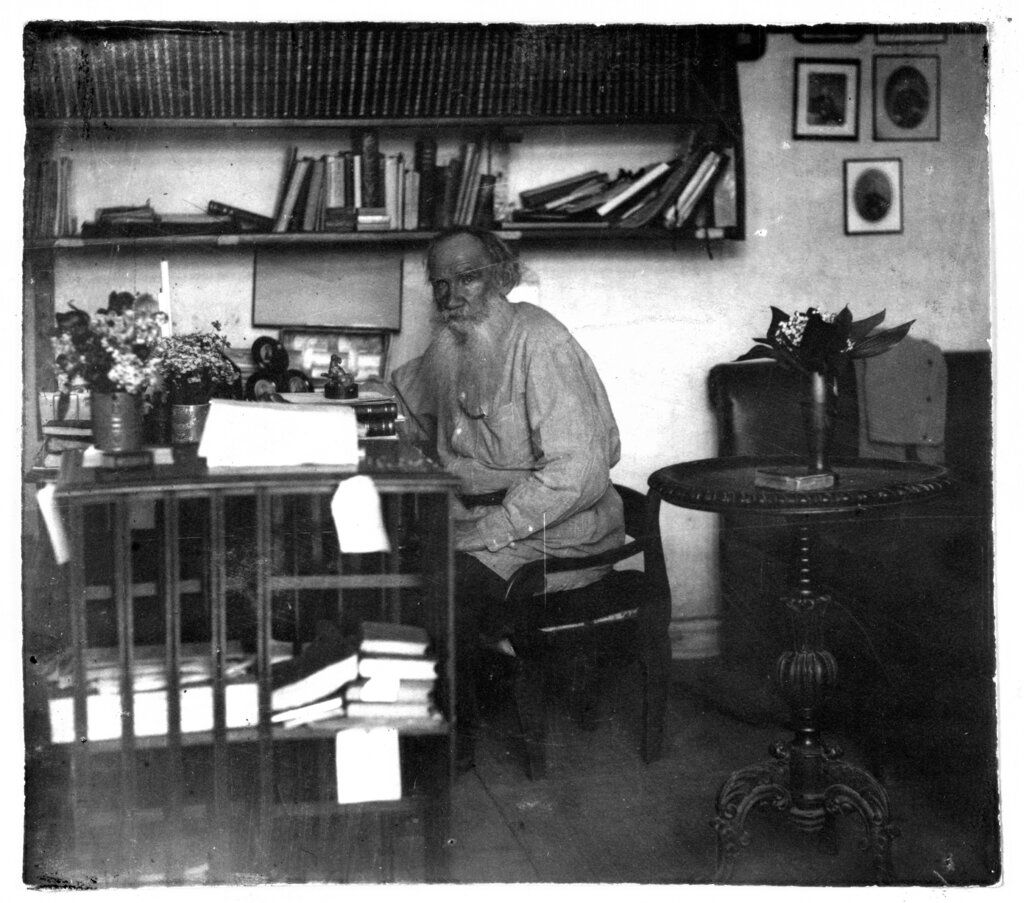
A Restless Education
Like many young noblemen, Tolstoy was expected to receive a fine education. He enrolled at Kazan University, first studying Oriental languages and later switching to law. However, he was a difficult student. He found the formal curriculum restrictive and uninspiring, often clashing with his professors.
He was more interested in moral philosophy and defining his own rules for life. After three years, he dropped out, convinced he could learn more on his own. He returned to Yasnaya Polyana with grand plans to manage the estate and improve the lives of the serfs. His efforts, however, were disorganized and largely unsuccessful, revealing a young man full of ideals but lacking the discipline to see them through. This period was marked by restlessness and a search for purpose.
The School of War
Seeking direction, Tolstoy followed his older brother into the army in 1851. His military service took him to the Caucasus, a mountainous region on the southern edge of the Russian Empire. Here, he experienced a life far removed from the salons of Moscow. He encountered raw nature, Cossack traditions, and the brutal reality of guerrilla warfare.
His most formative experience was serving as an artillery officer during the Crimean War (1853-1856). He fought in the Siege of Sevastopol, one of the bloodiest conflicts of the 19th century. The daily confrontation with death, the bravery of common soldiers, and the incompetence of the aristocratic officers shattered his romantic notions of war. He saw firsthand the immense gap between the patriotic rhetoric and the horrifying truth of combat.
This intense experience provided the raw material for his early writing and instilled in him a deep skepticism of authority and a profound empathy for the common person.
During this time, Tolstoy began to write seriously. His experiences in the war led to his Sevastopol Sketches, a series of stories that depicted the conflict with unflinching realism. These works launched his literary career, earning him recognition for their honest portrayal of a soldier's life.
He also began an autobiographical trilogy: Childhood (1852), Boyhood (1854), and Youth (1857). In these books, he explored the psychological development of a young man from a privileged background, examining themes of self-awareness, social alienation, and the search for meaning that mirrored his own life. These early works laid the foundation for the grand novels he would later create.
Let's check your understanding of Tolstoy's formative years.
What was the name of the family estate where Leo Tolstoy was born and raised?
True or False: Tolstoy's military service during the Crimean War reinforced his romantic and patriotic beliefs about warfare.
Tolstoy's early life, from his aristocratic roots to the battlefields of Crimea, provided the essential experiences that would fuel his life's work as a writer and thinker.