Lenz's Law Explained
Magnetic Fields
The Unseen Influence
You’ve probably played with magnets, feeling that strange, invisible push and pull. That unseen force operates within a region of influence called a magnetic field. It’s a force field created by magnetic materials and by moving electric charges, like the electric current flowing through a wire.
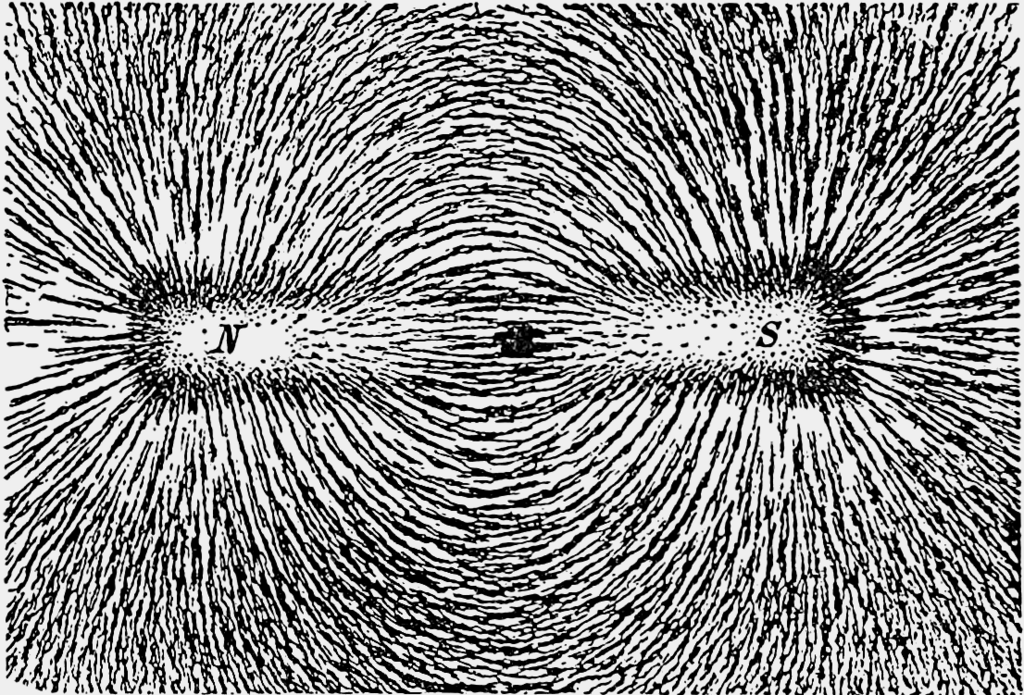
Think of a magnetic field like the heat from a campfire. The closer you are, the stronger you feel its effect. Move away, and the influence weakens. A magnetic field works similarly; it's strongest near its source and fades with distance. Every magnet, from a simple refrigerator magnet to the Earth itself, is surrounded by one of these fields.
Drawing the Invisible
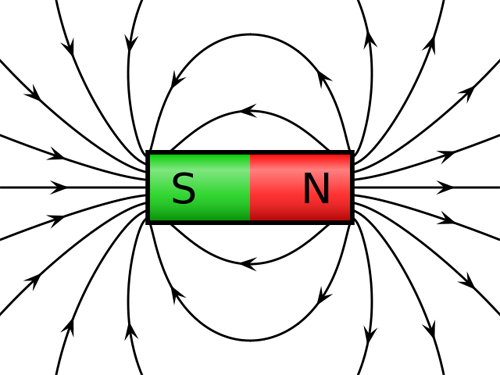
Since we can't see magnetic fields directly, we visualize them using magnetic field lines. These imaginary lines give us a map of the field's direction and strength.
A magnetic field line shows the direction the north pole of a compass would point if placed at that location.
These lines follow a few consistent rules:
- Direction: By convention, magnetic field lines always emerge from the North pole of a magnet and enter the South pole.
- Strength: The density of the lines indicates the field's strength. Where the lines are packed closely together, the magnetic field is strong. Where they are spread apart, the field is weak.
- No Crossing: Magnetic field lines can never cross each other. If they did, it would mean a compass at that point would have to point in two different directions at once, which is impossible.
- Closed Loops: The lines don't just stop at the poles. They form complete, continuous loops that pass through the inside of the magnet, running from the South pole back to the North pole to start again.
Sources of Magnetism
So where do these fields come from? There are two primary sources.
The most familiar source is a permanent magnet, like a bar magnet or a compass needle. The magnetic field is an intrinsic property of the material, created by the alignment of countless microscopic magnetic domains within it.
The second source is less obvious but fundamentally more important: moving electric charges. Any time an electric charge moves, it creates a magnetic field. An electric current is simply a flow of many charges, so any wire carrying a current is surrounded by a magnetic field.
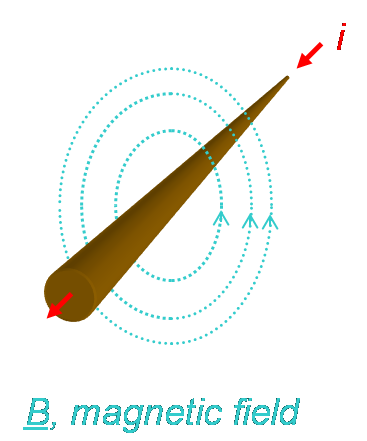
This connection is the heart of electromagnetism. A simple wire connected to a battery doesn't just carry electricity; it also becomes a magnet. The magnetic field it produces circles the wire. This principle is what allows us to create powerful electromagnets by coiling a wire and passing a current through it.
Now, let's check your understanding of these core concepts.
By convention, in which direction do magnetic field lines travel outside of a magnet?
What does the density of magnetic field lines in a diagram represent?