Legal Research and Writing Essentials
Introduction to Legal Systems
The Legal Pecking Order
Not all laws are created equal. Think of the legal system as a set of nested rules, where the rules made by a higher authority always win. This ranking is called the hierarchy of laws, and it prevents chaos by creating a clear order of command.
At the very top sits the U.S. Constitution. It is the supreme law of the land. No federal law, state law, or local rule can violate the principles laid out in the Constitution. If it does, the courts will strike it down. This principle is known as constitutional supremacy.
Below the Constitution are federal laws, also called statutes, which are passed by the U.S. Congress. Then come state constitutions, followed by state statutes. At the bottom are local laws, often called ordinances, created by city or county governments.
A city ordinance banning all public speeches would be unenforceable because it violates the First Amendment of the U.S. Constitution. The higher law always prevails.
Courts as Referees
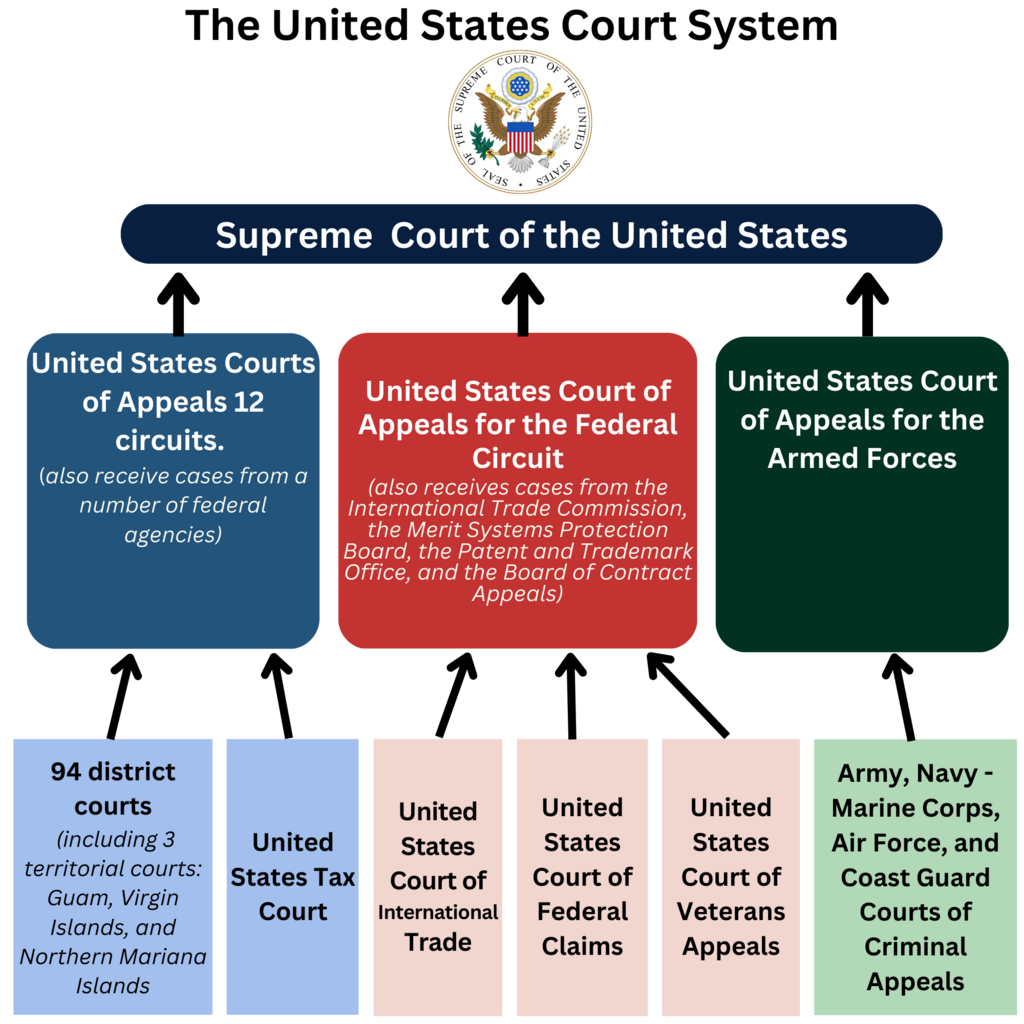
So, who decides when one law conflicts with another? That's the job of the courts. The U.S. has a dual court system, meaning there are both federal courts and state courts, each with its own jurisdiction or authority to hear certain types of cases.
Federal courts handle cases involving the U.S. Constitution, federal laws, or disputes between states. State courts handle the vast majority of legal disputes, from traffic violations to family law, based on state constitutions and state laws.
Both the federal and state systems generally have a three-tiered structure.
- Trial Courts: This is where cases start. Evidence is presented, witnesses testify, and a judge or jury makes an initial decision.
- Appellate Courts: If one party believes the trial court made a legal error, they can appeal. Appellate courts review the trial record to look for mistakes of law, they don't rehear the entire case.
- Supreme Courts: This is the final level of appeal. The U.S. Supreme Court is the highest court in the federal system, while each state has its own supreme court.
A case can sometimes move from a state supreme court to the U.S. Supreme Court, but only if it involves an issue of federal law or the U.S. Constitution.
Two Flavors of Law
Finally, it's important to understand where our laws come from. In the U.S., law is created in two primary ways: it's either written down by a legislature or it emerges from court decisions. These are known as statutory law and common law.
Statutory Law
noun
Laws formally written and enacted by a legislative body, such as the U.S. Congress or a state legislature.
Statutory law is what most people think of when they hear the word "law." It's the official rulebook, created to address specific needs or problems. For example, the Clean Air Act is a federal statute passed by Congress to control air pollution.
Common law, on the other hand, is judge-made law. It developed from the decisions judges have made in previous cases. When a judge decides a new case, they look at how similar cases were decided in the past. This practice of following past rulings is called stare decisis, which means "to stand by things decided."
This creates precedent: a legal principle established by a court decision that serves as a guide for future, similar cases. Precedent ensures that the law is stable, consistent, and predictable.
These two systems work together. Courts apply and interpret statutes, and in doing so, they create common law. If a legislature disagrees with how courts are interpreting a statute, it can pass a new law to clarify its intent. This constant dialogue between the legislative and judicial branches shapes the legal landscape.
What is considered the supreme law of the land in the United States, taking precedence over all other laws?
A city council passes an ordinance that conflicts with a statute passed by the state legislature. Which law will a court enforce?
Understanding this basic framework—the hierarchy of laws, the role of the courts, and the sources of our laws—is the first step in learning to think like a legal professional.