Legacy of the Freedom Trail
Dissent and Assembly
The Architecture of Dissent
In colonial Boston, where you met was as important as what you said. Political power wasn't just debated; it was performed in specific spaces that carried their own weight and meaning. Faneuil Hall was the city's official heart. Gifted to Boston by the wealthy merchant Peter Faneuil, it was the designated location for formal town meetings. Its stately brick walls housed the sanctioned discourse of urban politics, a place where property owners and the merchant elite set the town's agenda.
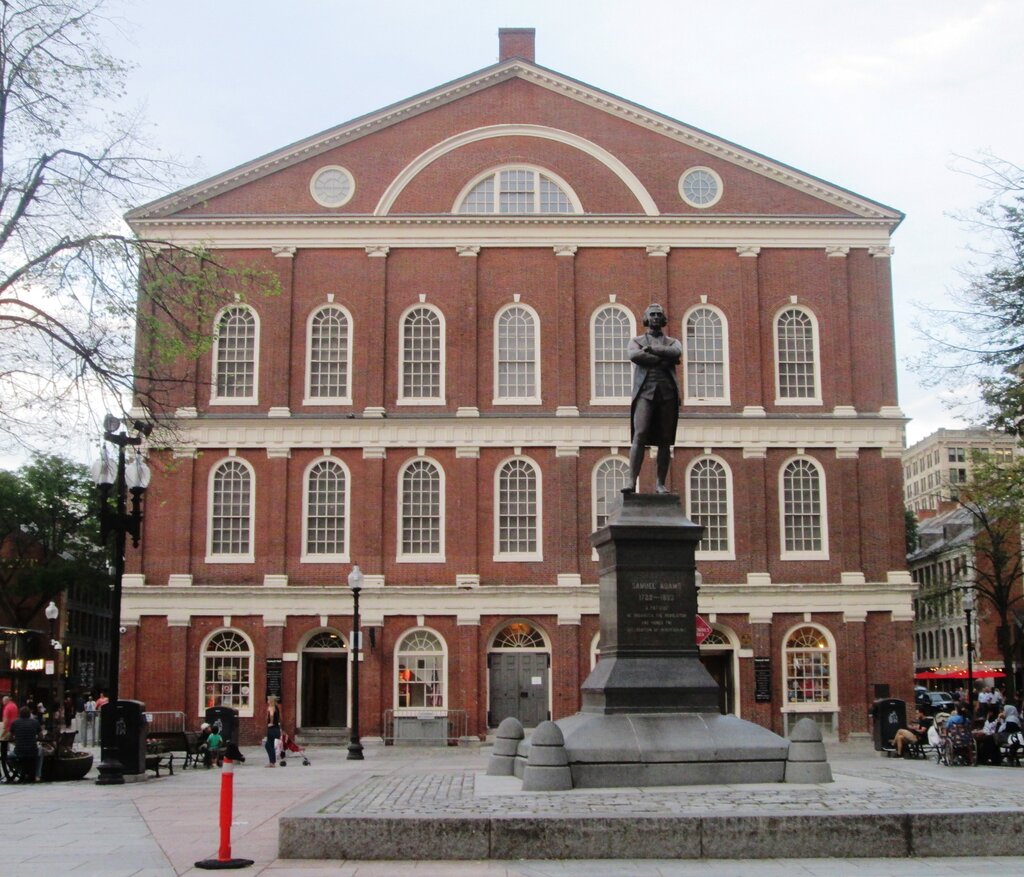
But Faneuil Hall had a critical limitation: its size. It could only hold about 1,300 people. This physical constraint became a political one. As tensions with Britain escalated, Boston's Patriot leaders needed to mobilize a much broader coalition. They needed to bring in the artisans, laborers, and sailors who made up what was called “The Body of the People.”
This group often had different priorities than the wealthy merchants. There was a constant social friction between the classes. To create a unified front against British policy, leaders like Samuel Adams had to bridge this gap. They needed a stage big enough for everyone, and Faneuil Hall wasn't it.
When the Hall Overflowed
When a crowd grew too large for Faneuil Hall, the meeting would adjourn and march a few blocks south to the Old South Meeting House. This was no mere change of venue; it was a powerful political act. As the largest building in all of colonial Boston, the Old South could hold over 5,000 people. Moving the assembly there transformed a formal town meeting into a mass mobilization.
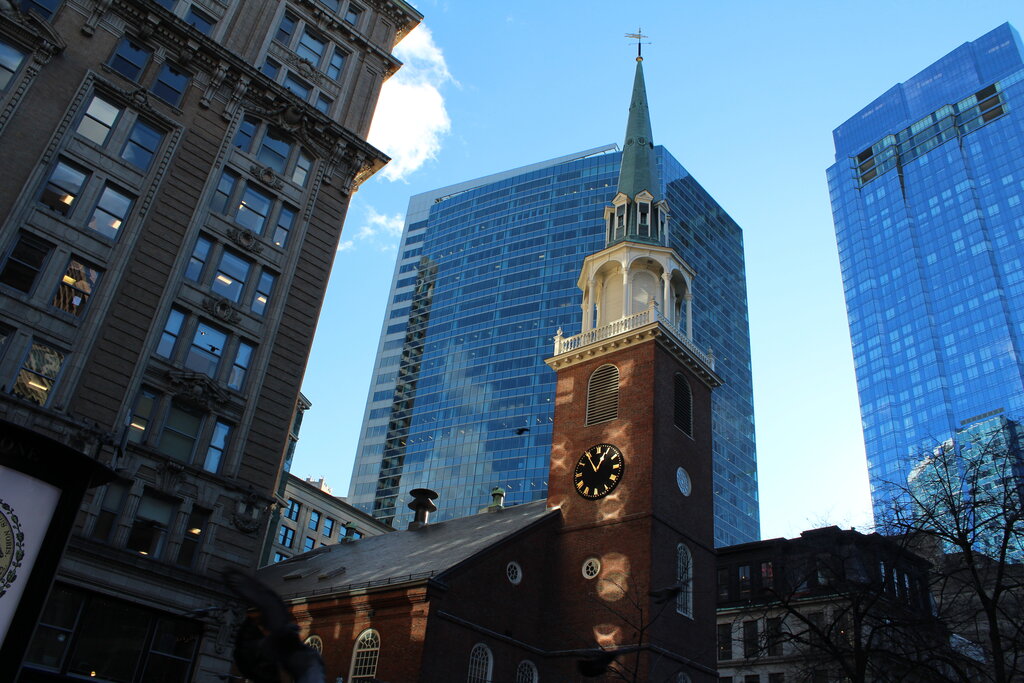
This shift signaled that an issue had transcended routine governance and become a matter for the entire populace. The sheer scale of the crowd inside the Old South created a sense of overwhelming unity and popular will. It was a physical manifestation of collective power, designed to pressure both British officials and wavering colonists.
Staging the Tea Protest
The crisis over the Tea Act in late 1773 provides a perfect case study in this spatial strategy. A series of massive meetings were called to prevent the ships Dartmouth, Eleanor, and Beaver from unloading their taxed tea. These were not official town meetings sanctioned by the Royal Governor. They were extra-legal assemblies, organized by the Sons of Liberty but attended by thousands from all social classes.
The location was the message. By gathering at the Old South, the Patriots demonstrated that the resistance was not a fringe movement but the overwhelming will of the people.
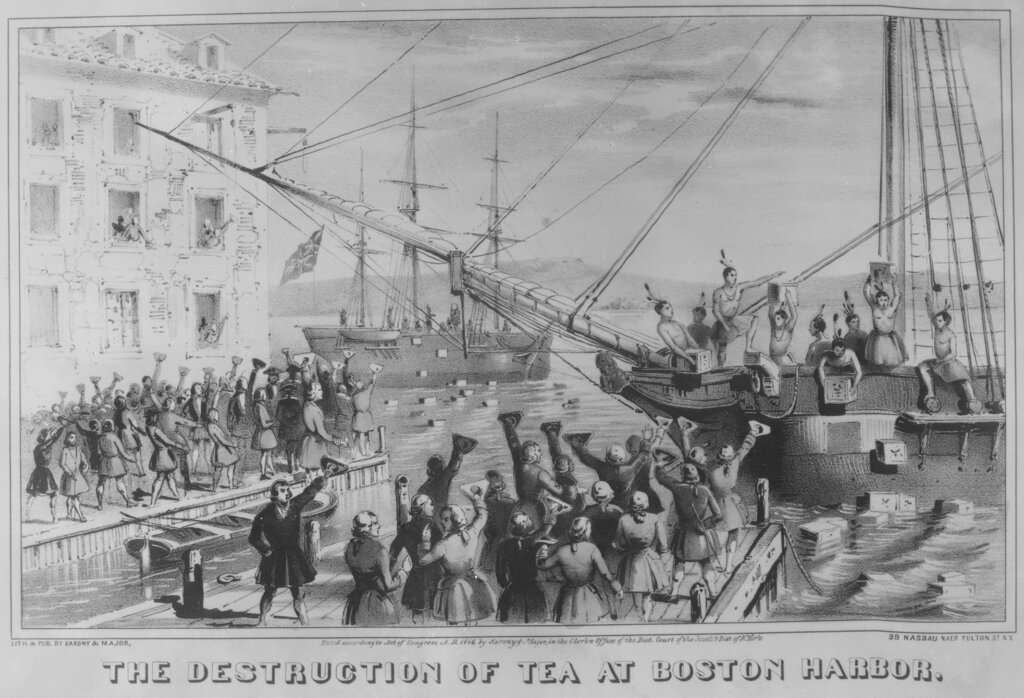
On December 16, 1773, the final meeting took place. Thousands packed the Old South and spilled into the streets, waiting for a final answer from Governor Thomas Hutchinson. When the message arrived that the governor would not permit the ships to leave without unloading the tea, Samuel Adams stood and declared, "This meeting can do nothing more to save the country."
This was the pre-arranged signal. A roar went up from the crowd, and a group of men, loosely disguised as Mohawk Indians, headed for Griffin's Wharf. The logistics of the protest had been planned, and its final, dramatic act was launched not from a back-alley tavern, but from the largest public hall in the city, filled with witnesses who were now participants.
The strategic use of Faneuil Hall and the Old South Meeting House shows how physical space became a tool of revolution. By carefully choosing their venues, Patriot leaders managed class tensions, demonstrated popular support, and turned dissent into decisive action.
What was the primary limitation of Faneuil Hall that made it unsuitable for the growing Patriot movement?
Moving a meeting from Faneuil Hall to the Old South Meeting House was a symbolic act that signified a shift from a formal town meeting to a mass mobilization.