Legacy and Literature of José Martí
Modernismo and Poetic Innovation
Forging an American Voice
In the late 19th century, Latin American literature was still looking over its shoulder at Spain. The rules of poetry were largely dictated by the Spanish Royal Academy, a deeply traditional institution. But a change was coming. Writers and thinkers across the Americas felt a growing need for a literary voice that was truly their own, one that reflected their unique landscapes, struggles, and identities.
Enter José Martí. While often remembered as a revolutionary and a hero of Cuban independence, Martí was also a literary firebrand. He stood at the crossroads of two major movements: the fading, emotional world of Romanticism and the birth of a vibrant, innovative new style called Modernismo. Martí didn't just participate in this shift; he helped ignite it, breaking from rigid Spanish forms to create something new.
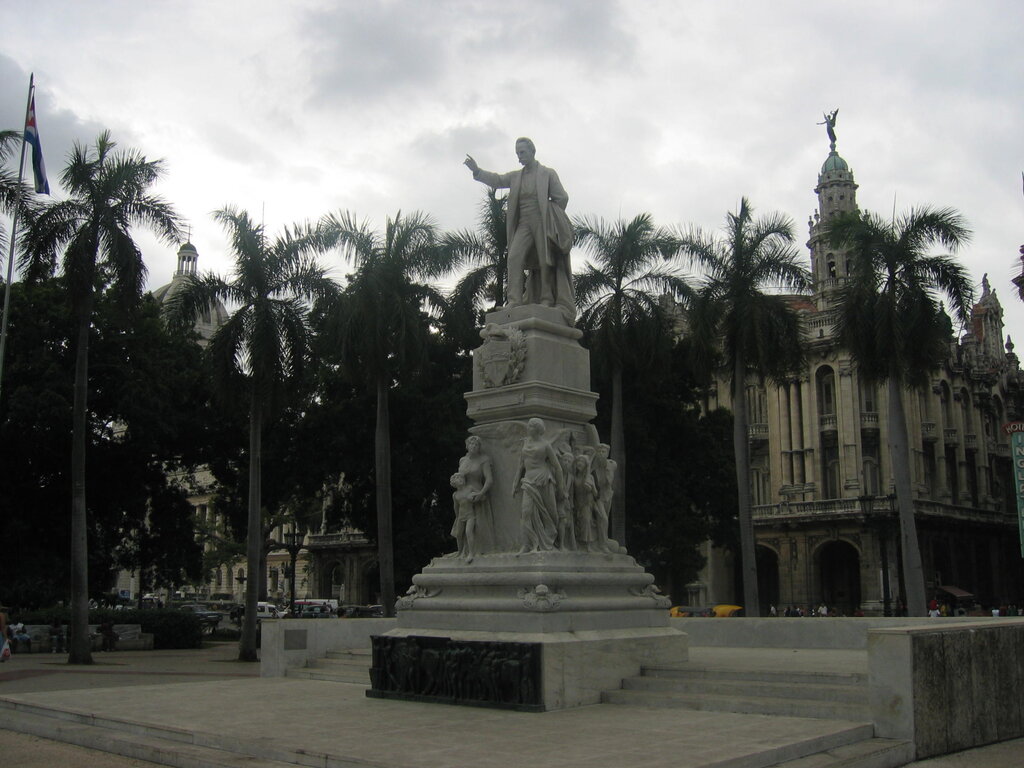
His work served as a declaration of cultural independence. By challenging the linguistic authority of Spain, Martí argued that Latin America should be the master of its own language and art, just as it should be the master of its own political destiny. This wasn't just about writing pretty poems; it was about forging an identity.
New Rhythms, New Rules
One of Martí's earliest and most significant breaks with tradition came in his 1882 collection, . Written for his son while in exile, the book is a marvel of rhythmic innovation. Instead of sticking to the well-worn meters of Spanish verse, Martí experimented with shorter lines and unusual cadences, creating a musicality that felt fresh and dynamic. The poems are light, agile, and deeply personal, capturing the tender but fierce love of a father for his child.
This shift was radical. It was like a musician trained in classical composition suddenly writing a suite of nimble, heartfelt folk songs. The emotion felt more direct, the structure more organic.
He pushed the boundaries even further with ('Free Verses'). In this collection, Martí moved closer to what we now call free verse, loosening the constraints of rhyme and meter almost completely. His goal was an aesthetic of sincerity. He believed that genuine emotion shouldn't be forced into a preconceived structure. Instead, the form of the poem should arise naturally from the feeling being expressed. This was a direct challenge to the idea that poetry had to follow strict, formal rules to be considered beautiful or valid.
Painting with Words
Martí's innovations weren't just structural. He also revolutionized the use of imagery in Spanish-language poetry. Two key techniques he employed were and .
He filled his poems with vibrant colors, not just to paint a picture, but to evoke a feeling or an idea. A flash of red could signal revolution; a deep blue might suggest a profound sadness. At the same time, he blended the senses, describing a sound as having a color or a color having a texture. This wasn't mere decoration. It was a way to make the reader experience the world with a new intensity, to see and feel the Americas in a way that the old Spanish forms could never quite capture.
Ultimately, Martí’s poetic innovations were inseparable from his political and cultural vision. He gave Latin American writers new tools and, more importantly, the permission to use them. He showed that their own experiences and their own continent were worthy of a new, powerful, and unapologetically American literary language.
Let's review what made Martí's poetry so revolutionary.
Before the rise of Modernismo, what was the primary external influence on the rules and forms of Latin American poetry?
José Martí's literary work served as a bridge between the fading emotionalism of Romanticism and the birth of a new, innovative movement called __________.
Through these bold experiments in form and imagery, José Martí not only became a foundational figure of Modernismo but also helped shape the very idea of a modern Latin American identity.