Legacies of the Nile Administrative and Cultural Evolution
State Unification Dynamics
The Iconography of Unification
The transition from scattered, competing chiefdoms in Predynastic Egypt to a single, unified state was not an overnight event. It was a complex process of conquest, diplomacy, and political messaging. Perhaps the most crucial surviving document from this era is not a text, but an object: the Narmer Palette.
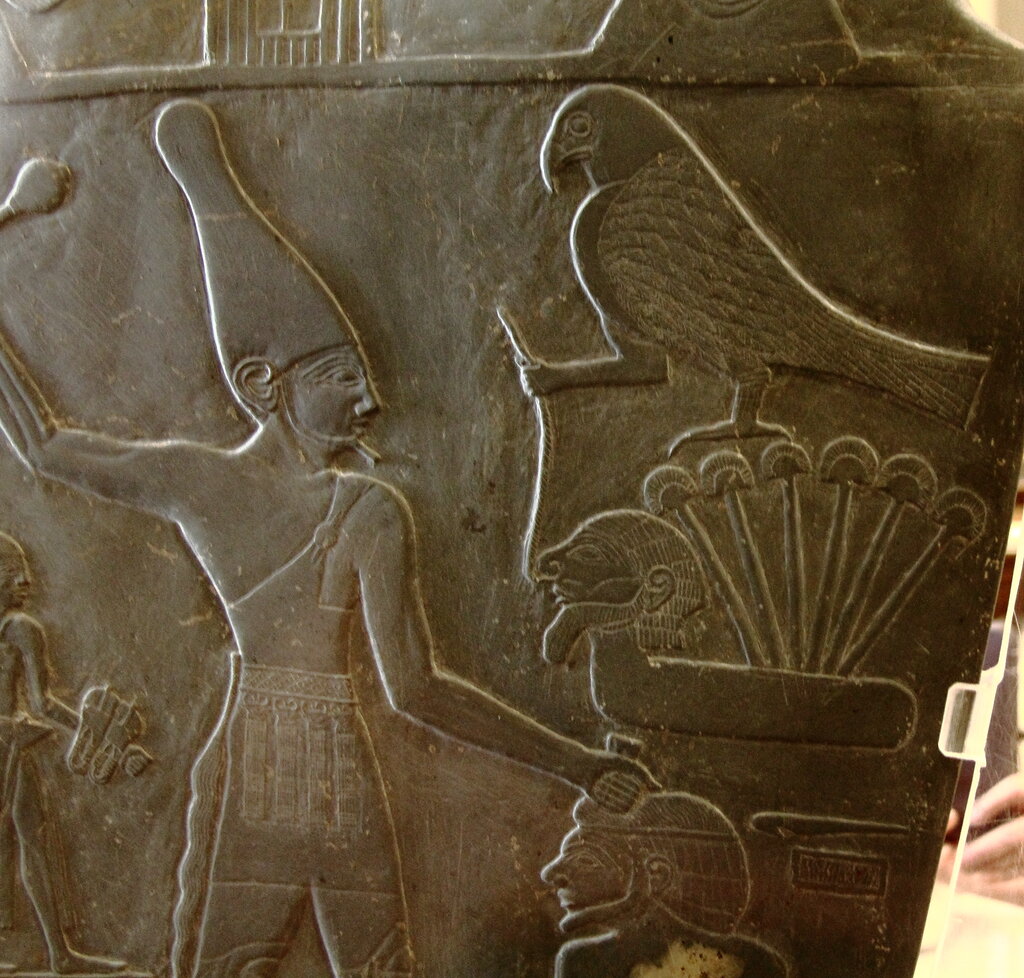
Discovered in Hierakonpolis, an ancient capital, this palette is a masterclass in political propaganda. On one side, King Narmer is shown wearing the tall, white crown of Upper Egypt, poised to strike down an enemy. The falcon god Horus, representing the king, holds a captive from the papyrus-filled land, symbolizing Lower Egypt. On the reverse side, Narmer wears the red crown of Lower Egypt as he inspects rows of decapitated enemies.
This isn't just art; it's a political manifesto carved in stone. It declares the consolidation of power through divine will and military might. The combination of both crowns on a single ruler is a powerful, unambiguous statement: the two lands are now one under a single king.
The Machinery of Control
Symbolic victory was one thing, but governing a newly unified kingdom was another. The Early Dynastic pharaohs needed a system to assert their authority and extract the resources necessary to run the state. This required the creation of a bureaucracy, a system of administration that would become a hallmark of Egyptian civilization for millennia.
One of the earliest and most important institutions was the 'Following of Horus'. This was not a religious procession, but a biennial royal tour throughout the country. The pharaoh and his court would travel from region to region, effectively conducting a national census and collecting taxes. These taxes weren't paid in coin, but in kind: grain, cattle, oil, and other goods. The tour served a dual purpose: it filled the state's coffers while making the king's presence and power visible to his subjects across the land.
What's in a Name?
A pharaoh's name was a critical tool for establishing legitimacy. The royal titulary, or the set of official names a king used, evolved to reflect specific political and religious agendas. The earliest and most important name was the Horus Name. It was written inside a rectangular symbol called a serekh, which represents a palace facade with a falcon (Horus) perched on top.
This name directly linked the king to the most powerful deity associated with kingship, making the pharaoh the living embodiment of Horus on earth. Later, other titles were added, such as the nesu-bity name, meaning 'He of the Sedge and the Bee,' which explicitly identified the king as the ruler of both Upper (sedge) and Lower (bee) Egypt. This five-fold titulary system turned the king's identity into a declaration of his divine right and political dominion.
Managing the Floodplain
Ultimately, the power and wealth of the Egyptian state depended on its ability to manage the Nile's resources. The annual inundation was the lifeblood of agriculture, but it was unpredictable. A flood that was too low meant famine; one that was too high could be destructive. The early state needed data to manage this vital resource.
This led to the development of the nilometer.
Nilometer
noun
A structure for measuring the Nile River's clarity and water level during the annual flood season.
These were typically a series of steps or a well connected to the river, marked with levels. By recording the maximum height of the flood, officials could forecast the agricultural yield for the year. This information was indispensable for the central treasury. It allowed them to set tax rates based on expected harvests, plan for potential food shortages, and manage the vast grain stores that powered the Egyptian state. This fusion of practical engineering and centralized bureaucracy was the foundation upon which the great pyramids of the Old Kingdom would be built.
What is the primary political statement conveyed by the Narmer Palette?
What was the main function of the 'Following of Horus' in the Early Dynastic period?
These early systems of political iconography, taxation, and resource management created a stable, unified state that would endure for thousands of years.