Leaving Cert Microbiology Synthesis
Ecological Biochemical Mechanics
The Biochemistry of Nitrogen Fixation
Nitrogen gas (N₂) makes up about 78% of our atmosphere, but it's completely useless to most living things in this form. The two nitrogen atoms are held together by a strong triple covalent bond, which is incredibly difficult to break. For plants and animals to build proteins and DNA, this atmospheric nitrogen must be 'fixed' or converted into a more usable form, like ammonia (NH₃).
This conversion is primarily carried out by specific bacteria from the Monera kingdom. These microbes possess an enzyme complex called nitrogenase, which is the key to the entire process. Nitrogenase catalyses the reaction that breaks the N≡N triple bond and combines it with hydrogen. The overall reaction is energetically expensive, requiring a significant amount of ATP.
A major challenge for nitrogen-fixing bacteria is that the nitrogenase enzyme is irreversibly inactivated by oxygen. This means these bacteria must live in anaerobic (oxygen-free) environments or have special mechanisms to protect the enzyme. Some cyanobacteria, for example, carry out nitrogen fixation in specialised, thick-walled cells called heterocysts, which limit oxygen exposure.
Symbiosis and Soil Chemistry
One of the most elegant solutions to the oxygen problem is found in the symbiotic relationship between Rhizobium bacteria and legume plants, such as peas, beans, and clover. The plant provides the bacteria with carbohydrates from photosynthesis, and in return, the bacteria fix nitrogen for the plant.
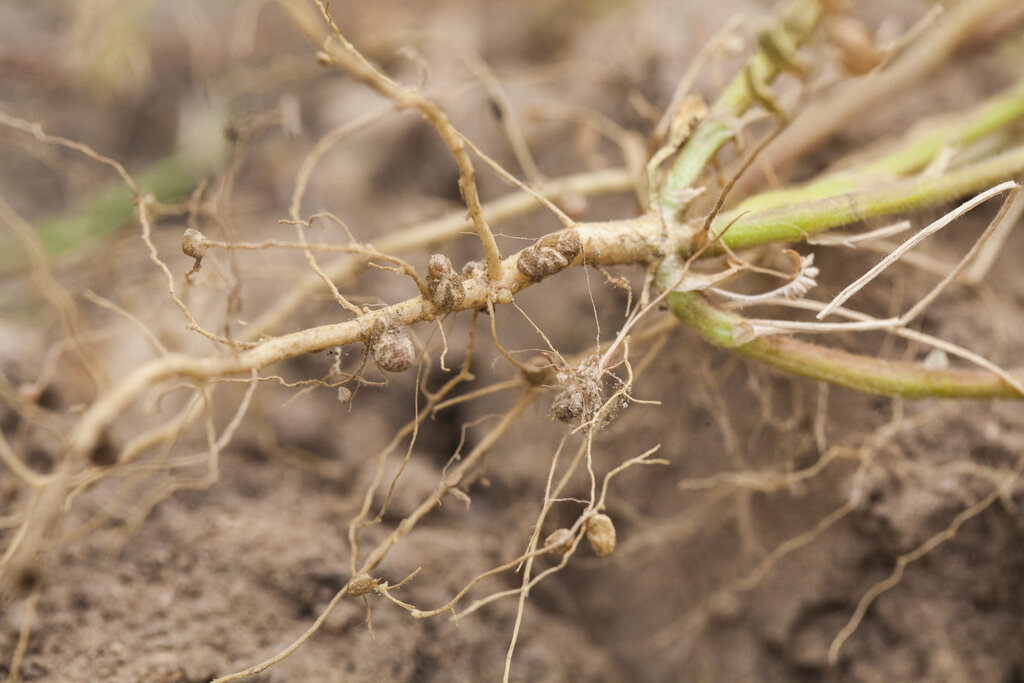
The plant forms root nodules that house the bacteria. Within these nodules, the plant produces a special protein called leghaemoglobin. This molecule has a high affinity for oxygen, binding to it and keeping the concentration low enough to protect the nitrogenase while still allowing the bacteria to respire aerobically. This creates the perfect micro-environment for nitrogen fixation. Farmers often rotate crops with legumes to naturally enrich the soil with nitrogen, reducing the need for artificial fertilisers.
Nitrification and Denitrification
Once nitrogen is fixed into ammonia (NH₃), it's still not the ideal form for most plants. The next step is nitrification, a two-stage process driven by different groups of chemosynthetic bacteria. These microbes get their energy by oxidising inorganic compounds, not from sunlight. First, bacteria like Nitrosomonas oxidise ammonia into nitrite (NO₂⁻).
Nitrite is toxic to plants, so it must be quickly converted. A different group of bacteria, such as Nitrobacter, takes over and oxidises the nitrite into nitrate (NO₃⁻), which is the form of nitrogen most readily absorbed by plant roots. Both stages of nitrification require well-aerated soil, as they are aerobic processes.
Finally, the cycle is completed by denitrification. This process returns nitrogen gas to the atmosphere. It is carried out by bacteria like Pseudomonas denitrificans, which use nitrate as a final electron acceptor during respiration in anaerobic conditions. This typically happens in waterlogged or compacted soils where oxygen is scarce. While essential for balancing the global nitrogen cycle, denitrification is a loss from an agricultural perspective, as it removes useful nitrates from the soil.
Soil conditions are critical. Aeration determines whether nitrification (aerobic) or denitrification (anaerobic) dominates. Soil pH also affects microbial activity, with most of these bacteria functioning best in neutral to slightly alkaline soils.
Understanding these biochemical pathways and the specific microbes involved is crucial for sustainable agriculture. It explains why soil drainage is important, how crop rotation works at a molecular level, and the precise effects of fertilisers on the microbial ecosystem.
Why is the vast amount of nitrogen gas (N₂) in the atmosphere unusable for most living organisms?
The enzyme complex nitrogenase is critical for nitrogen fixation, but it is irreversibly damaged by oxygen. What is the primary function of leghaemoglobin in the root nodules of legume plants?