Leaving Cert Biology The Digestive System
Overview of the Digestive System
Your Body's Fuel Factory
Everything you eat goes on a remarkable journey. The digestive system is the intricate network of organs responsible for taking whole foods and turning them into energy and nutrients your body can use. It's like a highly efficient processing plant, working around the clock to fuel your cells, repair tissues, and keep you going.
This system has three main jobs: breaking down food into smaller pieces, absorbing the useful nutrients from those pieces, and getting rid of the leftover waste.
Digestion
noun
The process of breaking down food by mechanical and chemical means into substances that can be absorbed and used by the body.
The Digestive Pathway
The entire process happens along a winding tube called the gastrointestinal (GI) tract, or the alimentary canal. Think of it as a long, continuous tunnel that starts at your mouth and ends at the other side. Let's follow the path food takes.
The digestive tract of an adult is about 30 feet (9 meters) long from start to finish.
It all starts in the mouth. Chewing, or mastication, is the first step. This is mechanical digestion, physically breaking food into smaller, more manageable bits. At the same time, your salivary glands release saliva, which begins the chemical digestion process and makes the food easier to swallow.
Once you swallow, the food doesn't just fall into your stomach. It's pushed down a muscular tube called the esophagus by waves of muscle contractions. This process, called peristalsis, ensures food gets to your stomach even if you were to eat upside down.
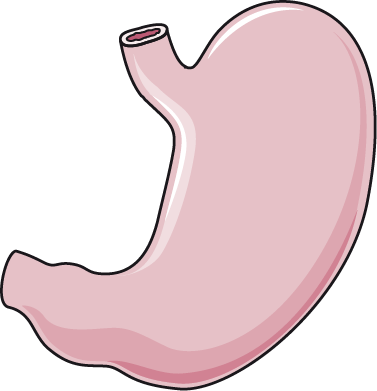
The stomach is a J-shaped organ that acts as a storage tank and a powerful mixer. It churns the food while bathing it in strong acids and enzymes, continuing the chemical breakdown. This turns the solid food you ate into a thick, soupy liquid called chyme.
From the stomach, the chyme enters the small intestine, which is where the real magic of nutrient absorption happens. Despite its name, the small intestine is incredibly long, coiled up inside your abdomen. Its inner surface is covered with tiny, finger-like projections called villi, which create a massive surface area for absorbing nutrients into the bloodstream.
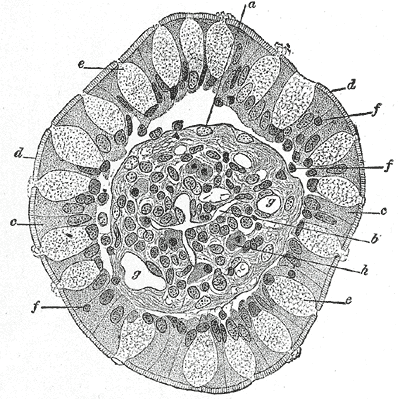
After the small intestine has absorbed all the useful nutrients, the remaining material, mostly water and indigestible fiber, moves into the large intestine. The main job of the large intestine is to absorb that water, turning the liquid waste into solid stool. Finally, the stool is stored in the rectum before being eliminated from the body.
The Helper Organs
The GI tract doesn't work alone. Several accessory organs play crucial roles by producing or storing substances that help digestion.
- Liver: This large organ has many jobs, but for digestion, its main role is producing bile, a substance that helps break down fats.
- Gallbladder: A small sac tucked under the liver. It stores bile and releases it into the small intestine when needed.
- Pancreas: Located behind the stomach, the pancreas produces powerful enzymes that break down fats, carbohydrates, and proteins. It releases these enzymes into the small intestine to complete the chemical digestion process.
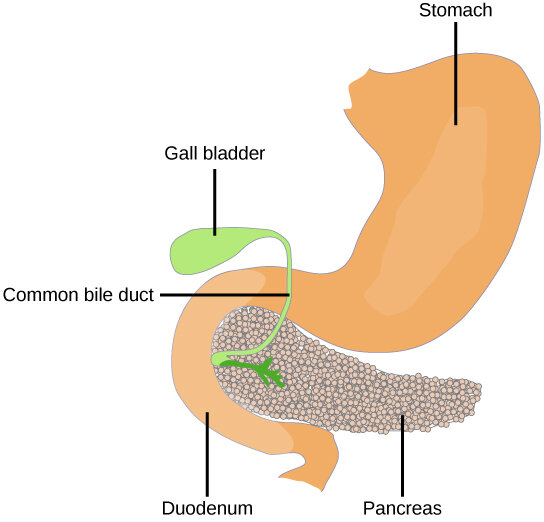
Together, these organs form a coordinated system. They ensure that the food we eat is converted into the essential components our bodies need to function and thrive.
Ready to check your understanding? Let's see what you've learned about the digestive system.
What are the three primary functions of the digestive system?
The wave-like muscle contractions that move food through the esophagus are called:
This overview provides a map of the digestive system. Each organ has a specific role in the journey from meal to molecule, a process essential for life.