Learn to Speak Spanish
Spanish Alphabet and Pronunciation
The Spanish Alphabet
The Spanish alphabet, or abecedario, is your starting point. It's almost identical to the English alphabet, but with a few friendly additions. The great news is that in Spanish, letters almost always make the same sound. Once you learn the sounds, you can pronounce almost any word you see.
Spanish pronunciation is consistent: once you learn the sounds, you’ll understand and be understood more easily.
The official Spanish alphabet has 27 letters.
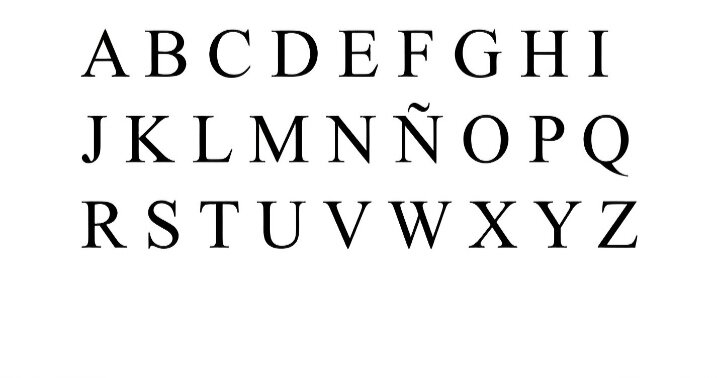
You'll notice one letter that isn't in the English alphabet: Ñ. Historically, you might also see two other combinations, CH and LL, treated as separate letters, but they were officially dropped as distinct letters in 2010. Still, you need to know how to pronounce them.
The Five Simple Vowels
Unlike English, which has a dozen or more vowel sounds, Spanish has only five. They are short, clear, and never change. Mastering these five sounds is the biggest step you can take toward clear pronunciation.
| Vowel | Pronunciation (like in the English word...) |
|---|---|
| A | ah, like in “father” |
| E | eh, like in “bed” |
| I | ee, like in “see” |
| O | oh, like in “go” |
| U | oo, like in “moon” |
Every time you see these vowels, they will make these sounds. No exceptions. This consistency is your best friend when learning Spanish.
Key Consonant Sounds
Many Spanish consonants sound just like they do in English. However, a few have special rules or unique sounds you'll need to learn. Let's walk through the most important ones.
H
other
The letter H (hache) is always silent in Spanish. Just ignore it when you see it.
Next up are the letters that change their sound depending on the vowel that follows.
| Letter | Sound with A, O, U | Sound with E, I |
|---|---|---|
| C | Hard 'k' sound (casa, cosa, cubo) | Soft 's' sound (cena, cine) |
| G | Hard 'g' sound (gato, gol, gusto) | 'h' sound (gente, gigante) |
Now for the sounds that are unique to Spanish.
This letter always makes a throaty 'h' sound, like the 'h' in "house" but a bit stronger. Think of words like *jardín* (har-DEEN) or *ojo* (O-ho).
This double letter sounds like the 'y' in "yes." So, *calle* (street) is pronounced "ka-yay" and *llave* (key) is "ya-vay."
This is the signature letter of the Spanish language. It makes a 'ny' sound, like in the word "canyon." You'll see it in words like *español* and *mañana* (man-YA-na).
The famous rolled 'r'. It's a trilling sound made by vibrating your tongue against the roof of your mouth. You'll hear it in words like *perro* (dog) and *carro* (car). A single 'R' is a much softer, quick tap. Don't worry if you can't roll your 'r's perfectly at first—it takes practice for everyone!
With these rules, you have the foundation to pronounce most Spanish words correctly. The key is to listen to native speakers and practice saying words out loud.
Ready to test what you've learned? Let's give it a try.
How many letters are in the official Spanish alphabet?
Which of the following is considered a distinct letter in the Spanish alphabet but not in the English alphabet?
Building a strong foundation in pronunciation will make every other part of learning Spanish much easier. Keep practicing, and listen as much as you can.