Learn Portuguese Faster With Spanish Skills
Portuguese Phonetics
The Sounds of Portuguese
If you've studied Spanish or another Romance language, you'll find a lot of familiar ground in Portuguese. But the music of the language, its unique sound, comes from a few key differences in pronunciation. Mastering these will make a huge difference in how well you're understood and how natural you sound. We'll focus on the sounds that most often trip up English and Spanish speakers.
Nasal Vowels
The signature sound of Portuguese is its set of nasal vowels. When you make a normal vowel sound, all the air comes out of your mouth. For a nasal vowel, some air escapes through your nose at the same time. You can feel a slight vibration in your nose if you're doing it right.
This might feel strange at first, but English has nasal sounds too. Think about the vowel sound before the "ng" in a word like "sing." You're already halfway there. In Portuguese, this nasal quality is written in a few ways. Sometimes you'll see a tilde (~), called a til in Portuguese, over the vowel.
mother
bread
More often, a vowel becomes nasal when it's followed by an m or n at the end of a syllable. In these cases, the m or n isn't pronounced as a full consonant. Instead, it just tells you to nasalize the vowel before it.
For example, in the word bem (well), you don't close your lips to make an "m" sound. You say the vowel e with a nasal quality.
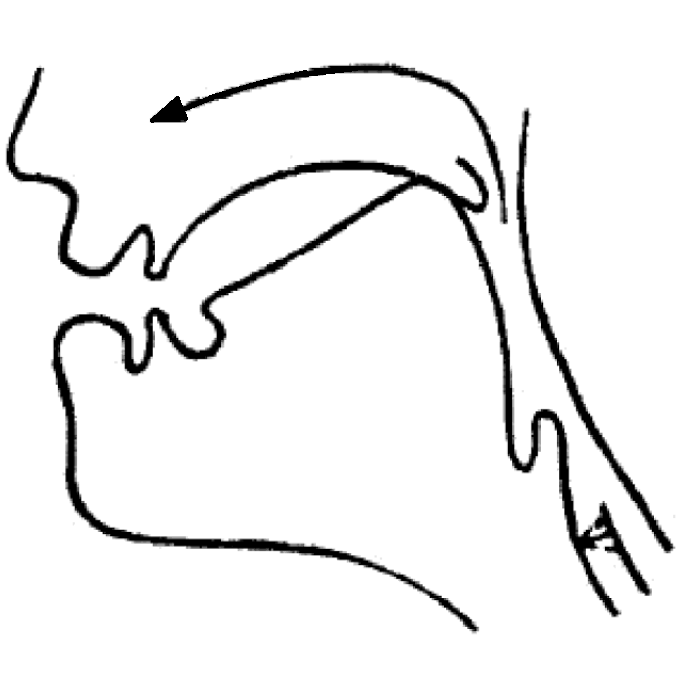
This happens with all the vowels:
anoram: cantar (to sing)enorem: tempo (time/weather)inorim: limpo (clean)onorom: ponte (bridge)unorum: mundo (world)
Getting this nasalization right is the biggest step toward a good Portuguese accent.
Key Consonant Sounds
Beyond the vowels, a few consonant sounds set Portuguese apart. Some of these will be familiar if you know Spanish, while others are quite different.
ch
other
In Portuguese, this is always a soft "sh" sound, like in the English word "shoe."
The letters j and g (before e or i) also have a distinct sound. It's the same sound as the 's' in "pleasure" or the 'j' in the French name "Jacques."
window
ice
Two other combinations, lh and nh, have parallels in other Romance languages. The nh is identical to the Spanish ñ. The lh is similar to the ll sound in some Spanish dialects, or the li in the English word "million."
| Combination | Portuguese Example | Spanish Equivalent | English Sound-alike |
|---|---|---|---|
| nh | vinho (wine) | ñ (in año) | "ny" in canyon |
| lh | mulher (woman) | ll (in calle) | "li" in million |
R's and S's
The pronunciation of r and s can vary a lot by region, but there are some general rules. An r at the start of a word, or a double rr between vowels, is a strong, throaty sound. In Lisbon, it's a guttural sound from the back of the throat, similar to a French r. In Rio de Janeiro, it sounds more like the h in the English word "hat."
rato(rat)carro(car)
A single r between two vowels is a quick tap of the tongue, just like the r in the Spanish word pero.
Listen for the difference between caro (expensive) with a tapped
r, and carro (car) with a strongrr.
Finally, the letter s at the end of a word or syllable is another major regional marker. In Portugal and Rio de Janeiro, it's pronounced like the "sh" in "shoe." In São Paulo and most of Brazil, it's a standard "s" sound. So the word português can sound like "por-tu-gaysh" or "por-tu-gayss" depending on the speaker.
Now let's test your understanding of these new sounds.
How are nasal vowel sounds primarily indicated in written Portuguese?
The Portuguese consonant combination nh is pronounced identically to which letter in Spanish?
These are the most critical pronunciation points for a beginner. Listening carefully to native speakers and trying to mimic them is the best way to improve. You don't have to be perfect, but getting these key sounds right will make communication much smoother.