Learn German Language Basics
German Alphabet and Pronunciation
The German Alphabet
The German alphabet looks very familiar. It uses the same 26 letters as English, so you're already off to a great start. The pronunciation, however, is more consistent. Once you learn the sound for each letter, you can reliably pronounce most German words.
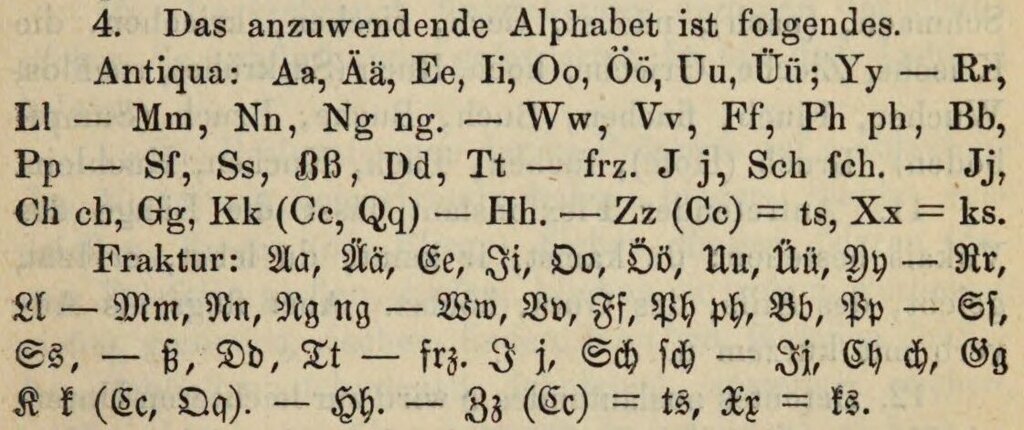
Besides the standard 26 letters, German has four special characters you'll need to know. Three of these are vowels with an umlaut (two dots) on top, and the last one is a unique consonant.
| Character | Name | Pronunciation Guide |
|---|---|---|
| Ä ä | A-Umlaut | Like the 'a' in "cat" or "can" |
| Ö ö | O-Umlaut | No English equivalent |
| Ü ü | U-Umlaut | No English equivalent |
| ẞ ß | Eszett | Like a sharp 's' sound, as in "hiss" |
Let's tackle the umlaut vowels that don't have an English counterpart. The key is mouth position. For Ö, shape your lips as if you're about to say "oh," but instead, try to say the sound "ay" as in "say." For Ü, pucker your lips for an "oo" sound like in "food," but then say "ee" as in "see."
The ß, called Eszett or "scharfes S" (sharp S), is simple. It's just a strong 's' sound. You'll find it after long vowels or diphthongs. If you're ever typing and can't find the 'ß' key, you can just use 'ss' instead.
Vowels and Consonants
German vowels are generally crisp and short. Unlike English, where a vowel's sound can change depending on the word, German vowels are much more predictable. They have a "long" and a "short" version.
- Long Vowels: A vowel is usually long if it's followed by a single consonant (like in gut), if it's doubled (Saal), or if it's followed by an 'h' (Bahn).
- Short Vowels: A vowel is typically short if it's followed by two or more consonants (schnell).
Most German consonants sound similar to their English counterparts, but there are a few key differences to watch out for.
| Letter(s) | German Sound | Example |
|---|---|---|
| J j | Like the 'y' in "yes" | Ja (yes) |
| V v | Like the 'f' in "fan" | Vater (father) |
| W w | Like the 'v' in "van" | Wasser (water) |
| Z z | Like 'ts' in "cats" | Zeit (time) |
Diphthongs and Combinations
A diphthong is just two vowels that blend to make a single sound. German has a few common ones that you'll see all the time. Learning them will make reading much easier, as their pronunciation is very consistent.
One key difference from English: in German diphthongs, it's the second vowel that determines the sound.
| Diphthong | Sound | Example |
|---|---|---|
| ie | Like 'ee' in "see" | die (the) |
| ei/ai/ey/ay | Like the 'i' in "ice" | mein (my) |
| au | Like 'ow' in "now" | Haus (house) |
| eu/äu | Like 'oy' in "boy" | neu (new) |
Certain consonant combinations also have their own special sounds. Pay close attention to these, as they are fundamental to German pronunciation.
Guttural
adjective
A sound produced in the throat; harsh-sounding.
The most famous is ch. Its sound depends on the vowel that comes before it.
- After a, o, u, or au, it's a harsh, throaty sound from the back of your mouth, similar to the sound in the Scottish word "loch." You'll hear this in words like Bach (stream) or auch (also).
- After any other vowel or consonant, it's a much softer sound, made by pushing air through the front of your mouth, like a hissing cat. You'll hear this in words like ich (I) or Milch (milk).
Other common combinations include sch, which is always pronounced like 'sh' in "shoe" (Schule - school), and st / sp at the beginning of a word, which sound like 'sht' (Stein - stone) and 'shp' (sprechen - to speak).
Now let's test your knowledge on the German alphabet and its sounds.
How is the German vowel 'Ö' correctly pronounced?
What is the German letter 'ß' (Eszett) equivalent to, especially when typing?
Getting a handle on these letters and sounds is the first major step. With practice, they'll become second nature.