Learn English from Zero
Alphabet and Phonics
The Building Blocks
The first step in learning any new language is getting to know its alphabet. The English alphabet is made up of 26 letters. Each one has an uppercase (big) and a lowercase (small) form.
Aa Bb Cc Dd Ee Ff Gg Hh Ii Jj Kk Ll Mm Nn Oo Pp Qq Rr Ss Tt Uu Vv Ww Xx Yy Zz
Think of these letters as the basic ingredients for every word you'll read and write in English. Just like a painter uses a few primary colors to create a masterpiece, English uses these 26 letters to build millions of words.
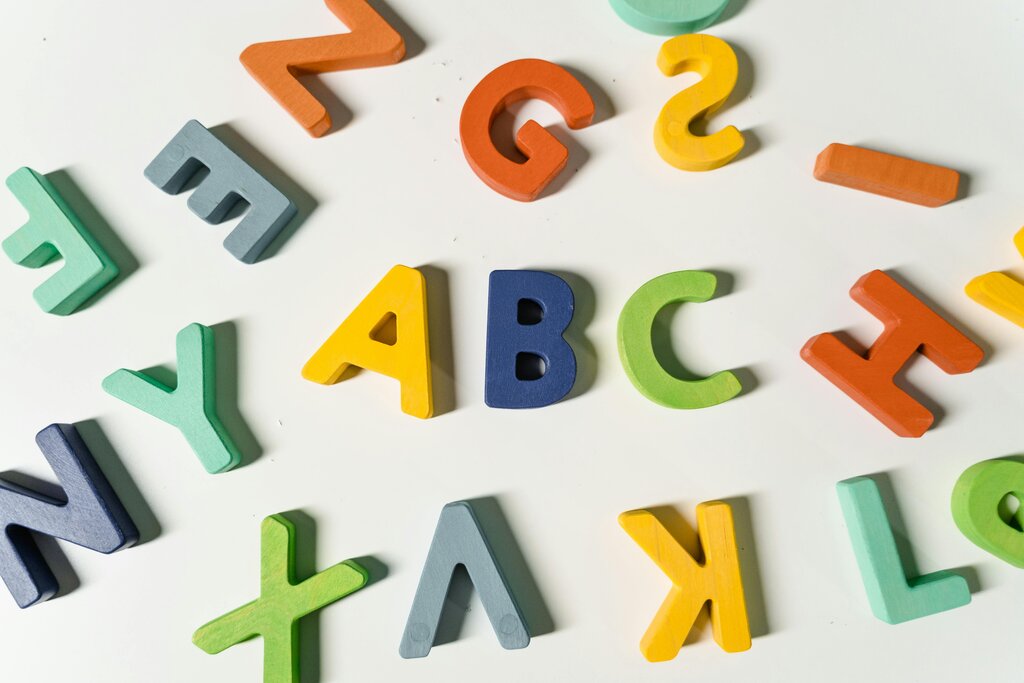
Recognizing these letters instantly, in both their uppercase and lowercase forms, is a crucial first skill. It's the groundwork for everything that comes next.
From Letters to Sounds
Letters aren't just shapes on a page. They represent sounds. The connection between letters and their sounds is the key to reading. This connection is what we call phonics.
Phonics
noun
A method of teaching reading by learning the sounds that letters and groups of letters make.
Some letters make one consistent sound. For example, the letter 'b' almost always makes the /b/ sound you hear at the beginning of the word ball. Other letters can make a few different sounds, but we'll start with the most common one for each.
Think of it like this: the letter is the symbol, and the sound is what you say when you see it.
The 26 letters are divided into two main groups: vowels and consonants. Vowels are the stars of the show. You can't have a word without a vowel sound. The vowels are A, E, I, O, and U. All the other letters are consonants.
Putting Sounds Together
Once you know the sounds each letter makes, you can start blending them together to read words. This is where the magic happens. Let's try it with a simple, three-letter word.
Take the word cat.
- The letter 'c' makes a /k/ sound.
- The letter 'a' makes an /æ/ sound (like in apple).
- The letter 't' makes a /t/ sound. Now, say those sounds one after another, smoothly: /k/ - /æ/ - /t/. You've just read the word cat!
This blending process works for many simple English words. It's like putting beads on a string. Each sound is a bead, and when you string them together, you create a word.
| Word | Letter Sounds | Put Them Together |
|---|---|---|
| dog | d - o - g | dog |
| sun | s - u - n | sun |
| sit | s - i - t | sit |
| pen | p - e - n | pen |
This skill, blending sounds, is the fundamental tool you'll use to decode words you've never seen before. Practice is key. The more you do it, the more automatic it becomes.
Ready to test your knowledge of these building blocks?
How many letters are in the English alphabet?
The letters A, E, I, O, and U are known as what?
Mastering the alphabet and basic phonics is your first major step toward reading fluency.