Learn Arabic Language
Arabic Alphabet
The Arabic Alphabet
Welcome to the foundation of the Arabic language. The first thing to know is that Arabic is written from right to left. It might feel backward at first, but you'll get used to it quickly.
The alphabet has 28 letters. Many of these letters represent sounds that don't exist in English, so it's important to listen to their pronunciation as you learn. Unlike English, Arabic script is cursive, meaning the letters in a word connect to each other.
Mastering the Arabic alphabet is the first and most essential step on your journey to learning the language.
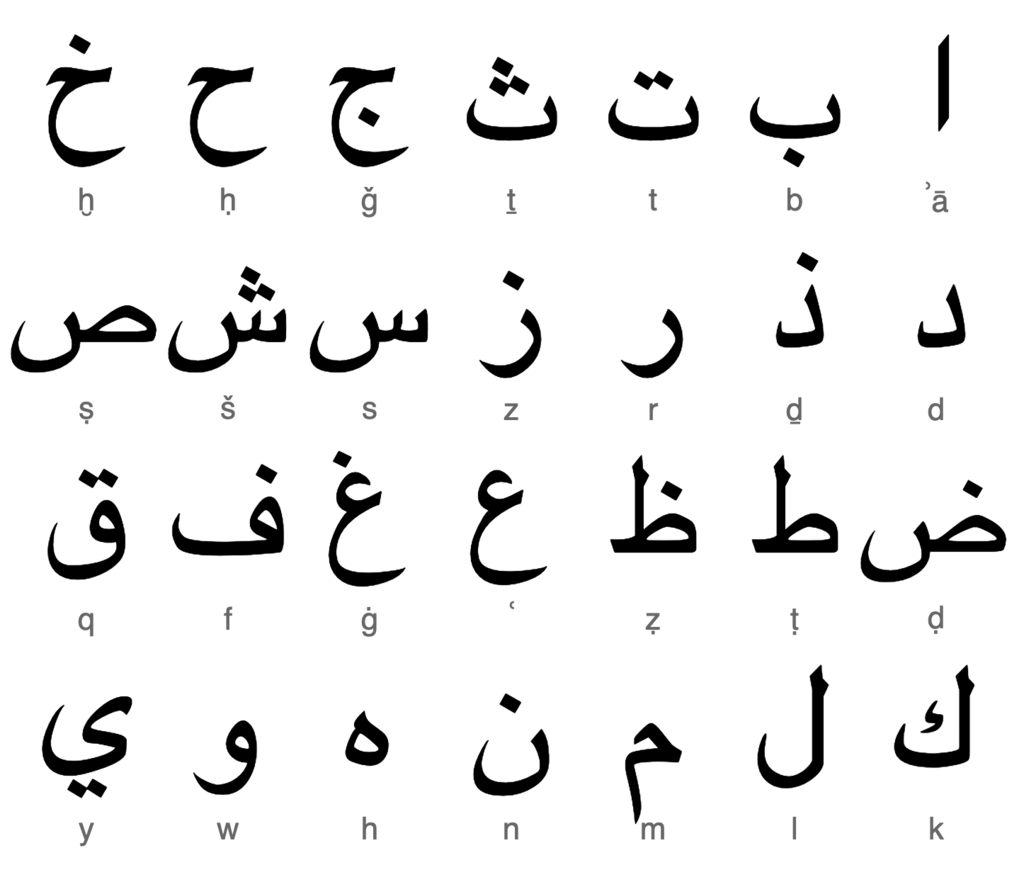
Here are the letters, their names, and the sounds they generally make. Don't worry about memorizing them all at once. Just get familiar with their shapes and sounds.
| Letter | Name | Sound |
|---|---|---|
| ا | Alif | ā (like in 'car') |
| ب | Bā’ | b |
| ت | Tā’ | t |
| ث | Thā’ | th (like in 'think') |
| ج | Jīm | j (like in 'jam') |
| ح | Ḥā’ | ḥ (a breathy 'h' from the throat) |
| خ | Khā’ | kh (like the 'ch' in 'loch') |
| د | Dāl | d |
| ذ | Dhāl | dh (like in 'this') |
| ر | Rā’ | r (a rolled 'r') |
| ز | Zāy | z |
| س | Sīn | s |
| ش | Shīn | sh |
| ص | Ṣād | ṣ (a heavy 's' sound) |
| ض | Ḍād | ḍ (a heavy 'd' sound) |
| ط | Ṭā’ | ṭ (a heavy 't' sound) |
| ظ | Ẓā’ | ẓ (a heavy 'dh' sound) |
| ع | ‘Ayn | ‘ (a deep throat sound) |
| غ | Ghayn | gh (like a French 'r') |
| ف | Fā’ | f |
| ق | Qāf | q (a 'k' sound from the back of the throat) |
| ك | Kāf | k |
| ل | Lām | l |
| م | Mīm | m |
| ن | Nūn | n |
| ه | Hā’ | h |
| و | Wāw | w or ū |
| ي | Yā’ | y or ī |
Vowels and Markings
You might have noticed that most of the letters in the alphabet are consonants. So, where are the vowels?
In Arabic, there are short vowels and long vowels. The short vowels aren't letters themselves; they're small marks written above or below the consonants. These marks are called ḥarakāt.
Written Arabic for beginners, as well as the Qur'an, almost always includes these vowel marks. However, in most everyday books and websites, they are omitted, and native speakers know how to pronounce the words from context.
There are three main short vowels:
| Mark | Name | Vowel Sound | Position |
|---|---|---|---|
| ◌َ | Fatḥah | a (as in 'cat') | Above the letter |
| ◌ِ | Kasrah | i (as in 'sit') | Below the letter |
| ◌ُ | Ḍammah | u (as in 'put') | Above the letter |
There's one more important mark: the sukūn (◌ْ). It's a small circle above a letter that indicates no vowel sound follows. It simply means you pronounce the consonant sound by itself.
Long vowels are easier. They are represented by letters of the alphabet. In fact, you've already seen them: Alif (ا), Yā’ (ي), and Wāw (و). They work together with the short vowel marks to stretch the sound out.
A consonant with a fatḥah followed by an Alif creates a long 'ā' sound. A consonant with a kasrah followed by a Yā’ creates a long 'ī' sound. A consonant with a ḍammah followed by a Wāw creates a long 'ū' sound.
Letters Change Shape
This is one of the trickiest parts of learning to read Arabic. Because the letters connect, their shape changes depending on where they are in a word. Most letters have four forms: isolated, initial, medial, and final.
- Isolated: When the letter stands alone.
- Initial: When it's the first letter of a word.
- Medial: When it's in the middle of a word, connected on both sides.
- Final: When it's the last letter of a word, connected only to the letter before it.
Let's look at the letter Bā’ (ب) as an example. Its core shape, a boat-like curve with one dot below, stays consistent.
| Form | Shape | Example |
|---|---|---|
| Isolated | ب | — |
| Initial | بـ | بَيْت (bayt - house) |
| Medial | ـبـ | خُبْز (khubz - bread) |
| Final | ـب | كِتَاب (kitāb - book) |
Notice how the initial and medial forms have a small tail to connect to the next letter. Most letters follow this pattern. However, there are six letters that are sometimes called "non-connectors" or "one-way connectors." They only connect to the letter before them, but never to the letter after them.
These letters are: Alif (ا), Dāl (د), Dhāl (ذ), Rā’ (ر), Zāy (ز), and Wāw (و).
When one of these six letters appears in the middle of a word, it breaks the connection. The next letter in the word will be written in its initial form, even though it's not at the very beginning of the word.
For example, in the word دَار (dār - house), the Dāl (د) does not connect to the Alif (ا), and the Alif does not connect to the Rā’ (ر). All three letters are in their final/isolated forms, even though they form a single word.
Time to check your understanding.
How is the Arabic language written and read?
What are the small marks written above or below Arabic letters to indicate short vowel sounds called?
Learning the alphabet is the biggest first step. With these fundamentals, you are now ready to start reading and writing your first Arabic words.