Lean Six Sigma Practitioner Mastery
Introduction to Lean Six Sigma
A Powerful Combination
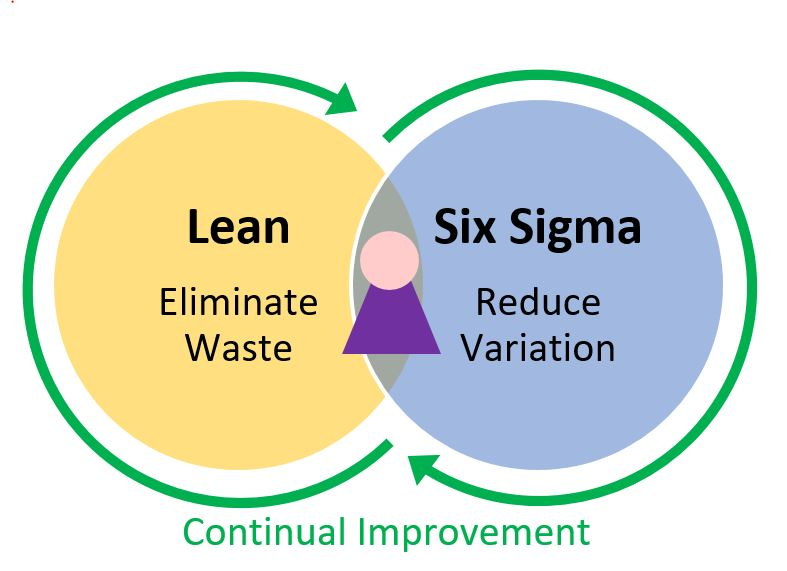
Lean Six Sigma isn't a single concept, but a blend of two powerful philosophies: Lean and Six Sigma. Think of it as a recipe for making any process better, faster, and more reliable.
Lean is all about speed and efficiency. Its goal is to ruthlessly eliminate waste. Imagine a busy restaurant kitchen. A Lean approach would organize the stations so chefs don't waste steps, place ingredients within easy reach, and ensure dishes move smoothly from prep to the pass. The result is faster service without sacrificing quality.
Six Sigma, on the other hand, is all about precision and consistency. Its goal is to eliminate defects and variation. In our restaurant, Six Sigma would ensure that every single steak is cooked to the perfect temperature and every sauce has the exact same flavor, night after night. It uses data to find the sources of inconsistency and fix them.
By themselves, Lean and Six Sigma are effective. But when you combine them, you get the best of both worlds. You create processes that are not only fast and waste-free but also incredibly consistent and high-quality.
The two methodologies developed separately. Lean's principles grew out of the Toyota Production System in Japan after World War II. Engineers like Taiichi Ohno focused on identifying and removing muda, the Japanese word for waste or futility.
Six Sigma originated in the 1980s at Motorola, an American technology company. An engineer named Bill Smith developed a data-driven system to reduce manufacturing defects. The term "Six Sigma" refers to a statistical goal: allowing only 3.4 defects for every million opportunities. It's a technical way of saying "very, very close to perfect."
Over time, companies realized that these two approaches weren't competing ideas. They were two sides of the same coin. A process could be fast but inconsistent, or consistent but slow and wasteful. Combining them created a more complete framework for improvement.
Guiding Ideas
At its heart, Lean Six Sigma is guided by a few core principles from each of its parent philosophies.
The core idea of Lean is to maximize customer value while minimizing waste. Simply, Lean means creating more value for customers with fewer resources.
Lean thinking starts with a simple question: What does the customer actually value? Any step in a process that doesn't add to that value is a candidate for elimination. This focus on the customer's perspective is the bedrock of the methodology. It's about seeing your process through their eyes.
Six Sigma adds another layer. It agrees that the customer is central, but it's obsessed with the data behind their experience. It seeks to understand, measure, and control variation in a process. Variation is the enemy of quality. Whether you're building a car, processing an insurance claim, or serving coffee, inconsistency leads to unhappy customers.
To tackle this, Six Sigma relies on a structured problem-solving method and a commitment to making decisions based on data, not guesswork. It demands that you define the problem, measure your current performance, analyze the cause, improve the process, and control the results to ensure the gains are permanent. Together, these principles create a culture of continuous improvement, where every person in an organization is empowered to make things better.
Why Bother?
Implementing Lean Six Sigma isn't just an academic exercise. It delivers tangible benefits that can transform an organization. The most obvious benefit is financial. By eliminating waste and reducing defects, companies spend less time and money fixing mistakes or performing unnecessary work. This leads directly to lower costs and higher profits.
But the impact goes deeper. When processes are streamlined and reliable, employee morale often improves. People are less frustrated by inefficient workflows and feel more empowered to do their jobs well. They spend less time on tedious rework and more time on value-added activities.
Most importantly, these improvements lead to greater customer satisfaction. Customers receive higher quality products and services, faster. When an organization consistently delivers what the customer wants, when they want it, it builds loyalty. This focus on the customer experience is what ultimately drives sustainable growth.

Lean Six Sigma provides a shared language and a clear toolkit for problem-solving that can be applied in any industry, from manufacturing and healthcare to finance and software development. It creates a framework for making smart, data-backed decisions that improve efficiency, quality, and the bottom line.