Lean Manufacturing Fundamentals
Introduction to Lean Manufacturing
What is Lean Manufacturing?
Lean manufacturing is a method for making things more efficiently. The core idea is simple: create more value for customers with fewer resources. It’s a systematic approach to identifying and eliminating waste in every step of a production process.
Lean is a business management framework that teams and organizations use to maximize value by streamlining workflows and eliminating waste.
Think of it like building a piece of furniture from a kit. A traditional process might involve unpacking every single screw, panel, and bracket before you start. You might count them all, sort them into piles, and then begin building. A lean approach would be to only take out the specific parts you need for each step, exactly when you need them. This saves time, reduces clutter, and minimizes the chance of losing a crucial piece.
This philosophy applies to everything from car manufacturing to software development. The goal is to trim the fat, focusing only on the activities that directly add value in the eyes of the customer. Anything else is considered waste.
A History of Lean Thinking
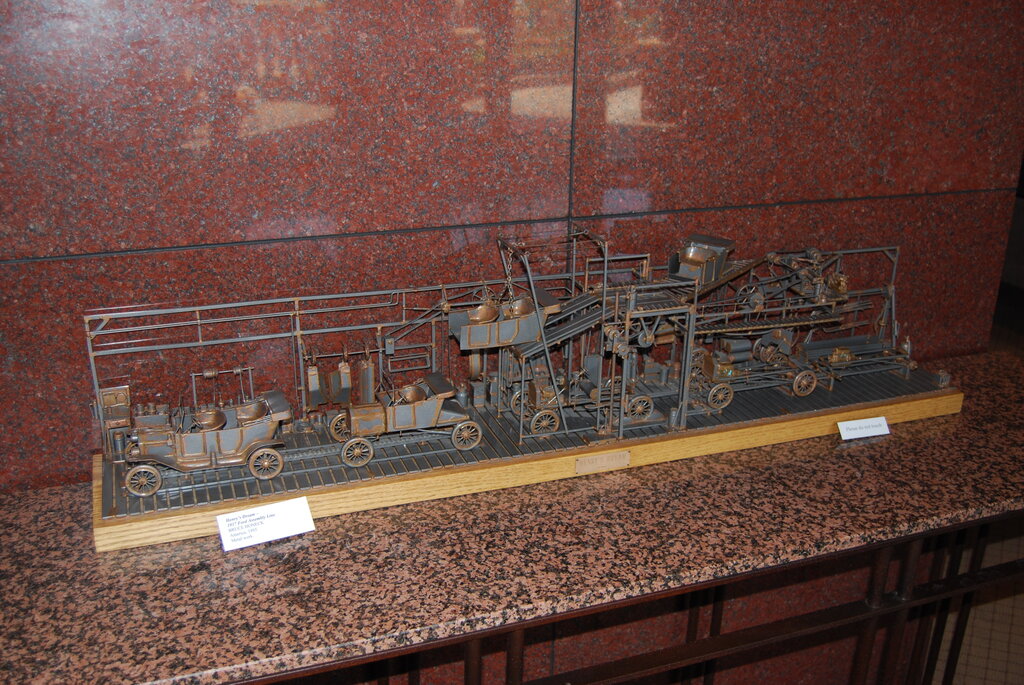
While the term "lean" is relatively modern, its principles have deep roots. Early ideas about production flow can be seen in Henry Ford's creation of the moving assembly line in the early 20th century. Ford's innovation was revolutionary because it standardized processes and kept products moving continuously, drastically cutting the time it took to build a car.
However, the true birthplace of lean manufacturing is post-World War II Japan. Facing limited resources and a devastated economy, Toyota needed a way to compete with larger, established automakers. They couldn't afford massive warehouses full of parts or the waste that came from large-batch production.
Engineers like Taiichi Ohno and Eiji Toyoda at Toyota developed a new system focused on ruthless efficiency and respect for people. This became known as the Toyota Production System, or TPS. It was designed to be highly flexible and produce high-quality vehicles without the massive inventories of its competitors.
Decades later, in the 1980s, American researchers studying the global automotive industry coined the term "Lean" to describe Toyota's remarkably efficient approach. It was lean because it used less of everything: less human effort, less manufacturing space, less investment in tools, and less inventory.
The Toyota Production System
The Toyota Production System (TPS) is the foundation of lean manufacturing. It's built on two core principles that work together to eliminate waste and ensure quality.
The Toyota Production System (TPS) is the direct ancestor of Lean management.
The first pillar is Just-in-Time (JIT). This means producing only what is needed, when it is needed, and in the amount needed. Instead of making large batches of parts and storing them in a warehouse, JIT synchronizes production with demand. Parts and materials arrive at the assembly line right as they are required, minimizing inventory costs and the waste of overproduction.
The second pillar is Jidoka, which can be translated as "automation with a human touch." This principle empowers machines and workers to stop the production line the moment a problem or defect is detected. This ensures that quality is built into the process, rather than being inspected at the end. By stopping to fix problems immediately, Jidoka prevents defects from continuing down the line, saving time and resources.
Together, these two pillars support the ultimate goals of TPS: to provide the highest quality products at the lowest possible cost, with the shortest lead time. It’s a system designed for continuous improvement, driven by the people who do the work every day.
Objectives Waste and Value
At its heart, lean has two primary objectives: enhance customer value and eliminate waste. The two are sides of the same coin.
Value is defined from the customer's perspective. It’s any action or process that a customer would be willing to pay for. If a step in the process doesn’t add value, it’s a candidate for elimination.
Waste, or muda in Japanese, is the opposite of value. It's any activity that consumes resources but doesn't create value for the customer. The TPS famously identified seven major types of waste:
| Waste Type | Description |
|---|---|
| Overproduction | Making more of something than is needed right now. |
| Inventory | Storing excess parts, materials, or finished goods. |
| Waiting | Idle time for people or machines. |
| Motion | Unnecessary movement of people or equipment. |
| Transportation | Moving materials or products more than necessary. |
| Defects | Products that require rework or must be scrapped. |
| Over-processing | Doing more work than the customer requires. |
By systematically identifying and removing these wastes, lean manufacturing streamlines processes, improves quality, and ultimately delivers a better product to the customer more efficiently.