Law School Preparation Bootcamp
Understanding the LSAT
Breaking Down the LSAT
The Law School Admission Test, or LSAT, is the main standardized test for getting into law school. It’s not a test of what you know, but rather how you think. It's designed to measure skills like reading comprehension, logical reasoning, and analytical thinking – all crucial for success in law school.
The test has several sections, but your final score comes from three of them. Each of these scored sections lasts 35 minutes.
You'll also complete an unscored writing sample on your own time after the test, and one of the sections you take on test day will be an unscored "experimental" section. You won't know which section is experimental, so you have to treat every section as if it counts.
Mastering Logical Reasoning
The Logical Reasoning (LR) section tests your ability to take apart an argument. You'll read a short passage, called a stimulus, and answer a question about it. These questions might ask you to find a flaw in the reasoning, identify an assumption the author is making, or find a statement that would strengthen or weaken the argument.
The key is to first identify the two most important parts of any argument: the conclusion (what the author is trying to prove) and the premises (the evidence used to support that conclusion). Let's look at a simple example.
Stimulus: Every dog I have ever met has been friendly. Therefore, it is likely that all dogs are friendly.
Question: Which of the following, if true, most weakens the argument?
Here, the premise is "Every dog I have ever met has been friendly." The conclusion is "it is likely that all dogs are friendly." To weaken this argument, you'd look for an answer choice that shows this evidence is too limited to support such a broad conclusion. For instance, an answer like "The speaker has only ever met golden retrievers, a breed known for its friendly temperament" would seriously undermine the argument.
Conquering Reading Comprehension
The Reading Comprehension (RC) section presents you with four dense, complex passages, each followed by 5-8 questions. The passages are drawn from topics in the humanities, social sciences, natural sciences, and law. Your job is to understand the main point, the author's tone, and how the passage is structured.
The LSAT isn’t testing whether you find the passage interesting or understand every word.
Instead, it's testing your ability to extract meaning from challenging text. A successful strategy involves active reading. As you read, focus on identifying the main idea of each paragraph and the overall purpose of the passage. Don't get lost in the jargon or technical details. You can always go back and find those specifics if a question asks for them.
Time management is critical here. With only 35 minutes for four passages and their questions, you have just under nine minutes per passage. Pacing yourself is essential.
The Writing Sample
Sometime after your multiple-choice test, you'll complete LSAT Writing. This is a 35-minute persuasive writing exercise that you take at home on your own computer. While it isn't scored as part of your 120-180 score, it is sent to every law school you apply to.
You'll be presented with a scenario where a decision must be made between two competing options. You are given a set of criteria and facts for each option. Your task is not to give your personal opinion, but to argue for one option over the other, using only the facts provided. Law schools use this to get a sense of your writing ability. They want to see if you can build a clear, organized, and logical argument to support a position.
How to Prepare
The LSAT is a test of skills, and skills can be improved with practice. The single most important part of preparing for the LSAT is taking full, timed practice tests using real questions from previous exams. This helps you understand the question types, manage your time, and build stamina for test day.
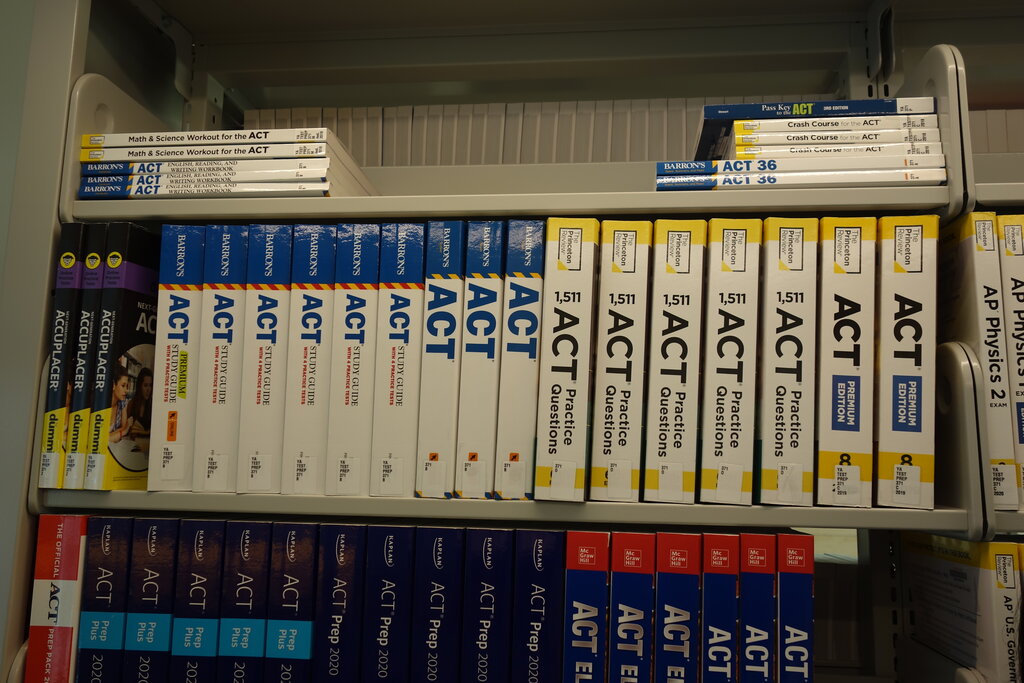
Whether you choose to self-study with prep books or enroll in a course, the strategy is the same: learn the fundamentals of each section, practice with individual questions to build your skills, and then simulate test-day conditions with timed practice exams.
To succeed, you must do more than just study the law; you must master the test itself.
Ready to see what you've learned about the LSAT?
What is the primary purpose of the LSAT?
In the Logical Reasoning section, what are the two most important parts of an argument you should identify first?