Launching Your Business Venture
Idea Generation
Finding Your Starting Point
Great business ideas don't usually arrive in a flash of lightning. They come from paying attention. Many successful businesses start from a simple observation: a common frustration, a personal passion, or a gap in the market nobody else seems to see.
The key is to look for problems to solve. Think about your daily life. What annoys you? What process could be more efficient? What service do you wish existed? Frustration is a powerful signal that an opportunity might be hiding nearby. Your own experiences are a rich source of inspiration.
Your best business idea might be hiding in your hobbies, your skills, or even your complaints.
Start by looking inward. The most sustainable businesses are often built on a foundation of genuine interest and expertise. When you're passionate about what you're doing, you'll have the motivation to push through the tough spots. When you have skills in a certain area, you have a head start on building something valuable.
Brainstorming for Business
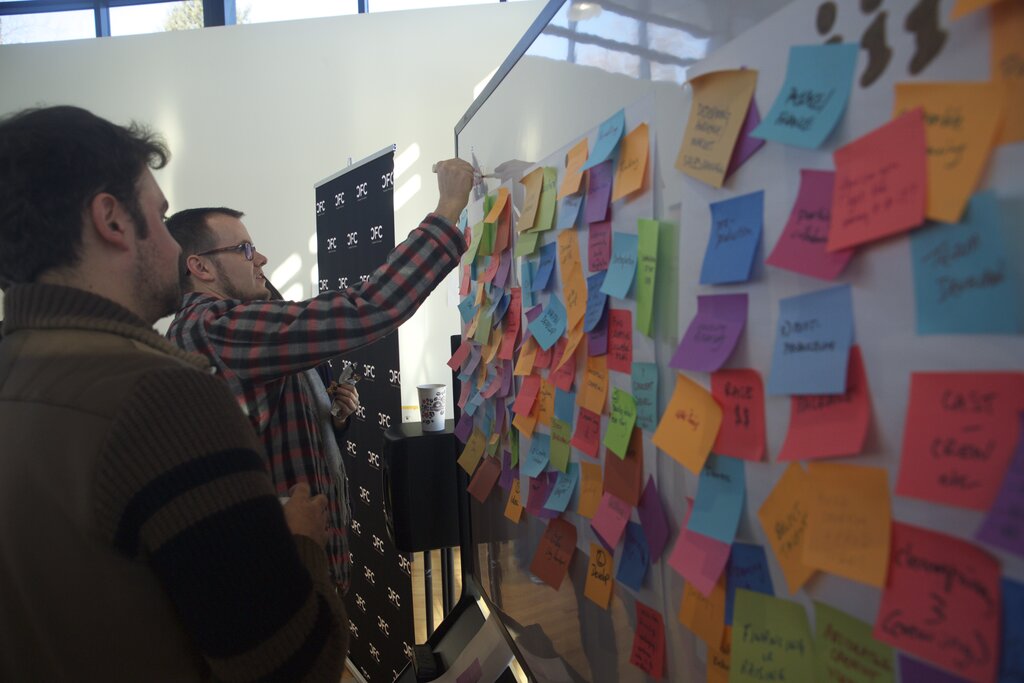
Once you have a general area in mind, it's time to generate specific ideas. Brainstorming is more than just waiting for inspiration. Using structured techniques can help you uncover surprisingly innovative concepts. Don't judge your ideas during this phase, just get them all down on paper. The goal is quantity over quality at first.
| Technique | How It Works | Best For |
|---|---|---|
| Problem-First | Start by identifying a common problem or pain point for a specific group of people. | Finding ideas with a clear, built-in customer need. |
| Mind Mapping | Begin with a central topic (like "fitness for seniors") and branch out with related ideas and sub-ideas. | Visually exploring all facets of a broad topic. |
| SCAMPER | Ask questions about an existing product: Can you Substitute, Combine, Adapt, Modify, or Reverse it? | Improving on something that already exists. |
Try picking one of these techniques and setting a timer for 20 minutes. You might be surprised by how many potential ideas you can generate when you give yourself a framework and a deadline.
Is It a Good Idea?
Now that you have a list of ideas, you need to filter them. A good business idea isn't just creative, it's also viable. This is where a little preliminary research comes in. You don't need a massive market analysis report, just enough information to make an educated guess about an idea's potential.
Start by defining who your target customer would be. Be specific. Instead of "everyone," think "busy young professionals who want healthy, quick meals." Understanding your customer helps you figure out if your idea actually solves a real problem for them.
A business idea is a hypothesis. The next step is to find evidence to support or reject it.
Once you have a customer in mind, do some quick research to check feasibility. Ask yourself a few key questions:
- Is there a real need? Use search engines to see if people are looking for solutions to the problem you've identified. Look at forums like Reddit or Quora to see what people are complaining about.
- Who is the competition? A quick search will show you who is already serving your target customer. Competition isn't always a bad thing—it proves a market exists. But you need to think about how you'll be different.
- Is it technically possible? Can you realistically create the product or deliver the service with the resources you have or could get?
- Can it be profitable? Think about potential costs and what customers might be willing to pay. It doesn't need to be exact, just a rough estimate to see if the numbers could work.
This initial check helps you weed out ideas that are dead ends and focus your energy on the ones with the most promise.
By researching companies active in your market or niche, you can identify market gaps, avoid common pitfalls, and most importantly of all - refine your unique value proposition so that your idea has a chance to stand out in the competitive landscape.
This process of generating and then evaluating ideas is the first crucial step. It moves you from a world of infinite possibilities to a focused, viable concept that you can start building on.
Now, let's test your understanding of how to generate and evaluate business ideas.
According to the text, where do most successful business ideas originate?
What is the primary goal during the initial brainstorming phase for new business ideas?
By following this process, you can move from a vague interest to a concrete idea with real potential.